







Excavations resume at Vigol Site in central Iran to unlock secrets of lost Sasanian city
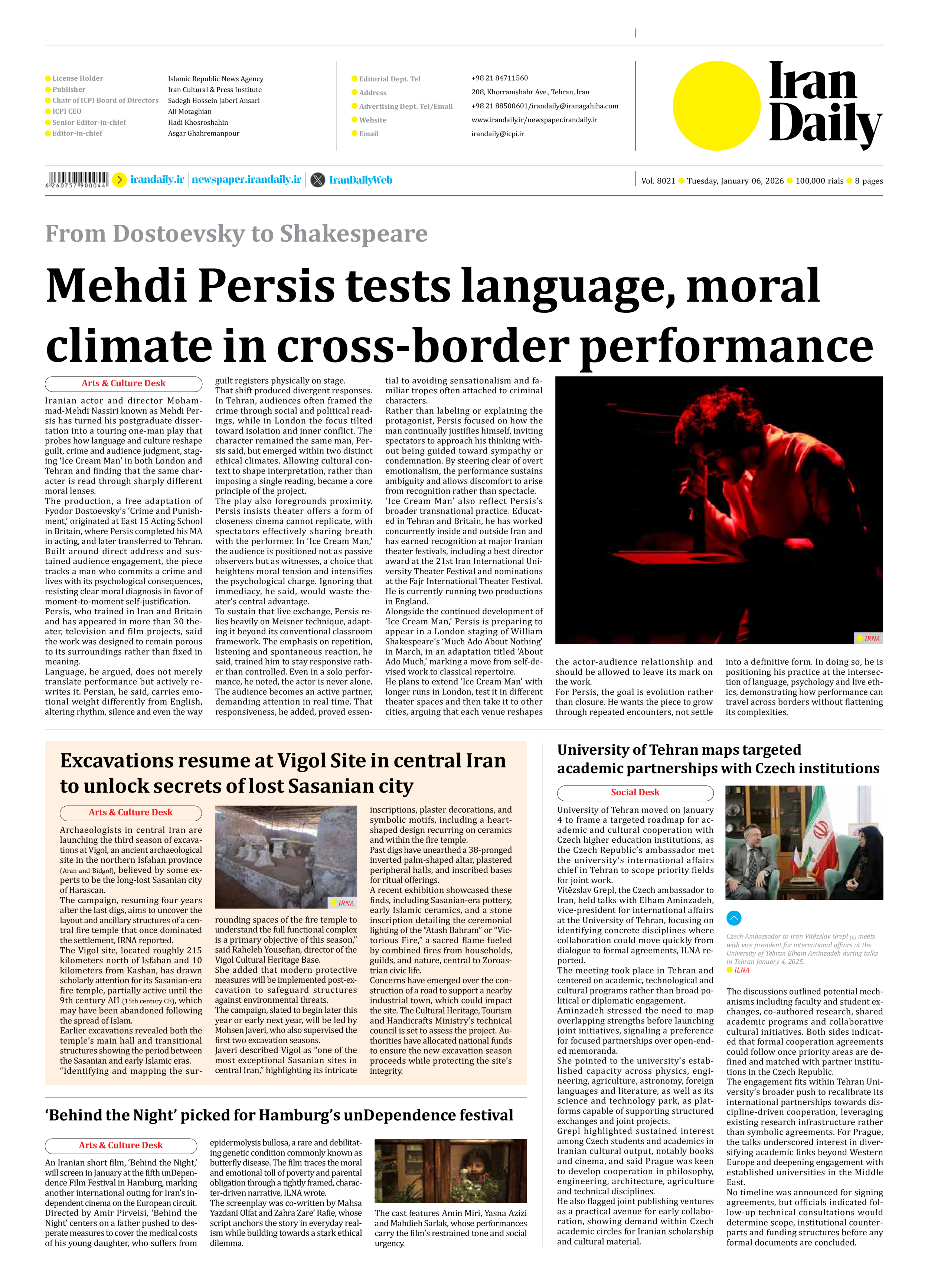
Archaeologists in central Iran are launching the third season of excavations at Vigol, an ancient archaeological site in the northern Isfahan province (Aran and Bidgol), believed by some experts to be the long-lost Sasanian city of Harascan.
The campaign, resuming four years after the last digs, aims to uncover the layout and ancillary structures of a central fire temple that once dominated the settlement, IRNA reported.
The Vigol site, located roughly 215 kilometers north of Isfahan and 10 kilometers from Kashan, has drawn scholarly attention for its Sasanian-era fire temple, partially active until the 9th century AH (15th century CE), which may have been abandoned following the spread of Islam.
Earlier excavations revealed both the temple’s main hall and transitional structures showing the period between the Sasanian and early Islamic eras.
“Identifying and mapping the surrounding spaces of the fire temple to understand the full functional complex is a primary objective of this season,” said Raheleh Yousefian, director of the Vigol Cultural Heritage Base.
She added that modern protective measures will be implemented post-excavation to safeguard structures against environmental threats.
The campaign, slated to begin later this year or early next year, will be led by Mohsen Javeri, who also supervised the first two excavation seasons.
Javeri described Vigol as “one of the most exceptional Sasanian sites in central Iran,” highlighting its intricate inscriptions, plaster decorations, and symbolic motifs, including a heart-shaped design recurring on ceramics and within the fire temple.
Past digs have unearthed a 38-pronged inverted palm-shaped altar, plastered peripheral halls, and inscribed bases for ritual offerings.
A recent exhibition showcased these finds, including Sasanian-era pottery, early Islamic ceramics, and a stone inscription detailing the ceremonial lighting of the “Atash Bahram” or “Victorious Fire,” a sacred flame fueled by combined fires from households, guilds, and nature, central to Zoroastrian civic life.
Concerns have emerged over the construction of a road to support a nearby industrial town, which could impact the site. The Cultural Heritage, Tourism and Handicrafts Ministry’s technical council is set to assess the project. Authorities have allocated national funds to ensure the new excavation season proceeds while protecting the site’s integrity.