







Copy in clipboard...
Iran designates Canada’s navy as ‘terrorist organization’ over IRGC listing
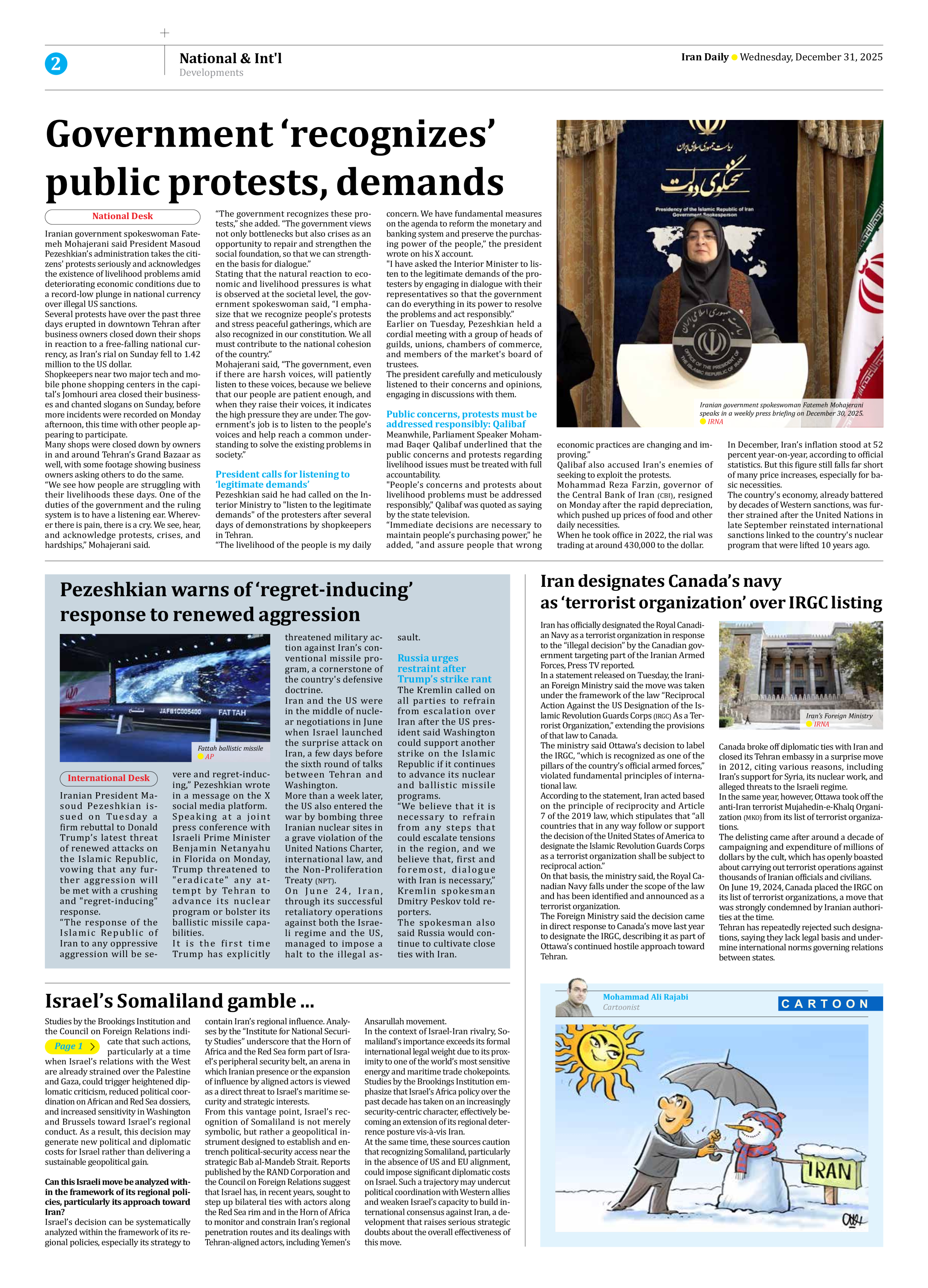
In a statement released on Tuesday, the Iranian Foreign Ministry said the move was taken under the framework of the law “Reciprocal Action Against the US Designation of the Islamic Revolution Guards Corps (IRGC) As a Terrorist Organization,” extending the provisions of that law to Canada.
The ministry said Ottawa’s decision to label the IRGC, “which is recognized as one of the pillars of the country’s official armed forces,” violated fundamental principles of international law.
According to the statement, Iran acted based on the principle of reciprocity and Article 7 of the 2019 law, which stipulates that “all countries that in any way follow or support the decision of the United States of America to designate the Islamic Revolution Guards Corps as a terrorist organization shall be subject to reciprocal action.”
On that basis, the ministry said, the Royal Canadian Navy falls under the scope of the law and has been identified and announced as a terrorist organization.
The Foreign Ministry said the decision came in direct response to Canada’s move last year to designate the IRGC, describing it as part of Ottawa’s continued hostile approach toward Tehran.
Canada broke off diplomatic ties with Iran and closed its Tehran embassy in a surprise move in 2012, citing various reasons, including Iran’s support for Syria, its nuclear work, and alleged threats to the Israeli regime.
In the same year, however, Ottawa took off the anti-Iran terrorist Mujahedin-e-Khalq Organization (MKO) from its list of terrorist organizations.
The delisting came after around a decade of campaigning and expenditure of millions of dollars by the cult, which has openly boasted about carrying out terrorist operations against thousands of Iranian officials and civilians.
On June 19, 2024, Canada placed the IRGC on its list of terrorist organizations, a move that was strongly condemned by Iranian authorities at the time.
Tehran has repeatedly rejected such designations, saying they lack legal basis and undermine international norms governing relations between states.