







Government ‘recognizes’ public protests, demands
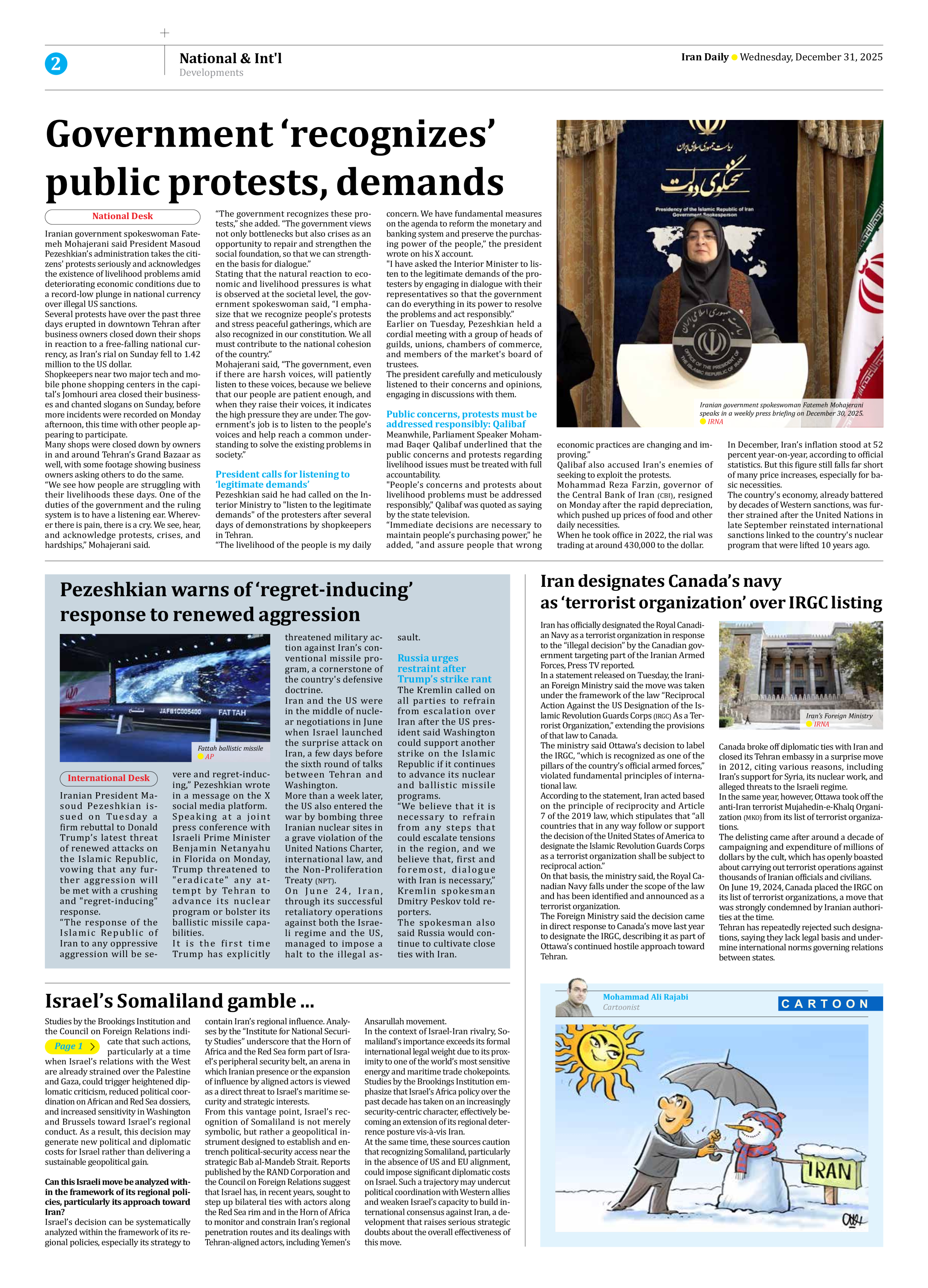
Iranian government spokeswoman Fatemeh Mohajerani said President Masoud Pezeshkian’s administration takes the citizens' protests seriously and acknowledges the existence of livelihood problems amid deteriorating economic conditions due to a record-low plunge in national currency over illegal US sanctions.
Several protests have over the past three days erupted in downtown Tehran after business owners closed down their shops in reaction to a free-falling national currency, as Iran’s rial on Sunday fell to 1.42 million to the US dollar.
Shopkeepers near two major tech and mobile phone shopping centers in the capital’s Jomhouri area closed their businesses and chanted slogans on Sunday, before more incidents were recorded on Monday afternoon, this time with other people appearing to participate.
Many shops were closed down by owners in and around Tehran’s Grand Bazaar as well, with some footage showing business owners asking others to do the same.
“We see how people are struggling with their livelihoods these days. One of the duties of the government and the ruling system is to have a listening ear. Wherever there is pain, there is a cry. We see, hear, and acknowledge protests, crises, and hardships,” Mohajerani said.
“The government recognizes these protests,” she added. “The government views not only bottlenecks but also crises as an opportunity to repair and strengthen the social foundation, so that we can strengthen the basis for dialogue.”
Stating that the natural reaction to economic and livelihood pressures is what is observed at the societal level, the government spokeswoman said, “I emphasize that we recognize people's protests and stress peaceful gatherings, which are also recognized in our constitution. We all must contribute to the national cohesion of the country.”
Mohajerani said, “The government, even if there are harsh voices, will patiently listen to these voices, because we believe that our people are patient enough, and when they raise their voices, it indicates the high pressure they are under. The government's job is to listen to the people's voices and help reach a common understanding to solve the existing problems in society.”
President calls for listening to ‘legitimate demands’
Pezeshkian said he had called on the Interior Ministry to "listen to the legitimate demands" of the protesters after several days of demonstrations by shopkeepers in Tehran.
“The livelihood of the people is my daily concern. We have fundamental measures on the agenda to reform the monetary and banking system and preserve the purchasing power of the people,” the president wrote on his X account.
"I have asked the Interior Minister to listen to the legitimate demands of the protesters by engaging in dialogue with their representatives so that the government can do everything in its power to resolve the problems and act responsibly.”
Earlier on Tuesday, Pezeshkian held a cordial meeting with a group of heads of guilds, unions, chambers of commerce, and members of the market's board of trustees.
The president carefully and meticulously listened to their concerns and opinions, engaging in discussions with them.
Public concerns, protests must be addressed responsibly: Qalibaf
Meanwhile, Parliament Speaker Mohammad Baqer Qalibaf underlined that the public concerns and protests regarding livelihood issues must be treated with full accountability.
"People’s concerns and protests about livelihood problems must be addressed responsibly," Qalibaf was quoted as saying by the state television.
“Immediate decisions are necessary to maintain people’s purchasing power," he added, "and assure people that wrong economic practices are changing and improving.”
Qalibaf also accused Iran's enemies of seeking to exploit the protests.
Mohammad Reza Farzin, governor of the Central Bank of Iran (CBI), resigned on Monday after the rapid depreciation, which pushed up prices of food and other daily necessities.
When he took office in 2022, the rial was trading at around 430,000 to the dollar.
In December, Iran’s inflation stood at 52 percent year-on-year, according to official statistics. But this figure still falls far short of many price increases, especially for basic necessities.
The country's economy, already battered by decades of Western sanctions, was further strained after the United Nations in late September reinstated international sanctions linked to the country's nuclear program that were lifted 10 years ago.