





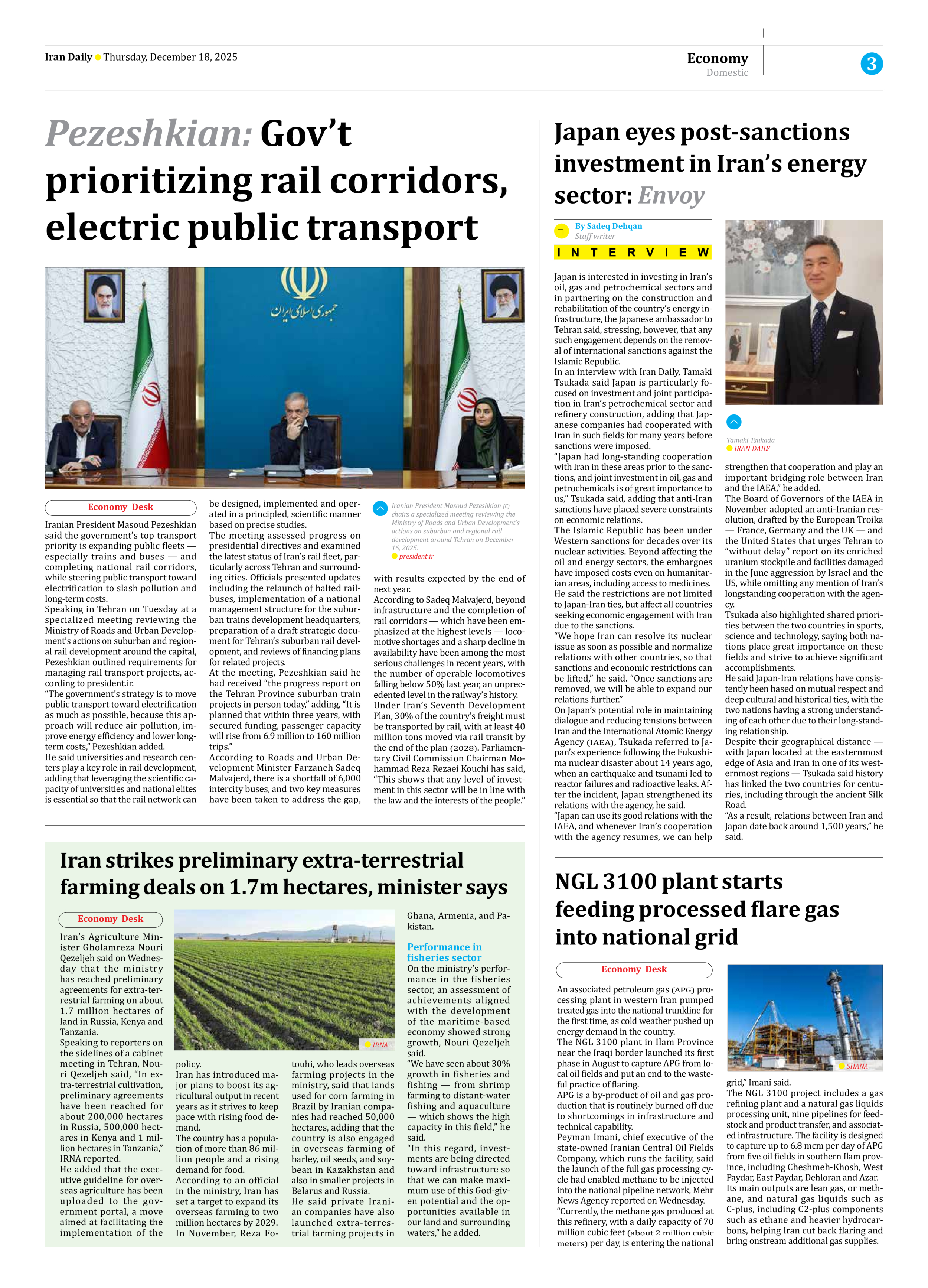


NGL 3100 plant starts feeding processed flare gas into national grid
An associated petroleum gas (APG) processing plant in western Iran pumped treated gas into the national trunkline for the first time, as cold weather pushed up energy demand in the country.
The NGL 3100 plant in Ilam Province near the Iraqi border launched its first phase in August to capture APG from local oil fields and put an end to the wasteful practice of flaring.
APG is a by-product of oil and gas production that is routinely burned off due to shortcomings in infrastructure and technical capability.
Peyman Imani, chief executive of the state-owned Iranian Central Oil Fields Company, which runs the facility, said the launch of the full gas processing cycle had enabled methane to be injected into the national pipeline network, Mehr News Agency reported on Wednesday.
“Currently, the methane gas produced at this refinery, with a daily capacity of 70 million cubic feet (about 2 million cubic meters) per day, is entering the national grid,” Imani said.
The NGL 3100 project includes a gas refining plant and a natural gas liquids processing unit, nine pipelines for feedstock and product transfer, and associated infrastructure. The facility is designed to capture up to 6.8 mcm per day of APG from five oil fields in southern Ilam province, including Cheshmeh-Khosh, West Paydar, East Paydar, Dehloran and Azar.
Its main outputs are lean gas, or methane, and natural gas liquids such as C-plus, including C2-plus components such as ethane and heavier hydrocarbons, helping Iran cut back flaring and bring onstream additional gas supplies.