





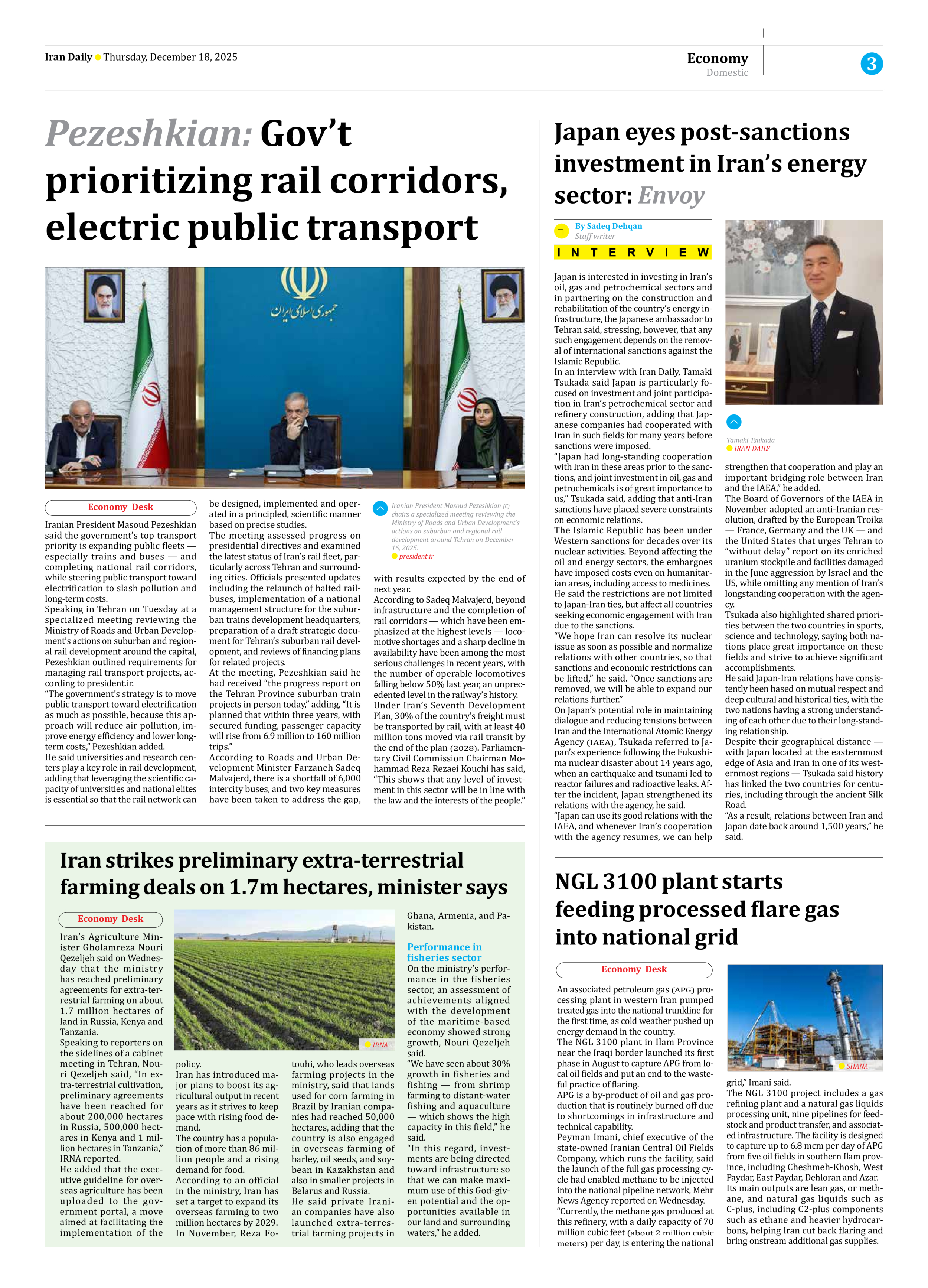


Pezeshkian: Gov’t prioritizing rail corridors, electric public transport
Iranian President Masoud Pezeshkian said the government’s top transport priority is expanding public fleets — especially trains and buses — and completing national rail corridors, while steering public transport toward electrification to slash pollution and long-term costs.
Speaking in Tehran on Tuesday at a specialized meeting reviewing the Ministry of Roads and Urban Development’s actions on suburban and regional rail development around the capital, Pezeshkian outlined requirements for managing rail transport projects, according to president.ir.
“The government’s strategy is to move public transport toward electrification as much as possible, because this approach will reduce air pollution, improve energy efficiency and lower long-term costs,” Pezeshkian added.
He said universities and research centers play a key role in rail development, adding that leveraging the scientific capacity of universities and national elites is essential so that the rail network can be designed, implemented and operated in a principled, scientific manner based on precise studies.
The meeting assessed progress on presidential directives and examined the latest status of Iran’s rail fleet, particularly across Tehran and surrounding cities. Officials presented updates including the relaunch of halted railbuses, implementation of a national management structure for the suburban trains development headquarters, preparation of a draft strategic document for Tehran’s suburban rail development, and reviews of financing plans for related projects.
At the meeting, Pezeshkian said he had received “the progress report on the Tehran Province suburban train projects in person today,” adding, “It is planned that within three years, with secured funding, passenger capacity will rise from 6.9 million to 160 million trips.”
According to Roads and Urban Development Minister Farzaneh Sadeq Malvajerd, there is a shortfall of 6,000 intercity buses, and two key measures have been taken to address the gap, with results expected by the end of next year.
According to Sadeq Malvajerd, beyond infrastructure and the completion of rail corridors — which have been emphasized at the highest levels — locomotive shortages and a sharp decline in availability have been among the most serious challenges in recent years, with the number of operable locomotives falling below 50% last year, an unprecedented level in the railway’s history.
Under Iran’s Seventh Development Plan, 30% of the country’s freight must be transported by rail, with at least 40 million tons moved via rail transit by the end of the plan (2028). Parliamentary Civil Commission Chairman Mohammad Reza Rezaei Kouchi has said, “This shows that any level of investment in this sector will be in line with the law and the interests of the people.”