







Jahanian Mansion of Esfahak registered on National Heritage List
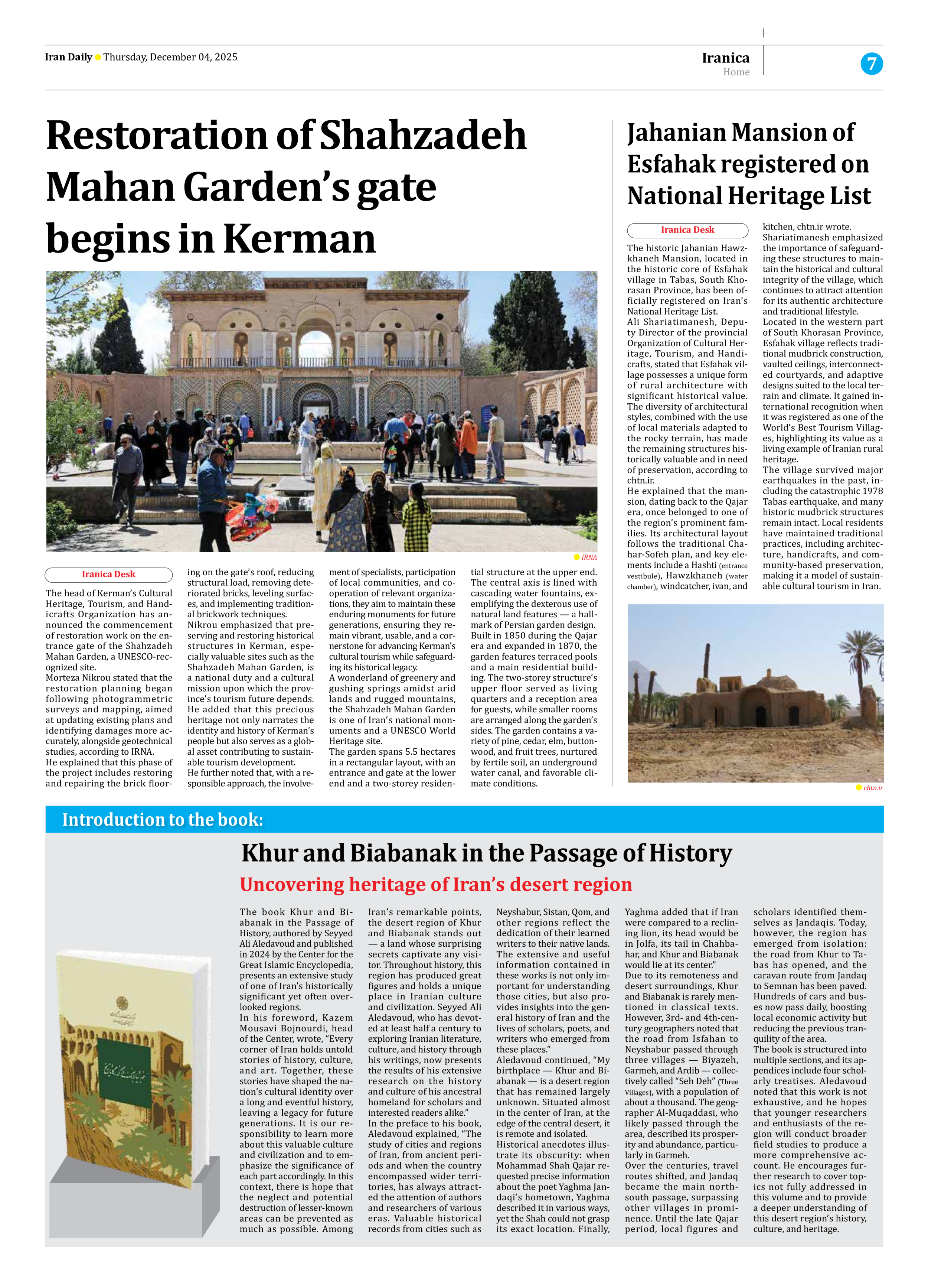
The historic Jahanian Hawzkhaneh Mansion, located in the historic core of Esfahak village in Tabas, South Khorasan Province, has been officially registered on Iran’s National Heritage List.
Ali Shariatimanesh, Deputy Director of the provincial Organization of Cultural Heritage, Tourism, and Handicrafts, stated that Esfahak village possesses a unique form of rural architecture with significant historical value. The diversity of architectural styles, combined with the use of local materials adapted to the rocky terrain, has made the remaining structures historically valuable and in need of preservation, according to chtn.ir.
He explained that the mansion, dating back to the Qajar era, once belonged to one of the region’s prominent families. Its architectural layout follows the traditional Chahar-Sofeh plan, and key elements include a Hashti (entrance vestibule), Hawzkhaneh (water chamber), windcatcher, ivan, and kitchen, chtn.ir wrote.
Shariatimanesh emphasized the importance of safeguarding these structures to maintain the historical and cultural integrity of the village, which continues to attract attention for its authentic architecture and traditional lifestyle.
Located in the western part of South Khorasan Province, Esfahak village reflects traditional mudbrick construction, vaulted ceilings, interconnected courtyards, and adaptive designs suited to the local terrain and climate. It gained international recognition when it was registered as one of the World’s Best Tourism Villages, highlighting its value as a living example of Iranian rural heritage.
The village survived major earthquakes in the past, including the catastrophic 1978 Tabas earthquake, and many historic mudbrick structures remain intact. Local residents have maintained traditional practices, including architecture, handicrafts, and community-based preservation, making it a model of sustainable cultural tourism in Iran.