







Need for Malayer to join Historical Cities Network of Iran
The head of the Malayer Department of Cultural Heritage, Tourism, and Handicrafts has emphasized the necessity of the city’s inclusion in the Historical Cities Network of Iran, noting that Malayer is among the oldest urban centers in western Iran. The city hosts an extensive collection of historical sites, traditional architectural spaces, and significant cultural monuments, many of which date back to pre-Islamic periods.
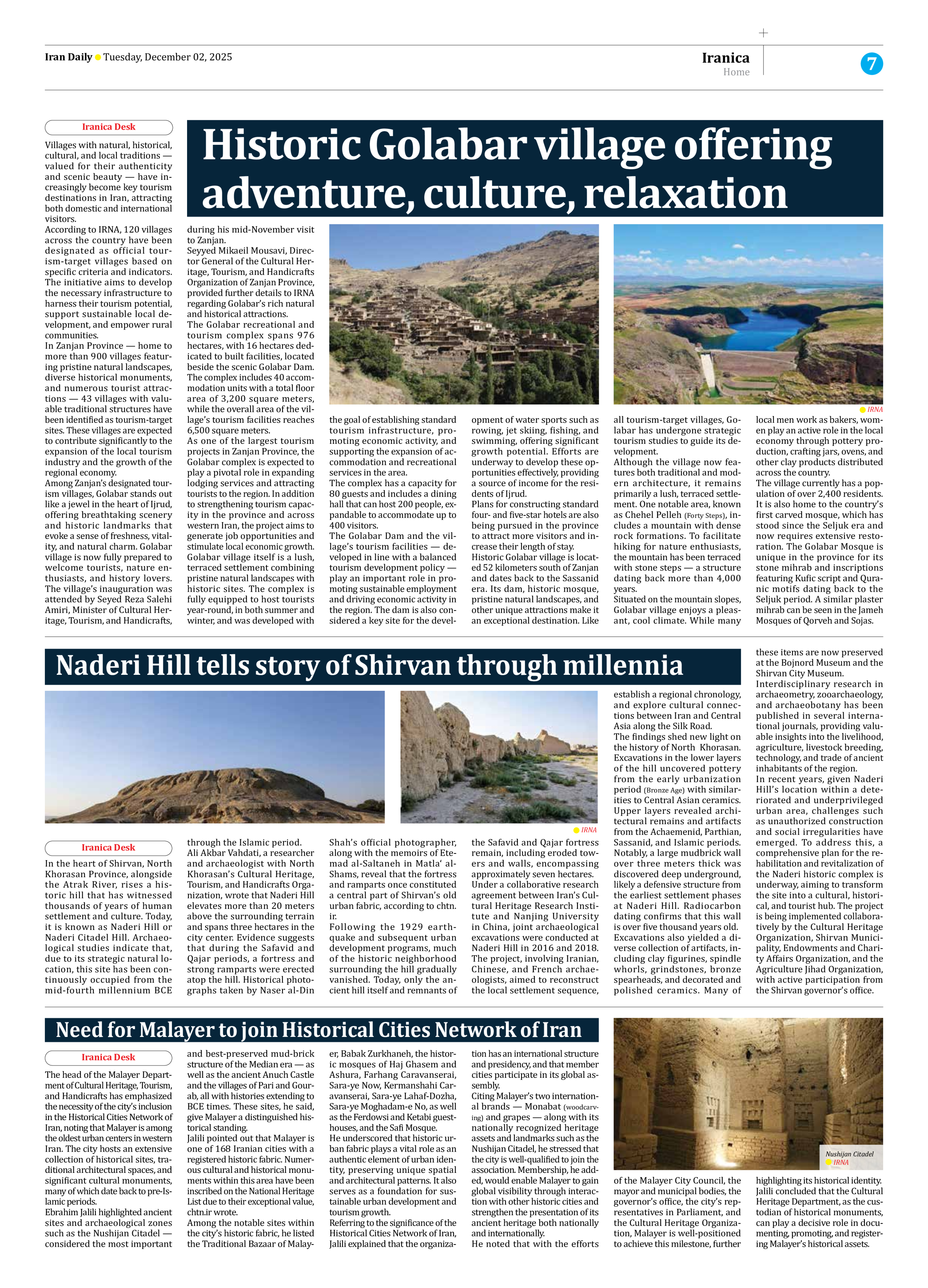
Ebrahim Jalili highlighted ancient sites and archaeological zones such as the Nushijan Citadel — considered the most important and best-preserved mud-brick structure of the Median era — as well as the ancient Anuch Castle and the villages of Pari and Gourab, all with histories extending to BCE times. These sites, he said, give Malayer a distinguished historical standing.
Jalili pointed out that Malayer is one of 168 Iranian cities with a registered historic fabric. Numerous cultural and historical monuments within this area have been inscribed on the National Heritage List due to their exceptional value, chtn.ir wrote.
Among the notable sites within the city’s historic fabric, he listed the Traditional Bazaar of Malayer, Babak Zurkhaneh, the historic mosques of Haj Ghasem and Ashura, Farhang Caravanserai, Sara-ye Now, Kermanshahi Caravanserai, Sara-ye Lahaf-Dozha, Sara-ye Moghadam-e No, as well as the Ferdowsi and Ketabi guesthouses, and the Safi Mosque.
He underscored that historic urban fabric plays a vital role as an authentic element of urban identity, preserving unique spatial and architectural patterns. It also serves as a foundation for sustainable urban development and tourism growth.
Referring to the significance of the Historical Cities Network of Iran, Jalili explained that the organization has an international structure and presidency, and that member cities participate in its global assembly.
Citing Malayer’s two international brands — Monabat (woodcarving) and grapes — along with its nationally recognized heritage assets and landmarks such as the Nushijan Citadel, he stressed that the city is well-qualified to join the association. Membership, he added, would enable Malayer to gain global visibility through interaction with other historic cities and strengthen the presentation of its ancient heritage both nationally and internationally.
He noted that with the efforts of the Malayer City Council, the mayor and municipal bodies, the governor’s office, the city’s representatives in Parliament, and the Cultural Heritage Organization, Malayer is well-positioned to achieve this milestone, further highlighting its historical identity.
Jalili concluded that the Cultural Heritage Department, as the custodian of historical monuments, can play a decisive role in documenting, promoting, and registering Malayer’s historical assets.