





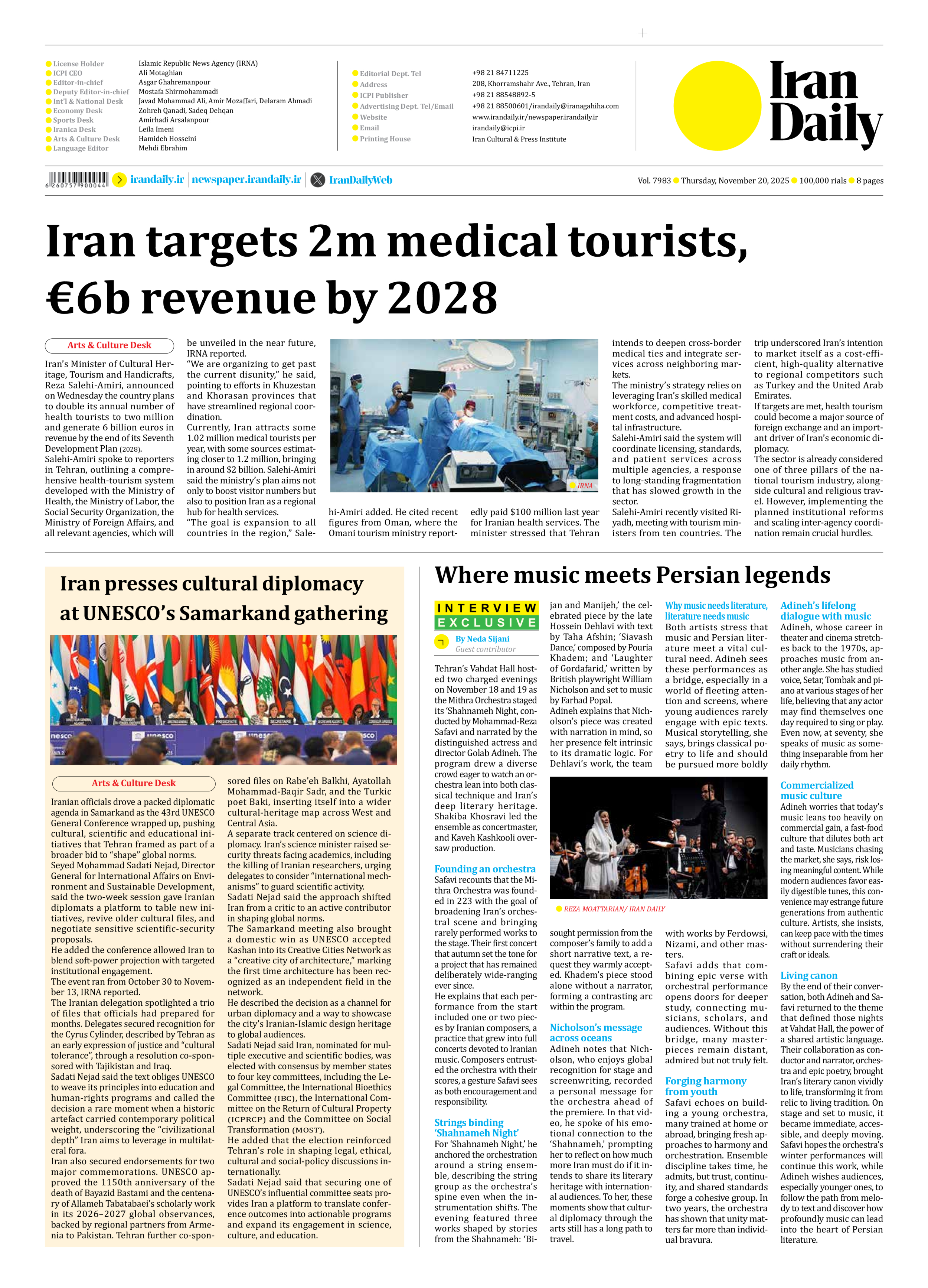


Iran presses cultural diplomacy at UNESCO’s Samarkand gathering
Iranian officials drove a packed diplomatic agenda in Samarkand as the 43rd UNESCO General Conference wrapped up, pushing cultural, scientific and educational initiatives that Tehran framed as part of a broader bid to “shape” global norms.
Seyed Mohammad Sadati Nejad, Director General for International Affairs on Environment and Sustainable Development, said the two-week session gave Iranian diplomats a platform to table new initiatives, revive older cultural files, and negotiate sensitive scientific-security proposals.
He added the conference allowed Iran to blend soft-power projection with targeted institutional engagement.
The event ran from October 30 to November 13, IRNA reported.
The Iranian delegation spotlighted a trio of files that officials had prepared for months. Delegates secured recognition for the Cyrus Cylinder, described by Tehran as an early expression of justice and “cultural tolerance”, through a resolution co-sponsored with Tajikistan and Iraq.
Sadati Nejad said the text obliges UNESCO to weave its principles into education and human-rights programs and called the decision a rare moment when a historic artefact carried contemporary political weight, underscoring the “civilizational depth” Iran aims to leverage in multilateral fora.
Iran also secured endorsements for two major commemorations. UNESCO approved the 1150th anniversary of the death of Bayazid Bastami and the centenary of Allameh Tabatabaei’s scholarly work in its 2026–2027 global observances, backed by regional partners from Armenia to Pakistan. Tehran further co-sponsored files on Rabe’eh Balkhi, Ayatollah Mohammad-Baqir Sadr, and the Turkic poet Baki, inserting itself into a wider cultural-heritage map across West and Central Asia.
A separate track centered on science diplomacy. Iran’s science minister raised security threats facing academics, including the killing of Iranian researchers, urging delegates to consider “international mechanisms” to guard scientific activity.
Sadati Nejad said the approach shifted Iran from a critic to an active contributor in shaping global norms.
The Samarkand meeting also brought a domestic win as UNESCO accepted Kashan into its Creative Cities Network as a “creative city of architecture,” marking the first time architecture has been recognized as an independent field in the network.
He described the decision as a channel for urban diplomacy and a way to showcase the city’s Iranian-Islamic design heritage to global audiences.
Sadati Nejad said Iran, nominated for multiple executive and scientific bodies, was elected with consensus by member states to four key committees, including the Legal Committee, the International Bioethics Committee (IBC), the International Committee on the Return of Cultural Property (ICPRCP) and the Committee on Social Transformation (MOST).
He added that the election reinforced Tehran’s role in shaping legal, ethical, cultural and social-policy discussions internationally.
Sadati Nejad said that securing one of UNESCO’s influential committee seats provides Iran a platform to translate conference outcomes into actionable programs and expand its engagement in science, culture, and education.