







Copy in clipboard...
‘Kneel Before the Iranians’ statue unveiled in Tehran after war with Israel
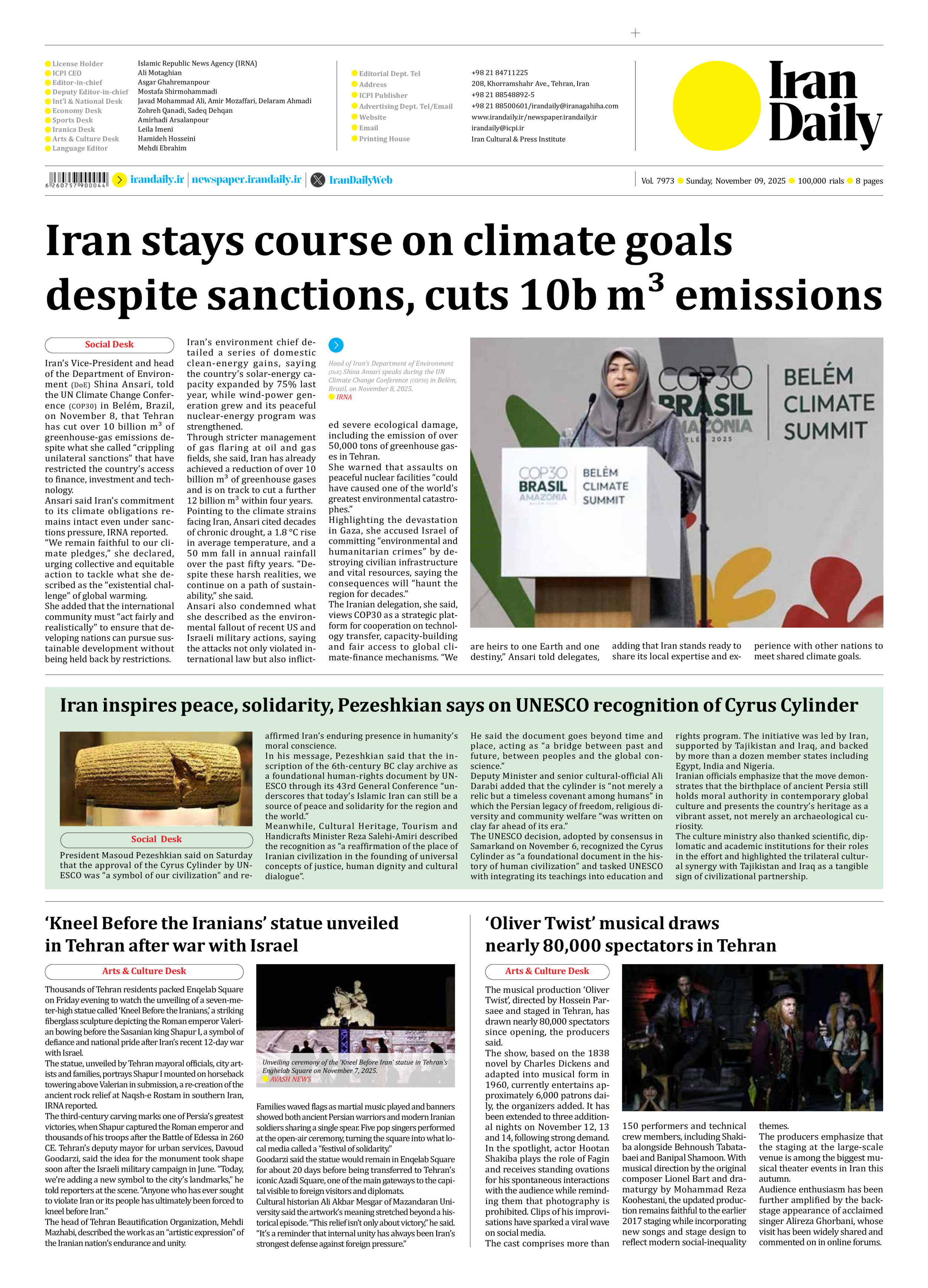
The statue, unveiled by Tehran mayoral officials, city artists and families, portrays Shapur I mounted on horseback towering above Valerian in submission, a re-creation of the ancient rock relief at Naqsh-e Rostam in southern Iran, IRNA reported.
The third-century carving marks one of Persia’s greatest victories, when Shapur captured the Roman emperor and thousands of his troops after the Battle of Edessa in 260 CE. Tehran’s deputy mayor for urban services, Davoud Goodarzi, said the idea for the monument took shape soon after the Israeli military campaign in June. “Today, we’re adding a new symbol to the city’s landmarks,” he told reporters at the scene. “Anyone who has ever sought to violate Iran or its people has ultimately been forced to kneel before Iran.”
The head of Tehran Beautification Organization, Mehdi Mazhabi, described the work as an “artistic expression” of the Iranian nation’s endurance and unity.
Families waved flags as martial music played and banners showed both ancient Persian warriors and modern Iranian soldiers sharing a single spear. Five pop singers performed at the open-air ceremony, turning the square into what local media called a “festival of solidarity.”
Goodarzi said the statue would remain in Enqelab Square for about 20 days before being transferred to Tehran’s iconic Azadi Square, one of the main gateways to the capital visible to foreign visitors and diplomats.
Cultural historian Ali Akbar Mesgar of Mazandaran University said the artwork’s meaning stretched beyond a historical episode. “This relief isn’t only about victory,” he said. “It’s a reminder that internal unity has always been Iran’s strongest defense against foreign pressure.”