







Copy in clipboard...
Iran inspires peace, solidarity, Pezeshkian says on UNESCO recognition of Cyrus Cylinder
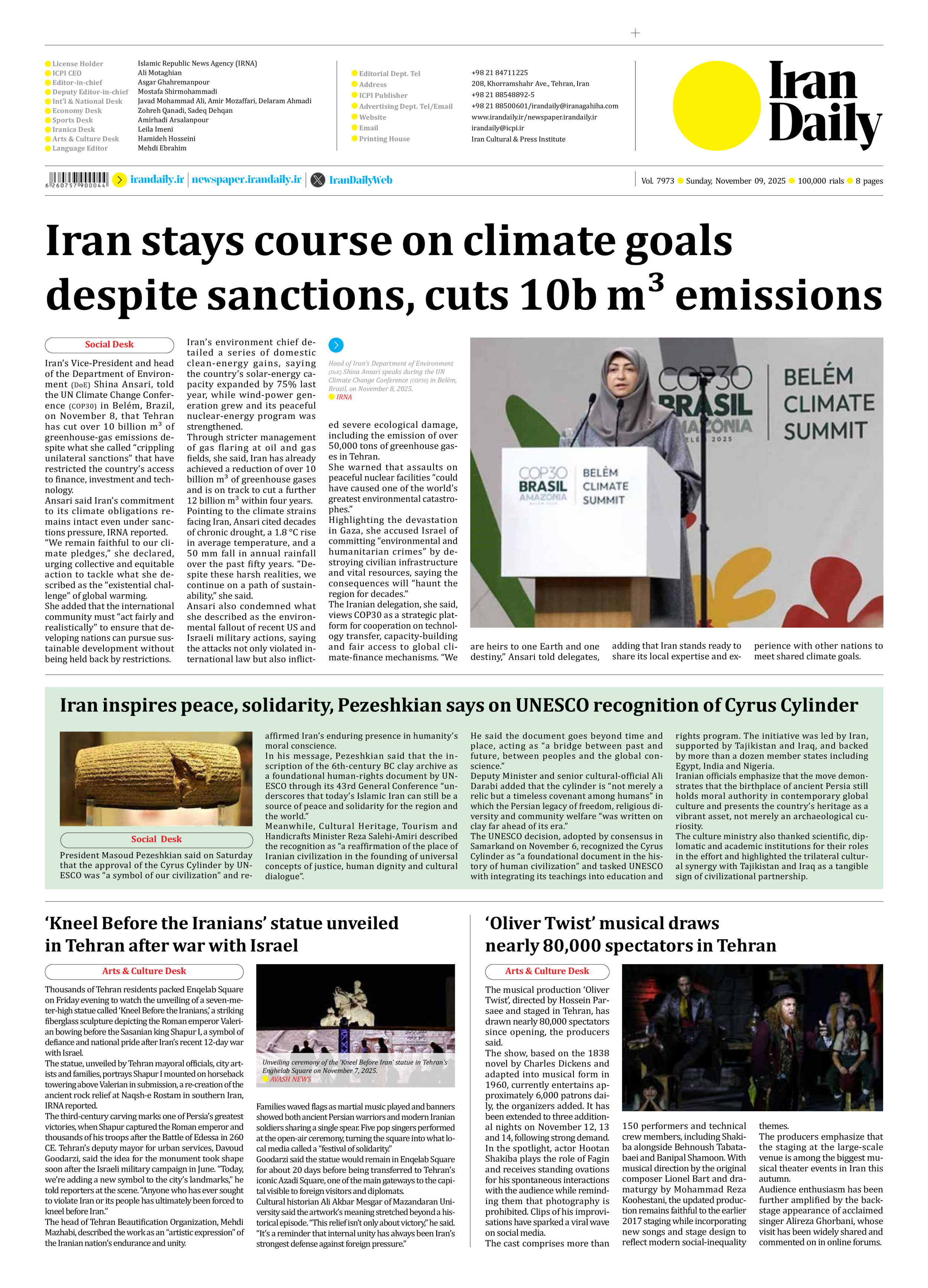
In his message, Pezeshkian said that the inscription of the 6th-century BC clay archive as a foundational human-rights document by UNESCO through its 43rd General Conference “underscores that today’s Islamic Iran can still be a source of peace and solidarity for the region and the world.”
Meanwhile, Cultural Heritage, Tourism and Handicrafts Minister Reza Salehi‑Amiri described the recognition as “a reaffirmation of the place of Iranian civilization in the founding of universal concepts of justice, human dignity and cultural dialogue”.
He said the document goes beyond time and place, acting as “a bridge between past and future, between peoples and the global conscience.”
Deputy Minister and senior cultural-official Ali Darabi added that the cylinder is “not merely a relic but a timeless covenant among humans” in which the Persian legacy of freedom, religious diversity and community welfare “was written on clay far ahead of its era.”
The UNESCO decision, adopted by consensus in Samarkand on November 6, recognized the Cyrus Cylinder as “a foundational document in the history of human civilization” and tasked UNESCO with integrating its teachings into education and rights program. The initiative was led by Iran, supported by Tajikistan and Iraq, and backed by more than a dozen member states including Egypt, India and Nigeria.
Iranian officials emphasize that the move demonstrates that the birthplace of ancient Persia still holds moral authority in contemporary global culture and presents the country’s heritage as a vibrant asset, not merely an archaeological curiosity.
The culture ministry also thanked scientific, diplomatic and academic institutions for their roles in the effort and highlighted the trilateral cultural synergy with Tajikistan and Iraq as a tangible sign of civilizational partnership.