







Coral revival as Chabahar reefs show recovery after three years
Director General of Marine and Coastal Ecosystem Protection at Iran's Department of Environment Shahram Fadakar announced that a three-year monitoring effort has confirmed the successful revival of coral reefs planted in the Gulf of Chabahar.
Over the past four days, Fadakar’s expert team, along with regional coastal offices, carried out fresh underwater surveys at the transplantation sites in Chabahar Bay, along Iran’s southeastern coast. Those reefs were first planted in late 2022. The results have exceeded expectations, IRNA reported.
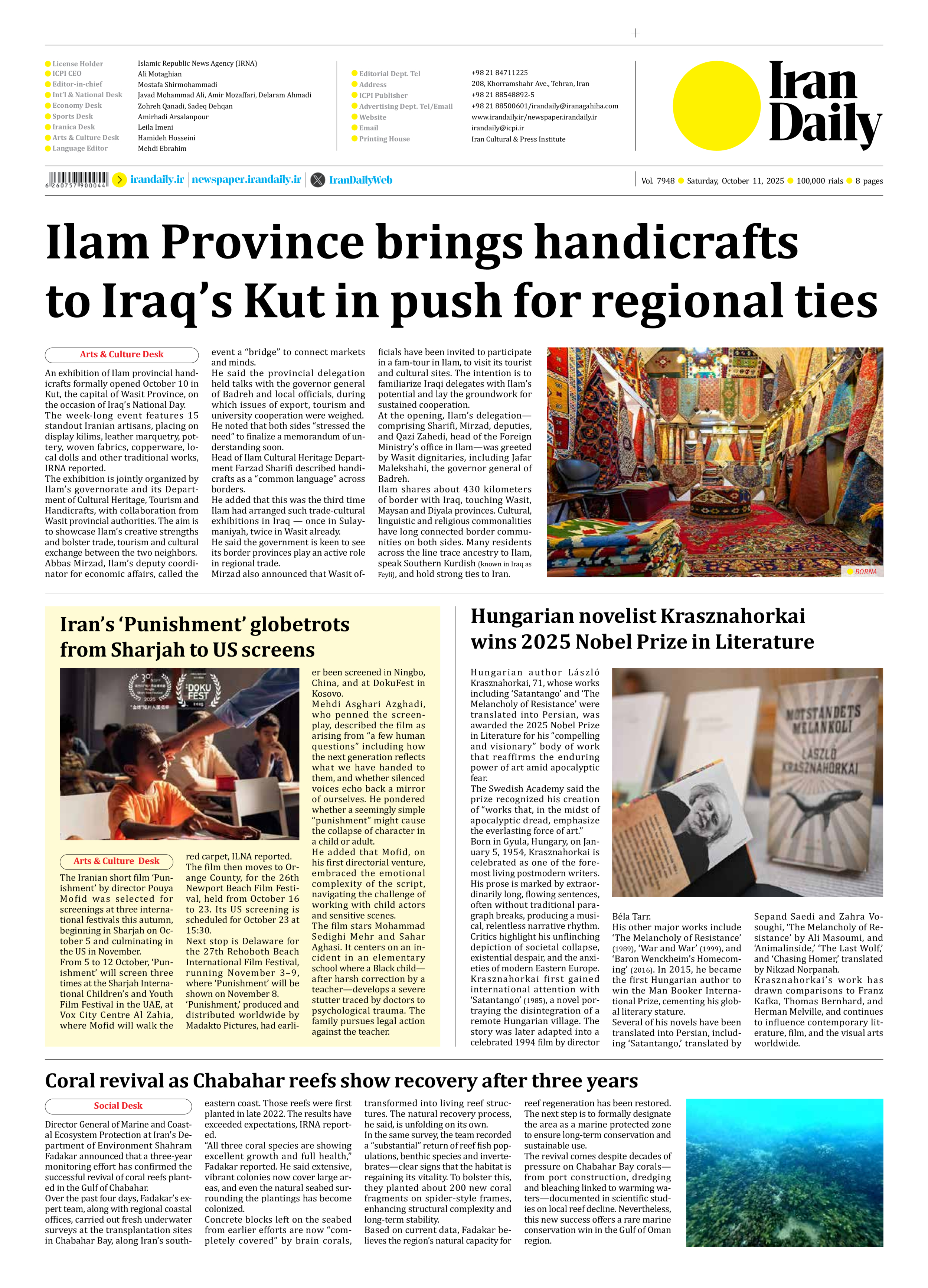
“All three coral species are showing excellent growth and full health,” Fadakar reported. He said extensive, vibrant colonies now cover large areas, and even the natural seabed surrounding the plantings has become colonized.
Concrete blocks left on the seabed from earlier efforts are now “completely covered” by brain corals, transformed into living reef structures. The natural recovery process, he said, is unfolding on its own.
In the same survey, the team recorded a “substantial” return of reef fish populations, benthic species and invertebrates—clear signs that the habitat is regaining its vitality. To bolster this, they planted about 200 new coral fragments on spider-style frames, enhancing structural complexity and long-term stability.
Based on current data, Fadakar believes the region’s natural capacity for reef regeneration has been restored. The next step is to formally designate the area as a marine protected zone to ensure long-term conservation and sustainable use.
The revival comes despite decades of pressure on Chabahar Bay corals—from port construction, dredging and bleaching linked to warming waters—documented in scientific studies on local reef decline. Nevertheless, this new success offers a rare marine conservation win in the Gulf of Oman region.