







Steel billet exports to Iraq surge as rebar imports face curbs: Chamber head
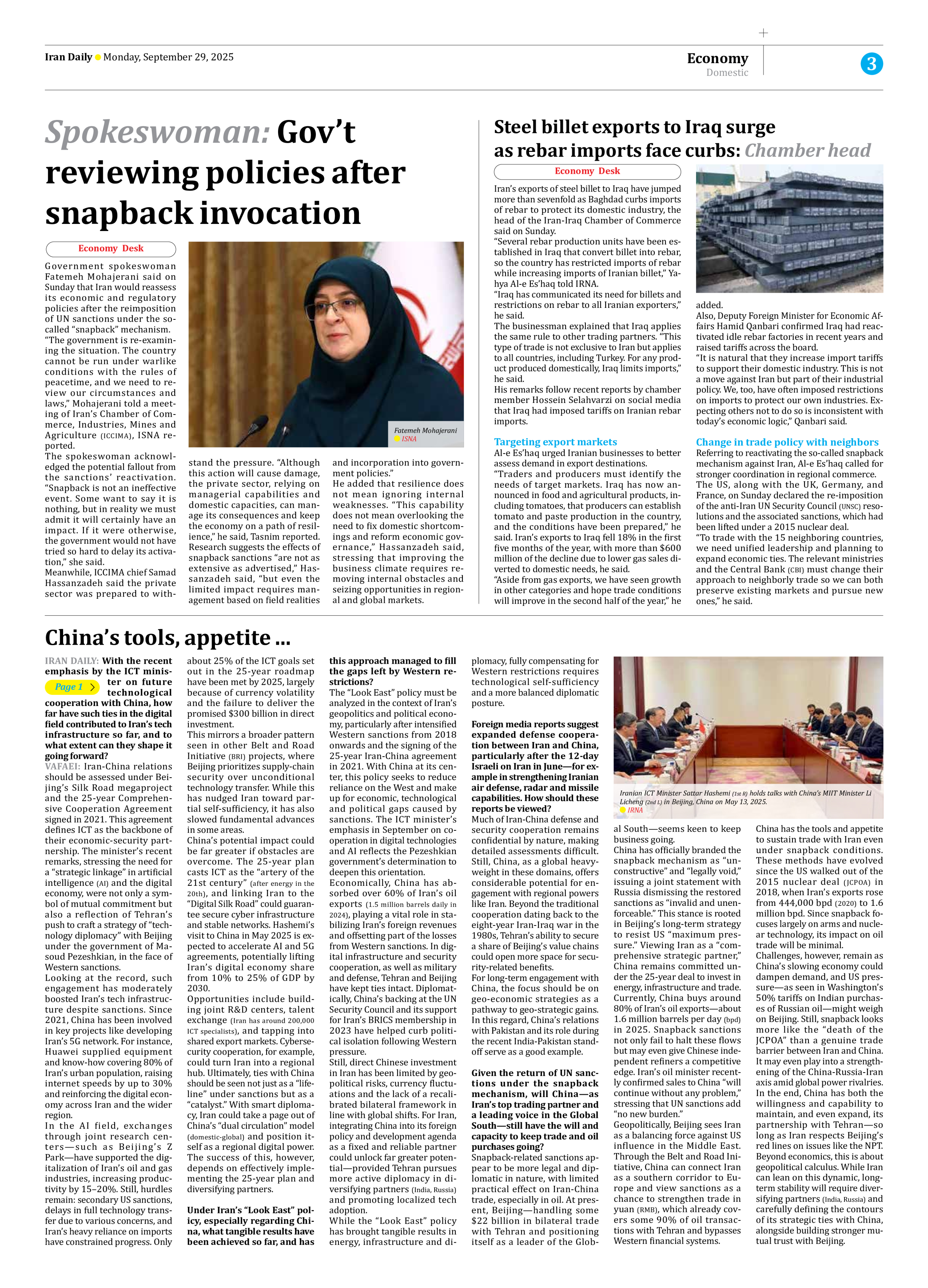
Iran’s exports of steel billet to Iraq have jumped more than sevenfold as Baghdad curbs imports of rebar to protect its domestic industry, the head of the Iran-Iraq Chamber of Commerce said on Sunday.
“Several rebar production units have been established in Iraq that convert billet into rebar, so the country has restricted imports of rebar while increasing imports of Iranian billet,” Yahya Al-e Es’haq told IRNA.
“Iraq has communicated its need for billets and restrictions on rebar to all Iranian exporters,” he said.
The businessman explained that Iraq applies the same rule to other trading partners. “This type of trade is not exclusive to Iran but applies to all countries, including Turkey. For any product produced domestically, Iraq limits imports,” he said.
His remarks follow recent reports by chamber member Hossein Selahvarzi on social media that Iraq had imposed tariffs on Iranian rebar imports.
Targeting export markets
Al-e Es’haq urged Iranian businesses to better assess demand in export destinations.
“Traders and producers must identify the needs of target markets. Iraq has now announced in food and agricultural products, including tomatoes, that producers can establish tomato and paste production in the country, and the conditions have been prepared,” he said. Iran’s exports to Iraq fell 18% in the first five months of the year, with more than $600 million of the decline due to lower gas sales diverted to domestic needs, he said.
“Aside from gas exports, we have seen growth in other categories and hope trade conditions will improve in the second half of the year,” he added.
Also, Deputy Foreign Minister for Economic Affairs Hamid Qanbari confirmed Iraq had reactivated idle rebar factories in recent years and raised tariffs across the board.
“It is natural that they increase import tariffs to support their domestic industry. This is not a move against Iran but part of their industrial policy. We, too, have often imposed restrictions on imports to protect our own industries. Expecting others not to do so is inconsistent with today’s economic logic,” Qanbari said.
Change in trade policy with neighbors
Referring to reactivating the so-called snapback mechanism against Iran, Al-e Es’haq called for stronger coordination in regional commerce.
The US, along with the UK, Germany, and France, on Sunday declared the re-imposition of the anti-Iran UN Security Council (UNSC) resolutions and the associated sanctions, which had been lifted under a 2015 nuclear deal.
“To trade with the 15 neighboring countries, we need unified leadership and planning to expand economic ties. The relevant ministries and the Central Bank (CBI) must change their approach to neighborly trade so we can both preserve existing markets and pursue new ones,” he said.