







Europe says reimposition of anti-Iran sanctions ‘not end of diplomacy’
‘Channels for dialogue with Iran remain open’
Despite the reimposition of international sanctions against Iran under pressure from the United States and European parties to the 2015 nuclear agreement, European officials stressed that channels for dialogue remained open to resolve a dispute over the Iranian nuclear issue.
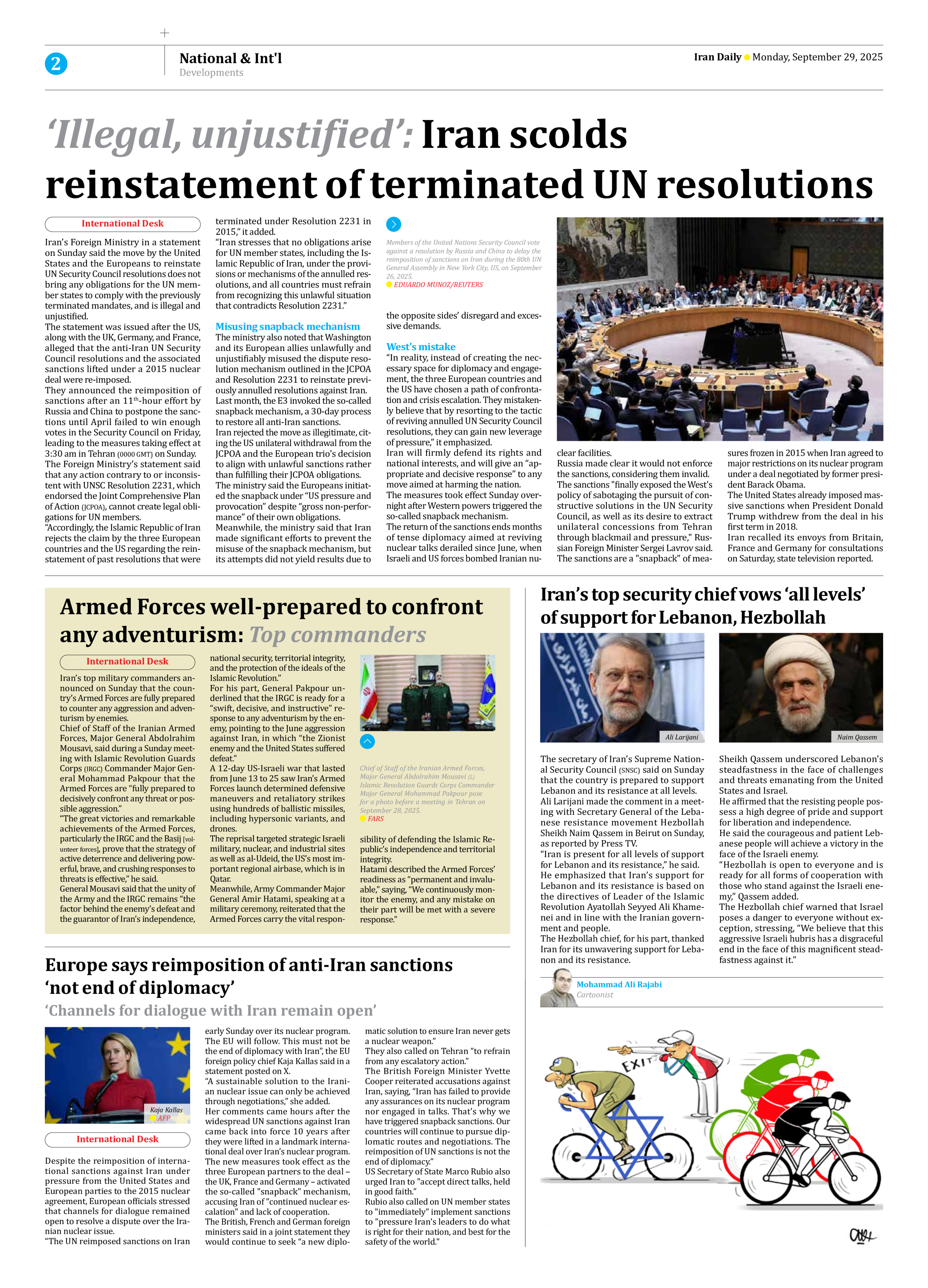
“The UN reimposed sanctions on Iran early Sunday over its nuclear program. The EU will follow. This must not be the end of diplomacy with Iran”, the EU foreign policy chief Kaja Kallas said in a statement posted on X.
“A sustainable solution to the Iranian nuclear issue can only be achieved through negotiations,” she added.
Her comments came hours after the widespread UN sanctions against Iran came back into force 10 years after they were lifted in a landmark international deal over Iran’s nuclear program.
The new measures took effect as the three European partners to the deal – the UK, France and Germany – activated the so-called "snapback" mechanism, accusing Iran of "continued nuclear escalation" and lack of cooperation.
The British, French and German foreign ministers said in a joint statement they would continue to seek “a new diplomatic solution to ensure Iran never gets a nuclear weapon.”
They also called on Tehran “to refrain from any escalatory action.”
The British Foreign Minister Yvette Cooper reiterated accusations against Iran, saying, “Iran has failed to provide any assurances on its nuclear program nor engaged in talks. That’s why we have triggered snapback sanctions. Our countries will continue to pursue diplomatic routes and negotiations. The reimposition of UN sanctions is not the end of diplomacy.”
US Secretary of State Marco Rubio also urged Iran to "accept direct talks, held in good faith.”
Rubio also called on UN member states to "immediately" implement sanctions to "pressure Iran's leaders to do what is right for their nation, and best for the safety of the world."