







Pezeshkian calls for sweeping educational overhaul to meet modern needs
Iranian President Masoud Pezeshkian on Saturday urged a fundamental redesign of the country’s schools, saying the education system must evolve into a “living organism” that blends teaching with sports, culture, and technology.
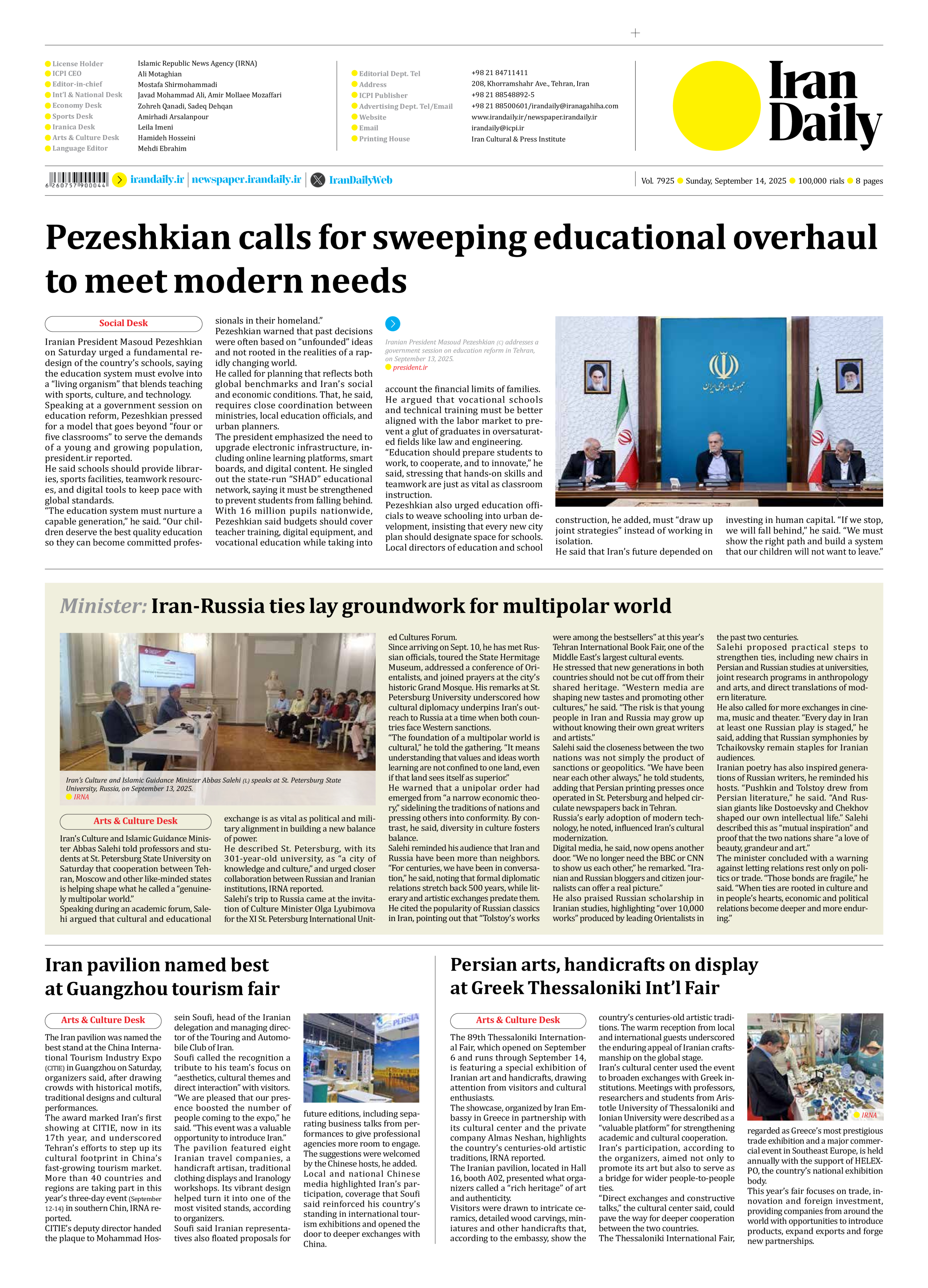
Speaking at a government session on education reform, Pezeshkian pressed for a model that goes beyond “four or five classrooms” to serve the demands of a young and growing population, president.ir reported.
He said schools should provide libraries, sports facilities, teamwork resources, and digital tools to keep pace with global standards.
“The education system must nurture a capable generation,” he said. “Our children deserve the best quality education so they can become committed professionals in their homeland.”
Pezeshkian warned that past decisions were often based on “unfounded” ideas and not rooted in the realities of a rapidly changing world.
He called for planning that reflects both global benchmarks and Iran’s social and economic conditions. That, he said, requires close coordination between ministries, local education officials, and urban planners.
The president emphasized the need to upgrade electronic infrastructure, including online learning platforms, smart boards, and digital content. He singled out the state-run “Shad” educational network, saying it must be strengthened to prevent students from falling behind.
With 16 million pupils nationwide, Pezeshkian said budgets should cover teacher training, digital equipment, and vocational education while taking into account the financial limits of families.
He argued that vocational schools and technical training must be better aligned with the labor market to prevent a glut of graduates in oversaturated fields like law and engineering.
“Education should prepare students to work, to cooperate, and to innovate,” he said, stressing that hands-on skills and teamwork are just as vital as classroom instruction.
Pezeshkian also urged education officials to weave schooling into urban development, insisting that every new city plan should designate space for schools. Local directors of education and school construction, he added, must “draw up joint strategies” instead of working in isolation.
He said that Iran’s future depended on investing in human capital. “If we stop, we will fall behind,” he said. “We must show the right path and build a system that our children will not want to leave.”