







Iran touts national unity in crisis as cultural sector gains government backing
Iran’s Minister of Cultural Heritage, Tourism and Handicrafts, Reza Salehi Amiri, highlighted national unity during recent crises and outlined efforts to strengthen the country’s cultural sectors at a high-level policy meeting on Sunday in Tehran.
Salehi Amiri said the nation passed a critical test during the recent 12-day war, crediting “the people’s dignity” and “national unity” for repelling external pressures, IRNA reported.
He stressed that the government, alongside the armed forces and citizens, secured essential supplies like food, fuel, and healthcare during this period. The minister also noted his ministry’s focus on maintaining organizational stability and pursuing reforms through “calm, logical, and strategic analysis” rather than rushed changes.
The meeting brought together four senior ministers—from communications, interior, labor and social welfare—and a top cultural adviser to the First Vice President, showing a rare alignment of government bodies supporting Iran’s cultural heritage, tourism, and handicrafts sectors. Officials described this collaboration as strengthening the “civilizational triangle” critical to Iran’s cultural governance and soft power amid mounting external challenges.
Communications Minister Sattar Hashemi underscored the role of technology in expanding Iran’s cultural and religious tourism outreach.
He referred to recent preparations for the Arbaeen pilgrimage, stating, “Technology must be our bridge to the world.” The ministry coordinated with Iraqi telecom providers to enhance connectivity for millions of pilgrims, part of a wider plan to grow religious tourism using digital infrastructure.
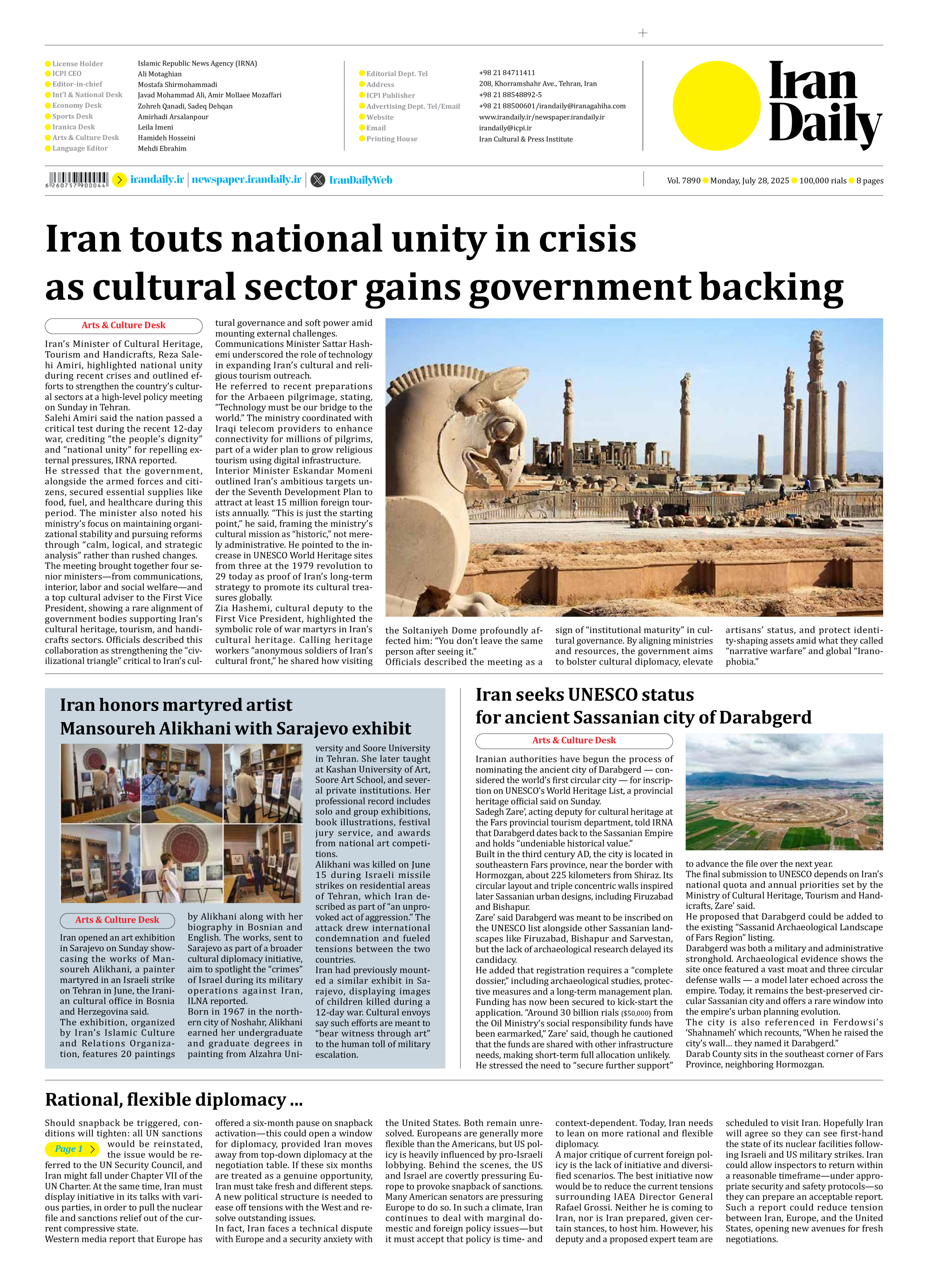
Interior Minister Eskandar Momeni outlined Iran’s ambitious targets under the Seventh Development Plan to attract at least 15 million foreign tourists annually. “This is just the starting point,” he said, framing the ministry’s cultural mission as “historic,” not merely administrative. He pointed to the increase in UNESCO World Heritage sites from three at the 1979 revolution to 29 today as proof of Iran’s long-term strategy to promote its cultural treasures globally.
Zia Hashemi, cultural deputy to the First Vice President, highlighted the symbolic role of war martyrs in Iran’s cultural heritage. Calling heritage workers “anonymous soldiers of Iran’s cultural front,” he shared how visiting the Soltaniyeh Dome profoundly affected him: “You don’t leave the same person after seeing it.”
Officials described the meeting as a sign of “institutional maturity” in cultural governance. By aligning ministries and resources, the government aims to bolster cultural diplomacy, elevate artisans’ status, and protect identity-shaping assets amid what they called “narrative warfare” and global “Iranophobia.”