







Iran ranks among top five in global heavy livestock
Iranian Minister of Agriculture Gholamreza Nouri Qezeljeh said that the country has become one of the world’s top five countries in heavy livestock breeding.
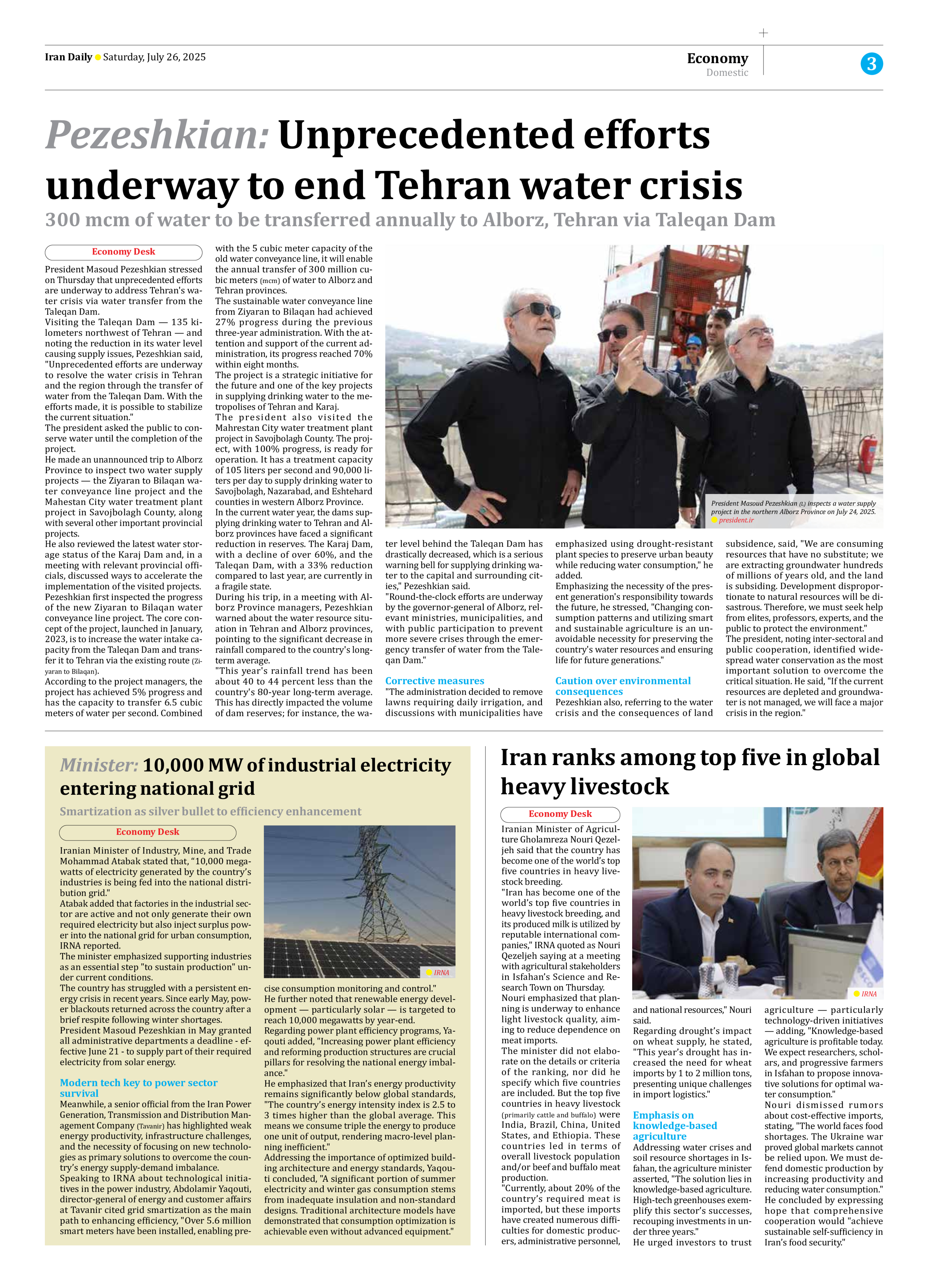
"Iran has become one of the world’s top five countries in heavy livestock breeding, and its produced milk is utilized by reputable international companies," IRNA quoted as Nouri Qezeljeh saying at a meeting with agricultural stakeholders in Isfahan’s Science and Research Town on Thursday.
Nouri emphasized that planning is underway to enhance light livestock quality, aiming to reduce dependence on meat imports.
The minister did not elaborate on the details or criteria of the ranking, nor did he specify which five countries are included. But the top five countries in heavy livestock (primarily cattle and buffalo) were India, Brazil, China, United States, and Ethiopia. These countries led in terms of overall livestock population and/or beef and buffalo meat production.
"Currently, about 20% of the country’s required meat is imported, but these imports have created numerous difficulties for domestic producers, administrative personnel, and national resources," Nouri said.
Regarding drought’s impact on wheat supply, he stated, "This year’s drought has increased the need for wheat imports by 1 to 2 million tons, presenting unique challenges in import logistics."
Emphasis on knowledge-based agriculture
Addressing water crises and soil resource shortages in Isfahan, the agriculture minister asserted, "The solution lies in knowledge-based agriculture. High-tech greenhouses exemplify this sector’s successes, recouping investments in under three years."
He urged investors to trust agriculture — particularly technology-driven initiatives — adding, "Knowledge-based agriculture is profitable today. We expect researchers, scholars, and progressive farmers in Isfahan to propose innovative solutions for optimal water consumption."
Nouri dismissed rumors about cost-effective imports, stating, "The world faces food shortages. The Ukraine war proved global markets cannot be relied upon. We must defend domestic production by increasing productivity and reducing water consumption."
He concluded by expressing hope that comprehensive cooperation would "achieve sustainable self-sufficiency in Iran’s food security."