





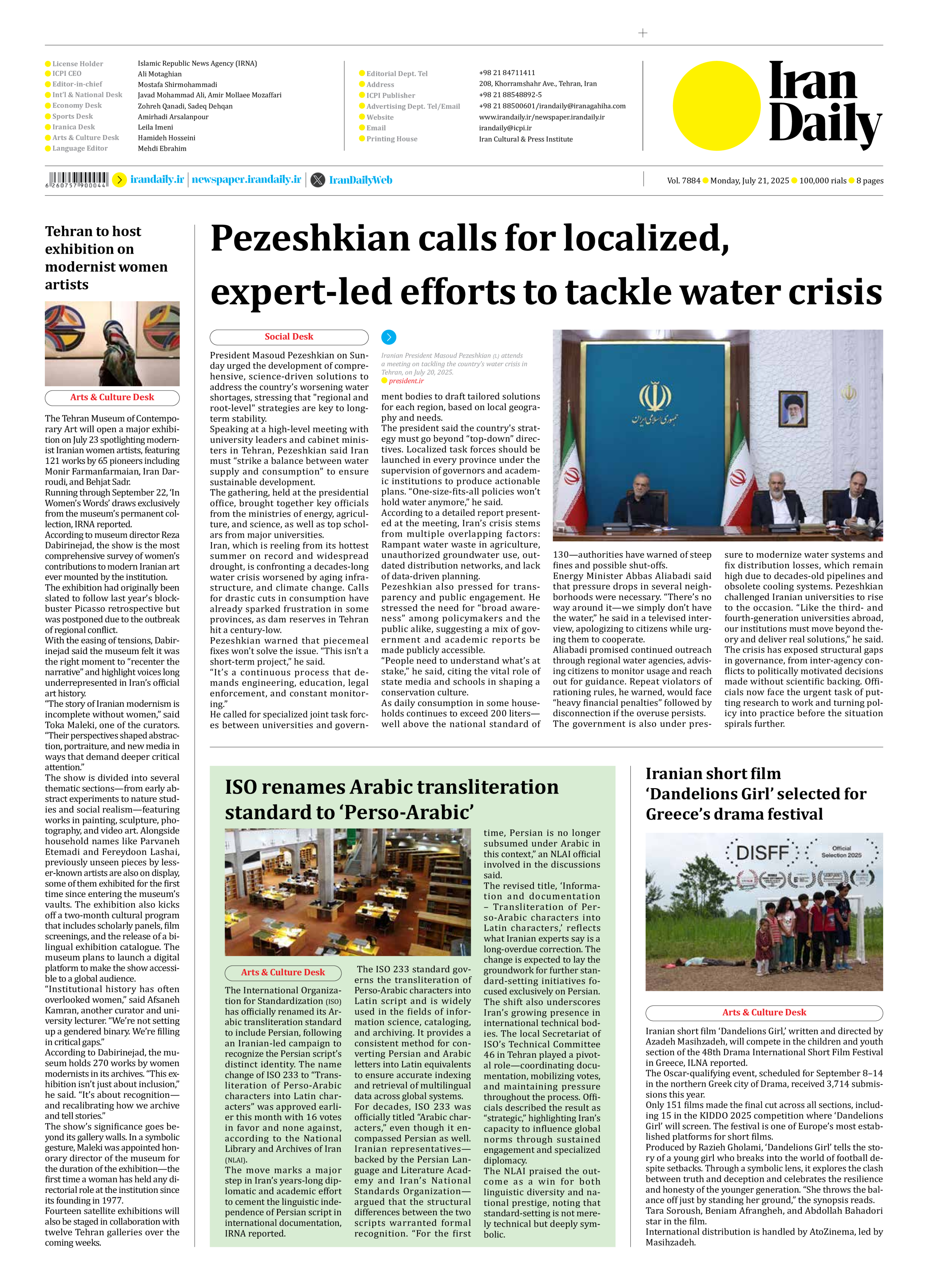


Tehran to host exhibition on modernist women artists
The Tehran Museum of Contemporary Art will open a major exhibition on July 23 spotlighting modernist Iranian women artists, featuring 121 works by 65 pioneers including Monir Farmanfarmaian, Iran Darroudi, and Behjat Sadr.
Running through September 22, ‘In Women’s Words’ draws exclusively from the museum’s permanent collection, IRNA reported.
According to museum director Reza Dabirinejad, the show is the most comprehensive survey of women’s contributions to modern Iranian art ever mounted by the institution.
The exhibition had originally been slated to follow last year’s blockbuster Picasso retrospective but was postponed due to the outbreak of regional conflict.
With the easing of tensions, Dabirinejad said the museum felt it was the right moment to “recenter the narrative” and highlight voices long underrepresented in Iran’s official art history.
“The story of Iranian modernism is incomplete without women,” said Toka Maleki, one of the curators. “Their perspectives shaped abstraction, portraiture, and new media in ways that demand deeper critical attention.”
The show is divided into several thematic sections—from early abstract experiments to nature studies and social realism—featuring works in painting, sculpture, photography, and video art. Alongside household names like Parvaneh Etemadi and Fereydoon Lashai, previously unseen pieces by lesser-known artists are also on display, some of them exhibited for the first time since entering the museum’s vaults. The exhibition also kicks off a two-month cultural program that includes scholarly panels, film screenings, and the release of a bilingual exhibition catalogue. The museum plans to launch a digital platform to make the show accessible to a global audience.
“Institutional history has often overlooked women,” said Afsaneh Kamran, another curator and university lecturer. “We’re not setting up a gendered binary. We’re filling in critical gaps.”
According to Dabirinejad, the museum holds 270 works by women modernists in its archives. “This exhibition isn’t just about inclusion,” he said. “It’s about recognition—and recalibrating how we archive and tell stories.”
The show’s significance goes beyond its gallery walls. In a symbolic gesture, Maleki was appointed honorary director of the museum for the duration of the exhibition—the first time a woman has held any directorial role at the institution since its founding in 1977.
Fourteen satellite exhibitions will also be staged in collaboration with twelve Tehran galleries over the coming weeks.