







Copy in clipboard...
Pezeshkian calls for localized, expert-led efforts to tackle water crisis
President Masoud Pezeshkian on Sunday urged the development of comprehensive, science-driven solutions to address the country’s worsening water shortages, stressing that "regional and root-level" strategies are key to long-term stability.
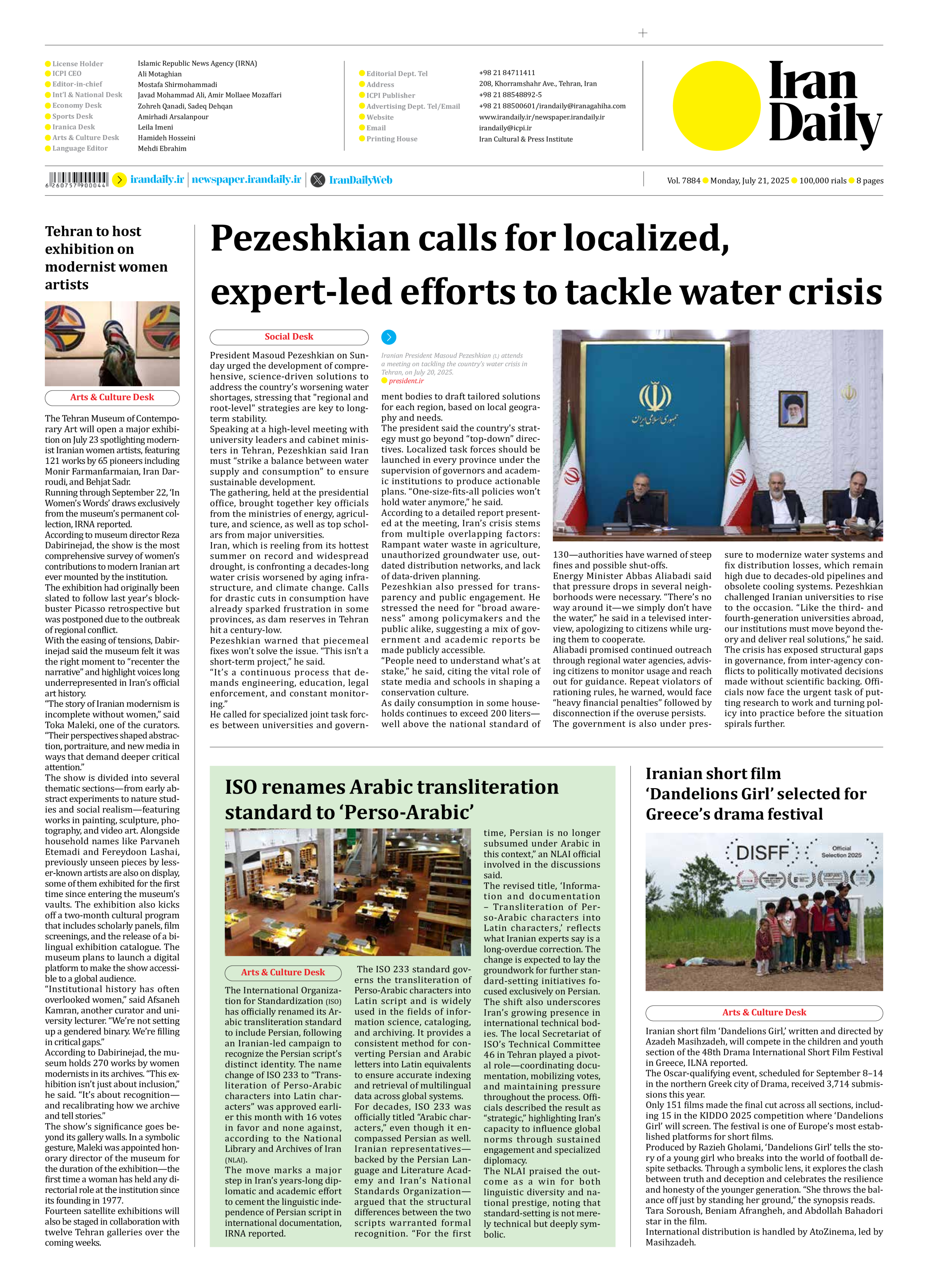
Speaking at a high-level meeting with university leaders and cabinet ministers in Tehran, Pezeshkian said Iran must “strike a balance between water supply and consumption” to ensure sustainable development.
The gathering, held at the presidential office, brought together key officials from the ministries of energy, agriculture, and science, as well as top scholars from major universities.
Iran, which is reeling from its hottest summer on record and widespread drought, is confronting a decades-long water crisis worsened by aging infrastructure, and climate change. Calls for drastic cuts in consumption have already sparked frustration in some provinces, as dam reserves in Tehran hit a century-low.
Pezeshkian warned that piecemeal fixes won’t solve the issue. “This isn’t a short-term project,” he said.
“It’s a continuous process that demands engineering, education, legal enforcement, and constant monitoring.”
He called for specialized joint task forces between universities and government bodies to draft tailored solutions for each region, based on local geography and needs.
The president said the country's strategy must go beyond “top-down” directives. Localized task forces should be launched in every province under the supervision of governors and academic institutions to produce actionable plans. “One-size-fits-all policies won’t hold water anymore,” he said.
According to a detailed report presented at the meeting, Iran’s crisis stems from multiple overlapping factors: Rampant water waste in agriculture, unauthorized groundwater use, outdated distribution networks, and lack of data-driven planning.
Pezeshkian also pressed for transparency and public engagement. He stressed the need for “broad awareness” among policymakers and the public alike, suggesting a mix of government and academic reports be made publicly accessible.
“People need to understand what’s at stake,” he said, citing the vital role of state media and schools in shaping a conservation culture.
As daily consumption in some households continues to exceed 200 liters—well above the national standard of 130—authorities have warned of steep fines and possible shut-offs.
Energy Minister Abbas Aliabadi said that pressure drops in several neighborhoods were necessary. “There’s no way around it—we simply don’t have the water,” he said in a televised interview, apologizing to citizens while urging them to cooperate.
Aliabadi promised continued outreach through regional water agencies, advising citizens to monitor usage and reach out for guidance. Repeat violators of rationing rules, he warned, would face “heavy financial penalties” followed by disconnection if the overuse persists.
The government is also under pressure to modernize water systems and fix distribution losses, which remain high due to decades-old pipelines and obsolete cooling systems. Pezeshkian challenged Iranian universities to rise to the occasion. “Like the third- and fourth-generation universities abroad, our institutions must move beyond theory and deliver real solutions,” he said.
The crisis has exposed structural gaps in governance, from inter-agency conflicts to politically motivated decisions made without scientific backing. Officials now face the urgent task of putting research to work and turning policy into practice before the situation spirals further.