





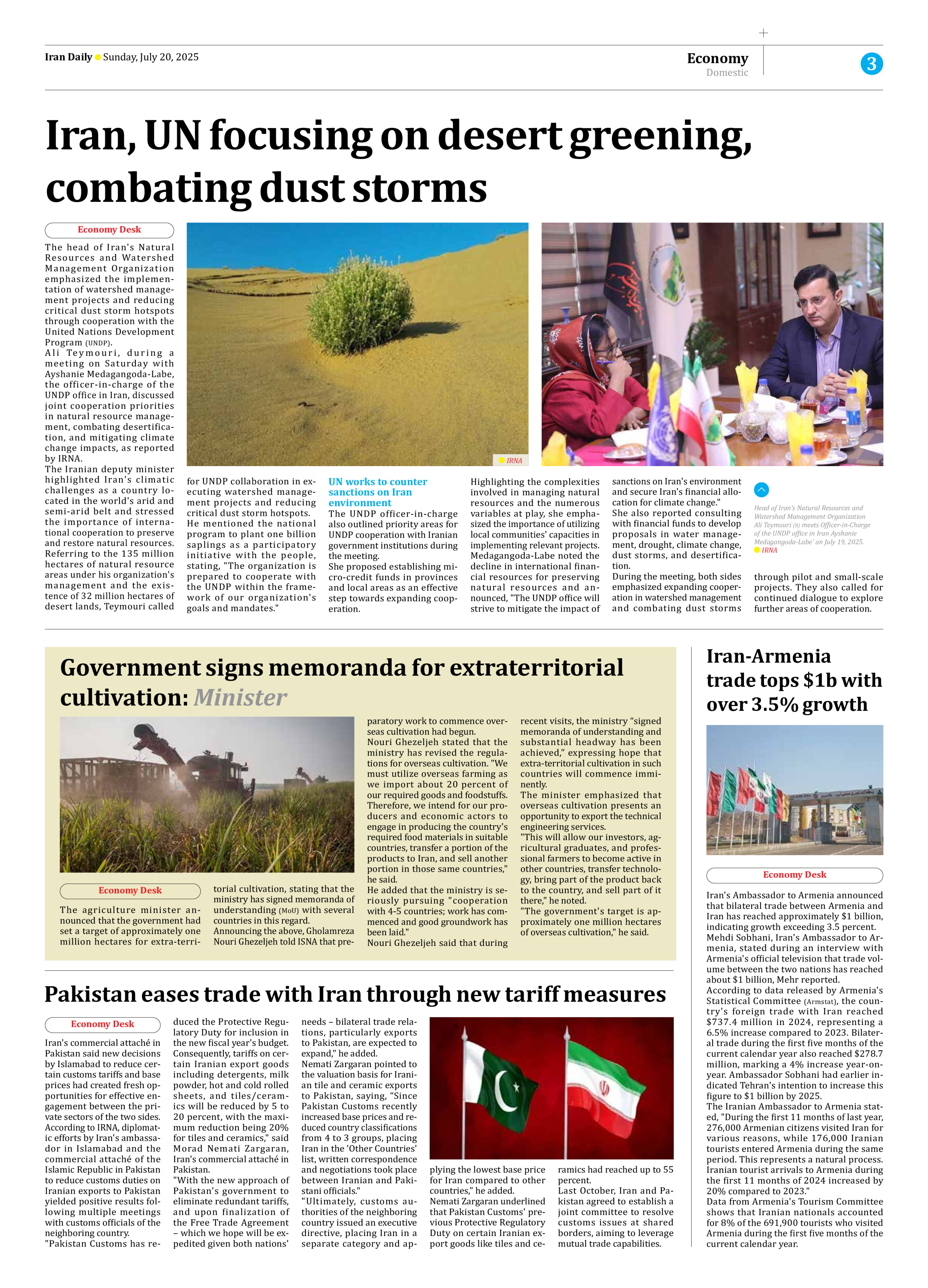


Pakistan eases trade with Iran through new tariff measures
Iran's commercial attaché in Pakistan said new decisions by Islamabad to reduce certain customs tariffs and base prices had created fresh opportunities for effective engagement between the private sectors of the two sides.
According to IRNA, diplomatic efforts by Iran's ambassador in Islamabad and the commercial attaché of the Islamic Republic in Pakistan to reduce customs duties on Iranian exports to Pakistan yielded positive results following multiple meetings with customs officials of the neighboring country.
"Pakistan Customs has reduced the Protective Regulatory Duty for inclusion in the new fiscal year's budget. Consequently, tariffs on certain Iranian export goods including detergents, milk powder, hot and cold rolled sheets, and tiles/ceramics will be reduced by 5 to 20 percent, with the maximum reduction being 20% for tiles and ceramics," said Morad Nemati Zargaran, Iran's commercial attaché in Pakistan.
"With the new approach of Pakistan's government to eliminate redundant tariffs, and upon finalization of the Free Trade Agreement – which we hope will be expedited given both nations' needs – bilateral trade relations, particularly exports to Pakistan, are expected to expand," he added.
Nemati Zargaran pointed to the valuation basis for Iranian tile and ceramic exports to Pakistan, saying, “Since Pakistan Customs recently increased base prices and reduced country classifications from 4 to 3 groups, placing Iran in the 'Other Countries' list, written correspondence and negotiations took place between Iranian and Pakistani officials."
"Ultimately, customs authorities of the neighboring country issued an executive directive, placing Iran in a separate category and applying the lowest base price for Iran compared to other countries," he added.
Nemati Zargaran underlined that Pakistan Customs' previous Protective Regulatory Duty on certain Iranian export goods like tiles and ceramics had reached up to 55 percent.
Last October, Iran and Pakistan agreed to establish a joint committee to resolve customs issues at shared borders, aiming to leverage mutual trade capabilities.