







Iran, UN focusing on desert greening, combating dust storms
The head of Iran's Natural Resources and Watershed Management Organization emphasized the implementation of watershed management projects and reducing critical dust storm hotspots through cooperation with the United Nations Development Program (UNDP).
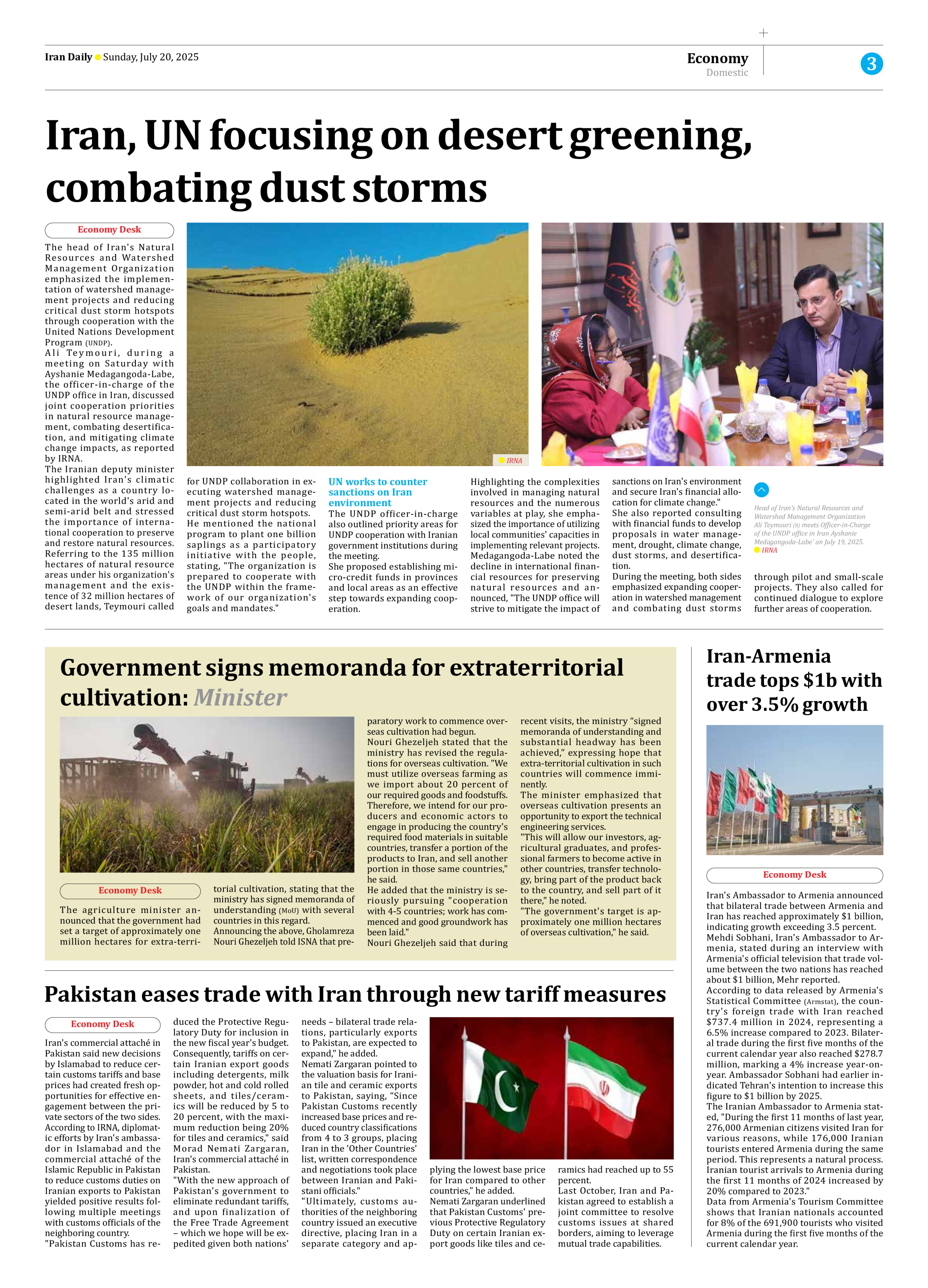
Ali Teymouri, during a meeting on Saturday with Ayshanie Medagangoda-Labe, the officer-in-charge of the UNDP office in Iran, discussed joint cooperation priorities in natural resource management, combating desertification, and mitigating climate change impacts, as reported by IRNA.
The Iranian deputy minister highlighted Iran's climatic challenges as a country located in the world's arid and semi-arid belt and stressed the importance of international cooperation to preserve and restore natural resources.
Referring to the 135 million hectares of natural resource areas under his organization's management and the existence of 32 million hectares of desert lands, Teymouri called for UNDP collaboration in executing watershed management projects and reducing critical dust storm hotspots.
He mentioned the national program to plant one billion saplings as a participatory initiative with the people, stating, "The organization is prepared to cooperate with the UNDP within the framework of our organization's goals and mandates."
UN works to counter sanctions on Iran environment
The UNDP officer-in-charge also outlined priority areas for UNDP cooperation with Iranian government institutions during the meeting.
She proposed establishing micro-credit funds in provinces and local areas as an effective step towards expanding cooperation.
Highlighting the complexities involved in managing natural resources and the numerous variables at play, she emphasized the importance of utilizing local communities' capacities in implementing relevant projects.
Medagangoda-Labe noted the decline in international financial resources for preserving natural resources and announced, "The UNDP office will strive to mitigate the impact of sanctions on Iran's environment and secure Iran's financial allocation for climate change."
She also reported consulting with financial funds to develop proposals in water management, drought, climate change, dust storms, and desertification.
During the meeting, both sides emphasized expanding cooperation in watershed management and combating dust storms through pilot and small-scale projects. They also called for continued dialogue to explore further areas of cooperation.