





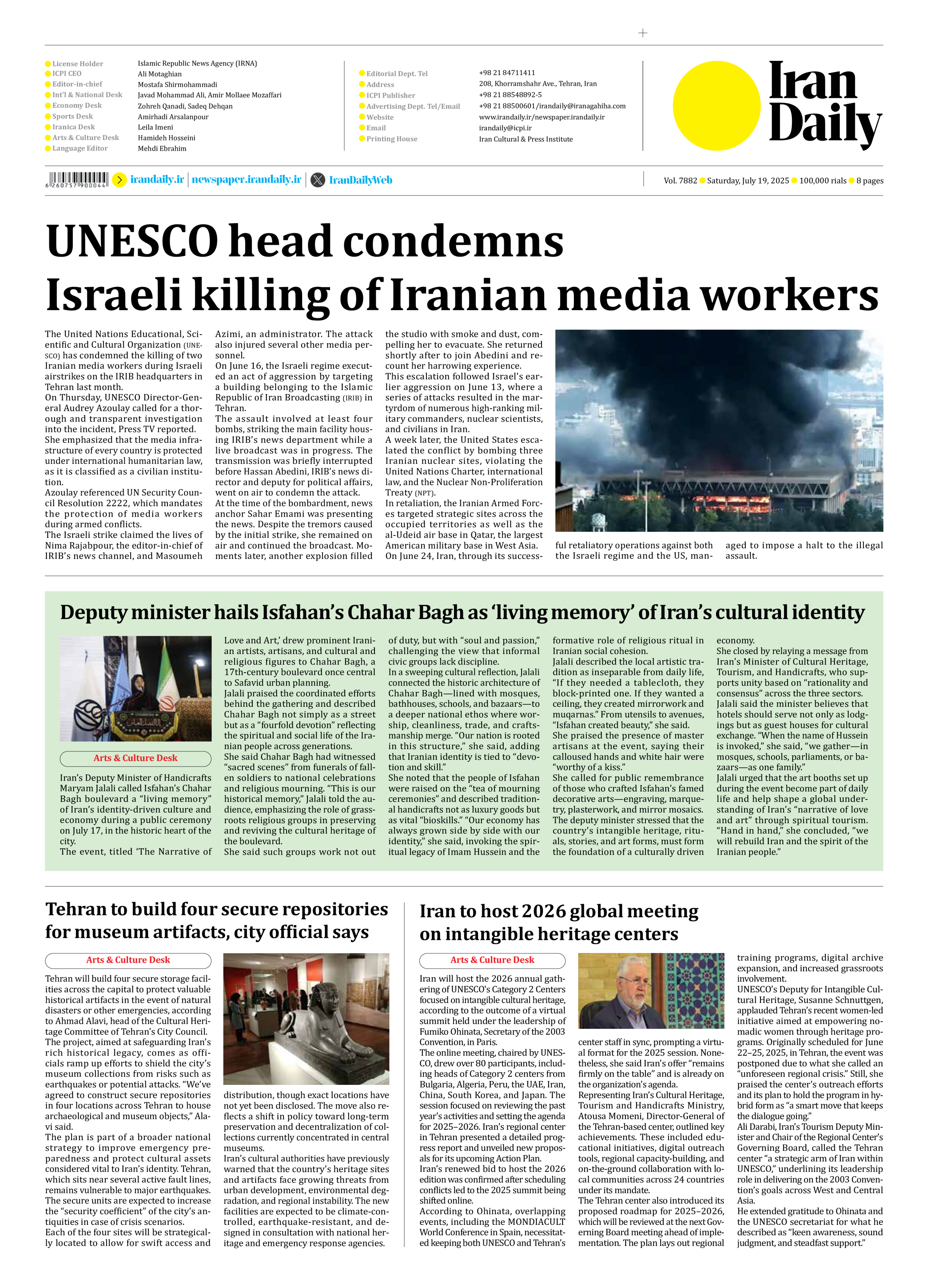


Tehran to build four secure repositories for museum artifacts, city official says
Tehran will build four secure storage facilities across the capital to protect valuable historical artifacts in the event of natural disasters or other emergencies, according to Ahmad Alavi, head of the Cultural Heritage Committee of Tehran’s City Council.
The project, aimed at safeguarding Iran’s rich historical legacy, comes as officials ramp up efforts to shield the city’s museum collections from risks such as earthquakes or potential attacks. “We’ve agreed to construct secure repositories in four locations across Tehran to house archaeological and museum objects,” Alavi said.
The plan is part of a broader national strategy to improve emergency preparedness and protect cultural assets considered vital to Iran’s identity. Tehran, which sits near several active fault lines, remains vulnerable to major earthquakes. The secure units are expected to increase the “security coefficient” of the city’s antiquities in case of crisis scenarios.
Each of the four sites will be strategically located to allow for swift access and distribution, though exact locations have not yet been disclosed. The move also reflects a shift in policy toward long-term preservation and decentralization of collections currently concentrated in central museums.
Iran’s cultural authorities have previously warned that the country’s heritage sites and artifacts face growing threats from urban development, environmental degradation, and regional instability. The new facilities are expected to be climate-controlled, earthquake-resistant, and designed in consultation with national heritage and emergency response agencies.