







Copy in clipboard...
Iran dismisses threat to national heritage sites after Israeli nuclear claims
Iranian heritage authorities on Sunday dismissed concerns over the safety of the country’s cultural sites following Israeli allegations about enriched uranium storage near the historic city of Isfahan.
Speaking to ILNA, veteran cultural heritage expert Seifollah Aminian said Iran’s museums and archaeological sites are “not under threat,” despite growing international concerns after a recent claim by the head of the International Atomic Energy Agency (IAEA).
In an interview with Fox News earlier this week, IAEA Director General Rafael Grossi alleged Iran is hiding “480 kilograms of highly enriched uranium” at a location near a historic site outside Isfahan — a central tourism hub home to centuries-old monuments from the Safavid era and earlier.
The statement raised alarm among preservationists and sparked speculation about the vulnerability of Iran’s cultural heritage in the event of renewed military war with Israel. However, Aminian, who has spent decades restoring and protecting heritage sites in Isfahan and Kashan, downplayed the threat.
“There is no danger facing Iran’s heritage sites, especially in Isfahan,” he said, adding that “protective measures are in place, and military defense systems in the region will certainly shield historic monuments.”
The concern follows the aftermath of a 12-day war between Iran and Israel, during which dozens of civilians were killed in what Tehran called “brutal” Israeli attacks.
The escalation prompted Iran’s Minister of Cultural Heritage, Tourism and Handicrafts, Reza Salehi Amiri, to call on UNESCO for “urgent support” to protect Iranian heritage from possible damage in future hostilities.
The 1954 Hague Convention prohibits direct attacks on cultural property during armed conflict. But heritage experts warn that such international agreements have limited deterrence in conflicts involving actors who do not respect global norms.
Aminian echoed this skepticism, stating that “no one can trust the Zionist regime to abide by UNESCO principles.” Still, he insisted that Iran’s military posture acts as a strong deterrent and that collaboration between the Islamic Republic and the Tourism Ministry ensures full preparedness.
“Experts have already briefed the authorities. There’s no imminent threat to national or world heritage sites under current circumstances,” Aminian said.
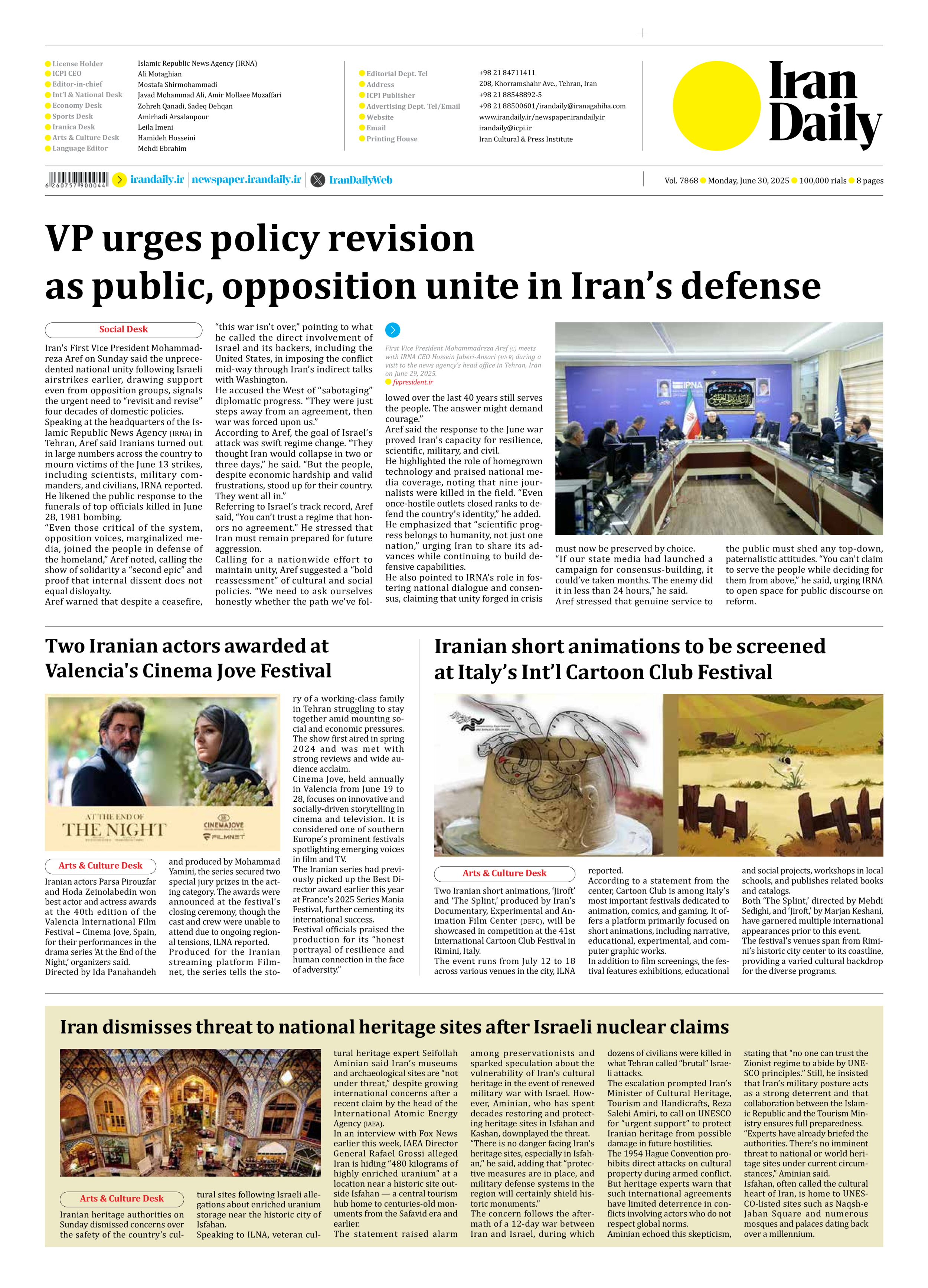
Isfahan, often called the cultural heart of Iran, is home to UNESCO-listed sites such as Naqsh-e Jahan Square and numerous mosques and palaces dating back over a millennium.