







Officials urge protection of cultural treasures on World Heritage Day
Coinciding with April 18, International Day for Monuments and Sites known also as World Heritage Day, the Directors General of Cultural Heritage, Tourism, and Handicrafts of three provinces — Khuzestan, South Khorasan, and Gilan — in separate messages commemorating this day, emphasized the importance of safeguarding cultural heritage as the “living memory of nations” and called for the cooperation of the public, specialists, and researchers to protect valuable historical sites.
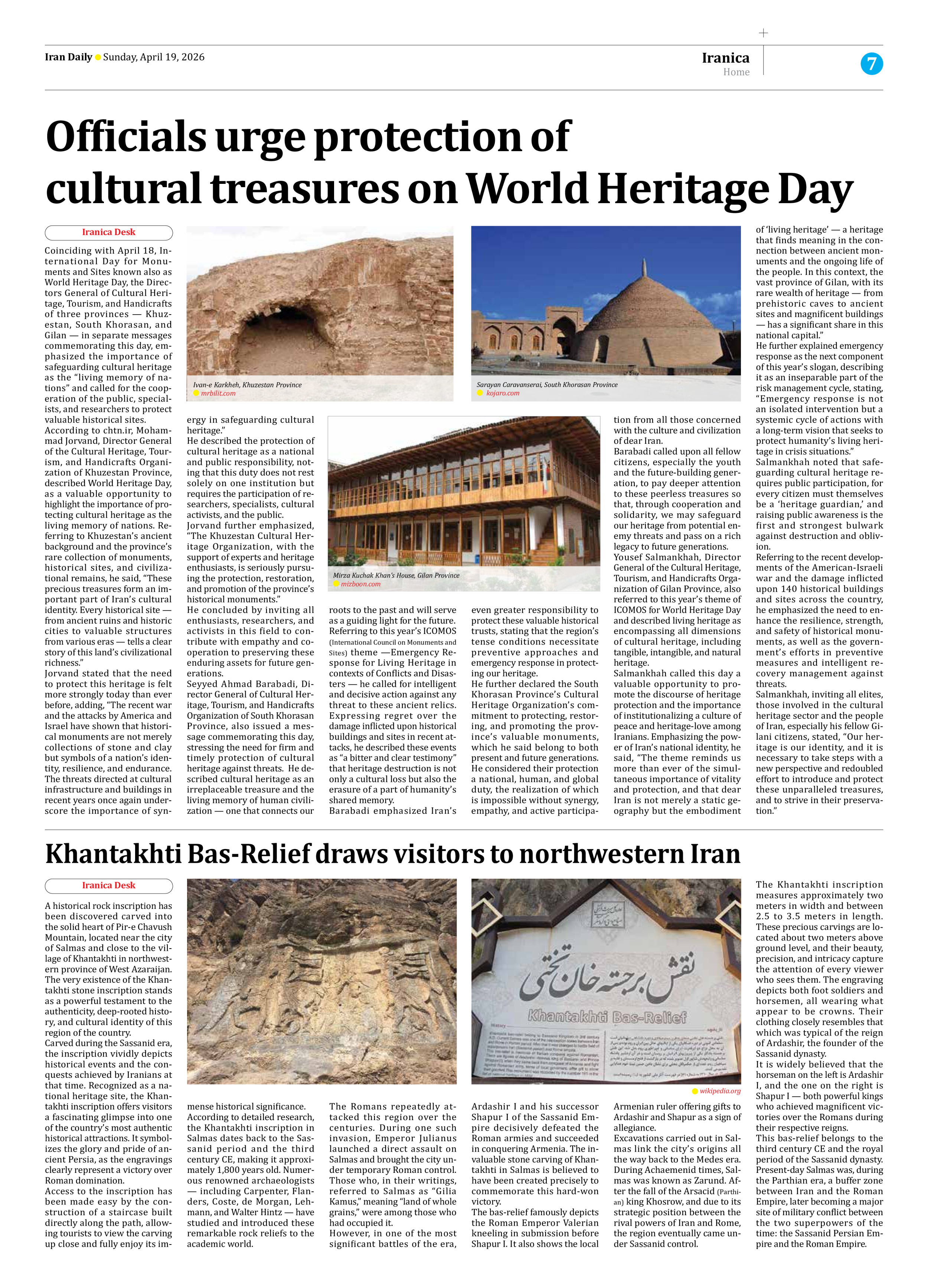
According to chtn.ir, Mohammad Jorvand, Director General of the Cultural Heritage, Tourism, and Handicrafts Organization of Khuzestan Province, described World Heritage Day, as a valuable opportunity to highlight the importance of protecting cultural heritage as the living memory of nations. Referring to Khuzestan’s ancient background and the province’s rare collection of monuments, historical sites, and civilizational remains, he said, “These precious treasures form an important part of Iran’s cultural identity. Every historical site — from ancient ruins and historic cities to valuable structures from various eras — tells a clear story of this land’s civilizational richness.”
Jorvand stated that the need to protect this heritage is felt more strongly today than ever before, adding, “The recent war and the attacks by America and Israel have shown that historical monuments are not merely collections of stone and clay but symbols of a nation’s identity, resilience, and endurance. The threats directed at cultural infrastructure and buildings in recent years once again underscore the importance of synergy in safeguarding cultural heritage.”
He described the protection of cultural heritage as a national and public responsibility, noting that this duty does not rest solely on one institution but requires the participation of researchers, specialists, cultural activists, and the public.
Jorvand further emphasized, “The Khuzestan Cultural Heritage Organization, with the support of experts and heritage enthusiasts, is seriously pursuing the protection, restoration, and promotion of the province’s historical monuments.”
He concluded by inviting all enthusiasts, researchers, and activists in this field to contribute with empathy and cooperation to preserving these enduring assets for future generations.
Seyyed Ahmad Barabadi, Director General of Cultural Heritage, Tourism, and Handicrafts Organization of South Khorasan Province, also issued a message commemorating this day, stressing the need for firm and timely protection of cultural heritage against threats. He described cultural heritage as an irreplaceable treasure and the living memory of human civilization — one that connects our roots to the past and will serve as a guiding light for the future.
Referring to this year’s ICOMOS (International Council on Monuments and Sites) theme —Emergency Response for Living Heritage in contexts of Conflicts and Disasters — he called for intelligent and decisive action against any threat to these ancient relics. Expressing regret over the damage inflicted upon historical buildings and sites in recent attacks, he described these events as “a bitter and clear testimony” that heritage destruction is not only a cultural loss but also the erasure of a part of humanity’s shared memory.
Barabadi emphasized Iran’s even greater responsibility to protect these valuable historical trusts, stating that the region’s tense conditions necessitate preventive approaches and emergency response in protecting our heritage.
He further declared the South Khorasan Province’s Cultural Heritage Organization’s commitment to protecting, restoring, and promoting the province’s valuable monuments, which he said belong to both present and future generations.
He considered their protection a national, human, and global duty, the realization of which is impossible without synergy, empathy, and active participation from all those concerned with the culture and civilization of dear Iran.
Barabadi called upon all fellow citizens, especially the youth and the future-building generation, to pay deeper attention to these peerless treasures so that, through cooperation and solidarity, we may safeguard our heritage from potential enemy threats and pass on a rich legacy to future generations.
Yousef Salmankhah, Director General of the Cultural Heritage, Tourism, and Handicrafts Organization of Gilan Province, also referred to this year’s theme of ICOMOS for World Heritage Day and described living heritage as encompassing all dimensions of cultural heritage, including tangible, intangible, and natural heritage.
Salmankhah called this day a valuable opportunity to promote the discourse of heritage protection and the importance of institutionalizing a culture of peace and heritage-love among Iranians. Emphasizing the power of Iran’s national identity, he said, “The theme reminds us more than ever of the simultaneous importance of vitality and protection, and that dear Iran is not merely a static geography but the embodiment of ‘living heritage’ — a heritage that finds meaning in the connection between ancient monuments and the ongoing life of the people. In this context, the vast province of Gilan, with its rare wealth of heritage — from prehistoric caves to ancient sites and magnificent buildings — has a significant share in this national capital.”
He further explained emergency response as the next component of this year’s slogan, describing it as an inseparable part of the risk management cycle, stating, “Emergency response is not an isolated intervention but a systemic cycle of actions with a long-term vision that seeks to protect humanity’s living heritage in crisis situations.”
Salmankhah noted that safeguarding cultural heritage requires public participation, for every citizen must themselves be a ‘heritage guardian,’ and raising public awareness is the first and strongest bulwark against destruction and oblivion.
Referring to the recent developments of the American-Israeli war and the damage inflicted upon 140 historical buildings and sites across the country, he emphasized the need to enhance the resilience, strength, and safety of historical monuments, as well as the government’s efforts in preventive measures and intelligent recovery management against threats.
Salmankhah, inviting all elites, those involved in the cultural heritage sector and the people of Iran, especially his fellow Gilani citizens, stated, “Our heritage is our identity, and it is necessary to take steps with a new perspective and redoubled effort to introduce and protect these unparalleled treasures, and to strive in their preservation.”