







140 historic sites damaged with Tehran bearing brunt of losses
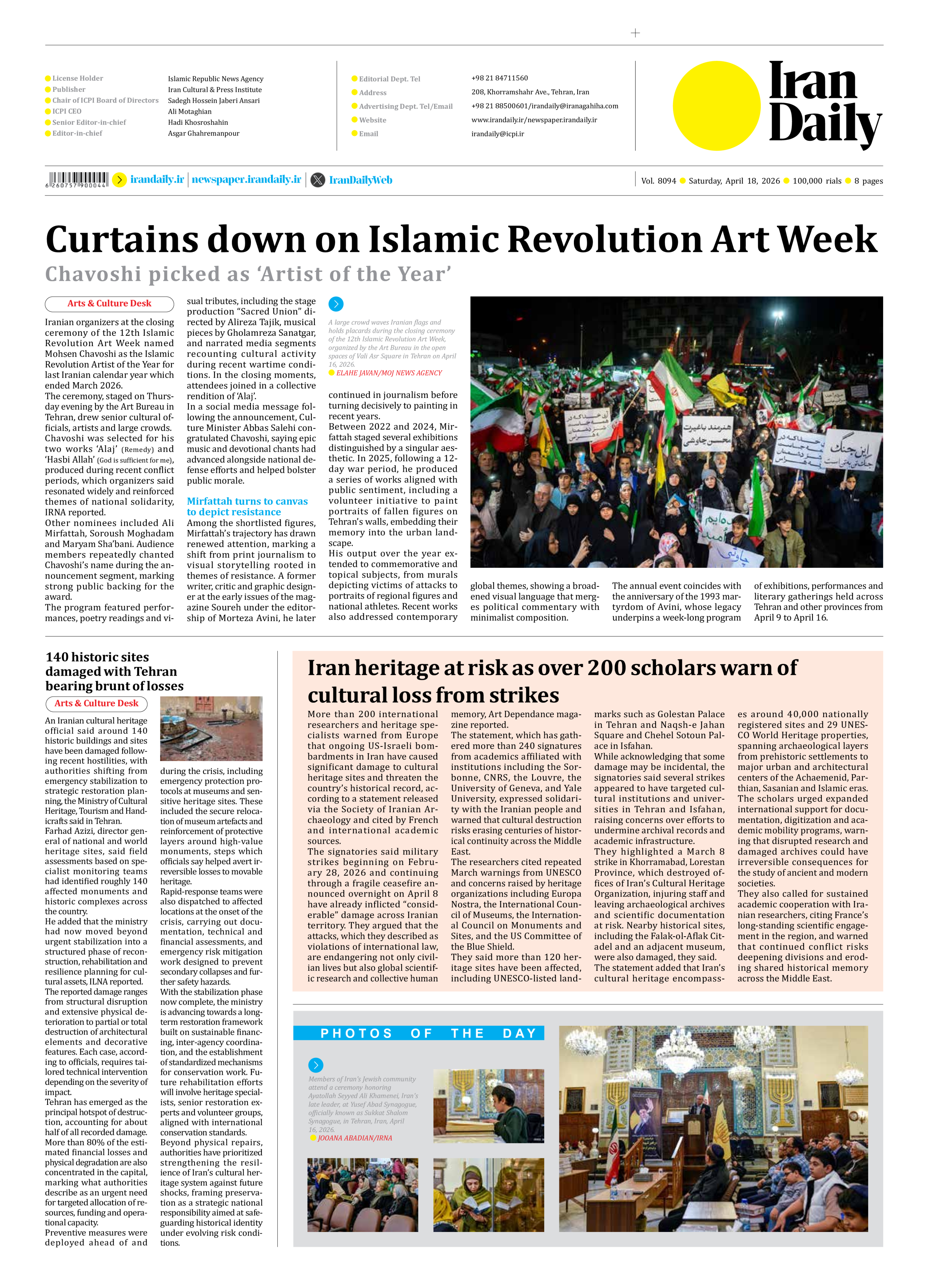
An Iranian cultural heritage official said around 140 historic buildings and sites have been damaged following recent hostilities, with authorities shifting from emergency stabilization to strategic restoration planning, the Ministry of Cultural Heritage, Tourism and Handicrafts said in Tehran.
Farhad Azizi, director general of national and world heritage sites, said field assessments based on specialist monitoring teams had identified roughly 140 affected monuments and historic complexes across the country.
He added that the ministry had now moved beyond urgent stabilization into a structured phase of reconstruction, rehabilitation and resilience planning for cultural assets, ILNA reported.
The reported damage ranges from structural disruption and extensive physical deterioration to partial or total destruction of architectural elements and decorative features. Each case, according to officials, requires tailored technical intervention depending on the severity of impact.
Tehran has emerged as the principal hotspot of destruction, accounting for about half of all recorded damage. More than 80% of the estimated financial losses and physical degradation are also concentrated in the capital, marking what authorities describe as an urgent need for targeted allocation of resources, funding and operational capacity.
Preventive measures were deployed ahead of and during the crisis, including emergency protection protocols at museums and sensitive heritage sites. These included the secure relocation of museum artefacts and reinforcement of protective layers around high-value monuments, steps which officials say helped avert irreversible losses to movable heritage.
Rapid-response teams were also dispatched to affected locations at the onset of the crisis, carrying out documentation, technical and financial assessments, and emergency risk mitigation work designed to prevent secondary collapses and further safety hazards.
With the stabilization phase now complete, the ministry is advancing towards a long-term restoration framework built on sustainable financing, inter-agency coordination, and the establishment of standardized mechanisms for conservation work. Future rehabilitation efforts will involve heritage specialists, senior restoration experts and volunteer groups, aligned with international conservation standards.
Beyond physical repairs, authorities have prioritized strengthening the resilience of Iran’s cultural heritage system against future shocks, framing preservation as a strategic national responsibility aimed at safeguarding historical identity under evolving risk conditions.