







Curtains down on Islamic Revolution Art Week
Chavoshi picked as ‘Artist of the Year’
Iranian organizers at the closing ceremony of the 12th Islamic Revolution Art Week named Mohsen Chavoshi as the Islamic Revolution Artist of the Year for last Iranian calendar year which ended March 2026.
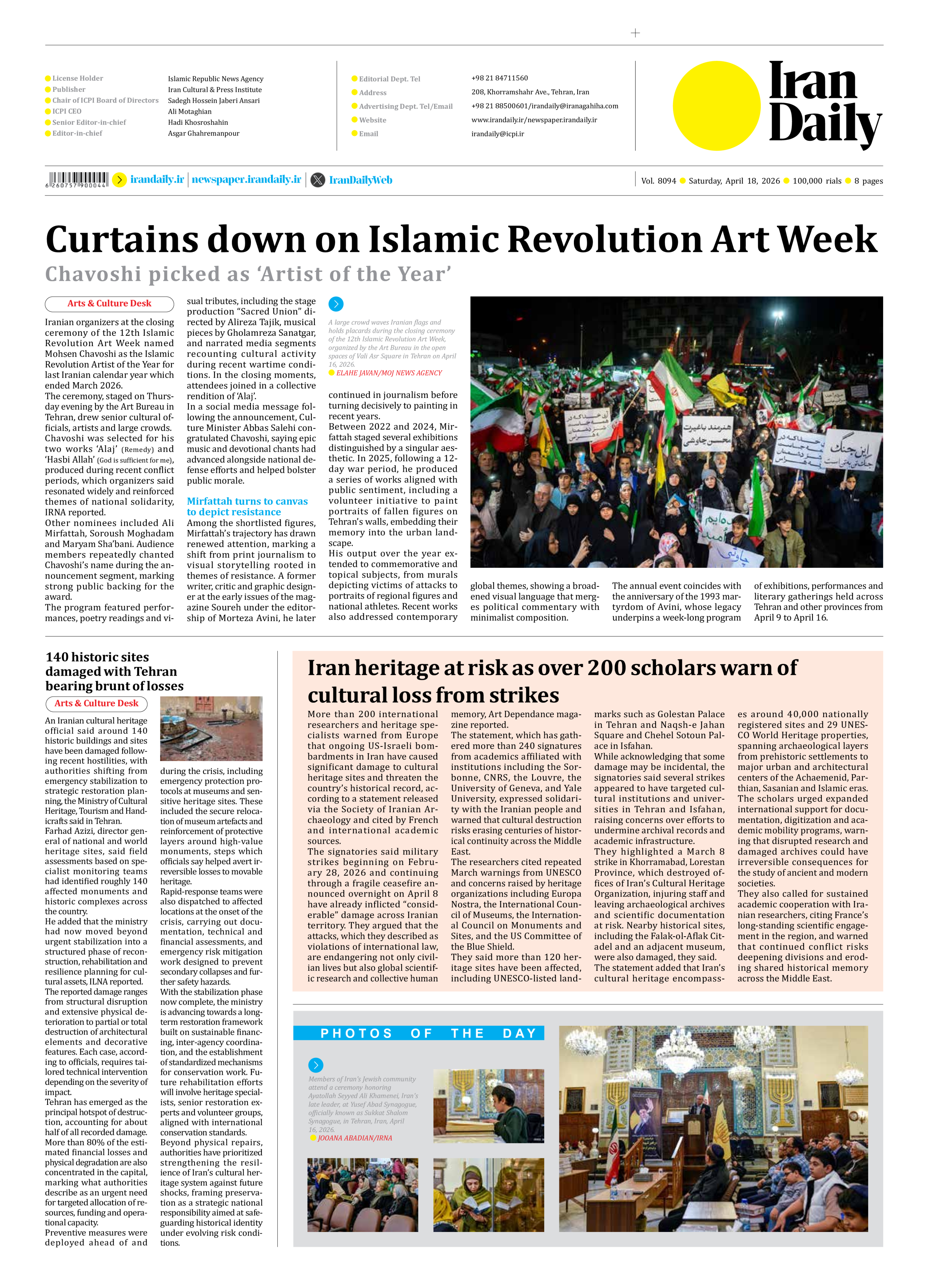
The ceremony, staged on Thursday evening by the Art Bureau in Tehran, drew senior cultural officials, artists and large crowds.
Chavoshi was selected for his two works ‘Alaj’ (Remedy) and ‘Hasbi Allah’ (God is sufficient for me), produced during recent conflict periods, which organizers said resonated widely and reinforced themes of national solidarity, IRNA reported.
Other nominees included Ali Mirfattah, Soroush Moghadam and Maryam Sha’bani. Audience members repeatedly chanted Chavoshi’s name during the announcement segment, marking strong public backing for the award.
The program featured performances, poetry readings and visual tributes, including the stage production “Sacred Union” directed by Alireza Tajik, musical pieces by Gholamreza Sanatgar, and narrated media segments recounting cultural activity during recent wartime conditions. In the closing moments, attendees joined in a collective rendition of ‘Alaj’.
In a social media message following the announcement, Culture Minister Abbas Salehi congratulated Chavoshi, saying epic music and devotional chants had advanced alongside national defense efforts and helped bolster public morale.
Mirfattah turns to canvas to depict resistance
Among the shortlisted figures, Mirfattah’s trajectory has drawn renewed attention, marking a shift from print journalism to visual storytelling rooted in themes of resistance. A former writer, critic and graphic designer at the early issues of the magazine Soureh under the editorship of Morteza Avini, he later continued in journalism before turning decisively to painting in recent years.
Between 2022 and 2024, Mirfattah staged several exhibitions distinguished by a singular aesthetic. In 2025, following a 12-day war period, he produced a series of works aligned with public sentiment, including a volunteer initiative to paint portraits of fallen figures on Tehran’s walls, embedding their memory into the urban landscape.
His output over the year extended to commemorative and topical subjects, from murals depicting victims of attacks to portraits of regional figures and national athletes. Recent works also addressed contemporary global themes, showing a broadened visual language that merges political commentary with minimalist composition.
The annual event coincides with the anniversary of the 1993 martyrdom of Avini, whose legacy underpins a week-long program of exhibitions, performances and literary gatherings held across Tehran and other provinces from April 9 to April 16.