





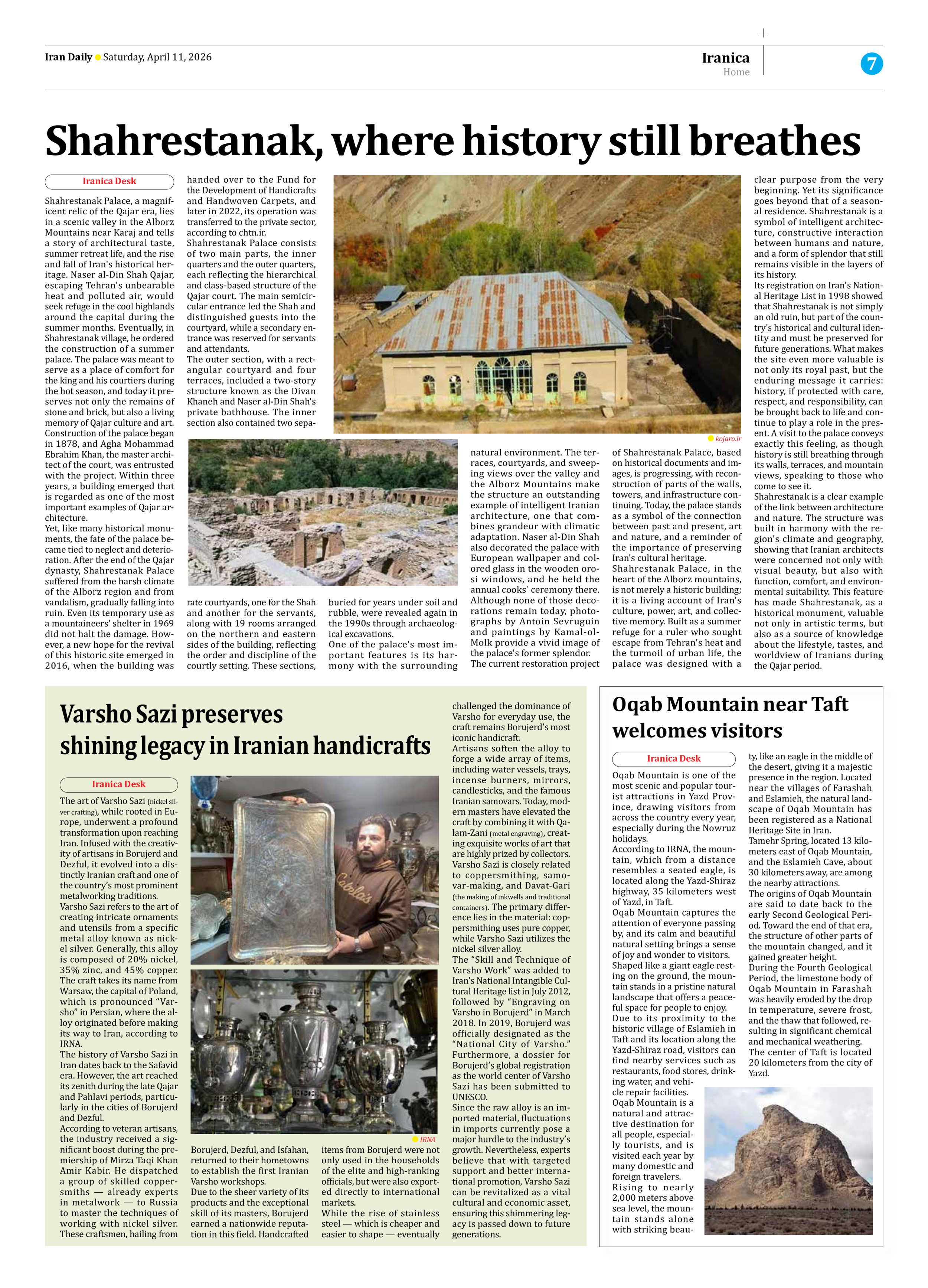


Varsho Sazi preserves shining legacy in Iranian handicrafts
The art of Varsho Sazi (nickel silver crafting), while rooted in Europe, underwent a profound transformation upon reaching Iran. Infused with the creativity of artisans in Borujerd and Dezful, it evolved into a distinctly Iranian craft and one of the country’s most prominent metalworking traditions.
Varsho Sazi refers to the art of creating intricate ornaments and utensils from a specific metal alloy known as nickel silver. Generally, this alloy is composed of 20% nickel, 35% zinc, and 45% copper. The craft takes its name from Warsaw, the capital of Poland, which is pronounced “Varsho” in Persian, where the alloy originated before making its way to Iran, according to IRNA.
The history of Varsho Sazi in Iran dates back to the Safavid era. However, the art reached its zenith during the late Qajar and Pahlavi periods, particularly in the cities of Borujerd and Dezful.
According to veteran artisans, the industry received a significant boost during the premiership of Mirza Taqi Khan Amir Kabir. He dispatched a group of skilled coppersmiths — already experts in metalwork — to Russia to master the techniques of working with nickel silver. These craftsmen, hailing from Borujerd, Dezful, and Isfahan, returned to their hometowns to establish the first Iranian Varsho workshops.
Due to the sheer variety of its products and the exceptional skill of its masters, Borujerd earned a nationwide reputation in this field. Handcrafted items from Borujerd were not only used in the households of the elite and high-ranking officials, but were also exported directly to international markets.
While the rise of stainless steel — which is cheaper and easier to shape — eventually challenged the dominance of Varsho for everyday use, the craft remains Borujerd’s most iconic handicraft.
Artisans soften the alloy to forge a wide array of items, including water vessels, trays, incense burners, mirrors, candlesticks, and the famous Iranian samovars. Today, modern masters have elevated the craft by combining it with Qalam-Zani (metal engraving), creating exquisite works of art that are highly prized by collectors.
Varsho Sazi is closely related to coppersmithing, samovar-making, and Davat-Gari (the making of inkwells and traditional containers). The primary difference lies in the material: coppersmithing uses pure copper, while Varsho Sazi utilizes the nickel silver alloy.
The “Skill and Technique of Varsho Work” was added to Iran’s National Intangible Cultural Heritage list in July 2012, followed by “Engraving on Varsho in Borujerd” in March 2018. In 2019, Borujerd was officially designated as the “National City of Varsho.” Furthermore, a dossier for Borujerd’s global registration as the world center of Varsho Sazi has been submitted to UNESCO.
Since the raw alloy is an imported material, fluctuations in imports currently pose a major hurdle to the industry’s growth. Nevertheless, experts believe that with targeted support and better international promotion, Varsho Sazi can be revitalized as a vital cultural and economic asset, ensuring this shimmering legacy is passed down to future generations.