







Shahrestanak, where history still breathes
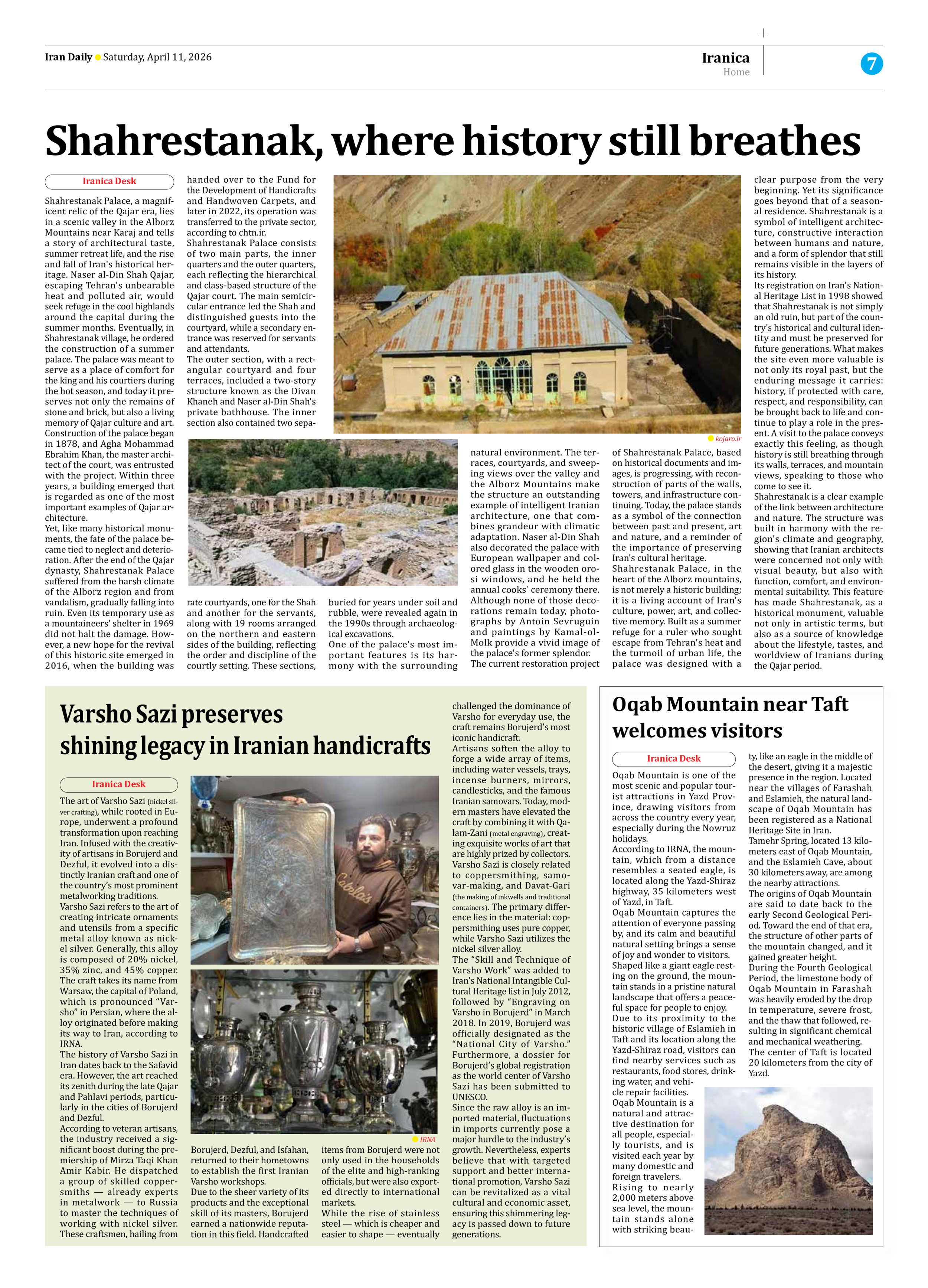
Shahrestanak Palace, a magnificent relic of the Qajar era, lies in a scenic valley in the Alborz Mountains near Karaj and tells a story of architectural taste, summer retreat life, and the rise and fall of Iran's historical heritage. Naser al-Din Shah Qajar, escaping Tehran's unbearable heat and polluted air, would seek refuge in the cool highlands around the capital during the summer months. Eventually, in Shahrestanak village, he ordered the construction of a summer palace. The palace was meant to serve as a place of comfort for the king and his courtiers during the hot season, and today it preserves not only the remains of stone and brick, but also a living memory of Qajar culture and art.
Construction of the palace began in 1878, and Agha Mohammad Ebrahim Khan, the master architect of the court, was entrusted with the project. Within three years, a building emerged that is regarded as one of the most important examples of Qajar architecture.
Yet, like many historical monuments, the fate of the palace became tied to neglect and deterioration. After the end of the Qajar dynasty, Shahrestanak Palace suffered from the harsh climate of the Alborz region and from vandalism, gradually falling into ruin. Even its temporary use as a mountaineers' shelter in 1969 did not halt the damage. However, a new hope for the revival of this historic site emerged in 2016, when the building was handed over to the Fund for the Development of Handicrafts and Handwoven Carpets, and later in 2022, its operation was transferred to the private sector, according to chtn.ir.
Shahrestanak Palace consists of two main parts, the inner quarters and the outer quarters, each reflecting the hierarchical and class-based structure of the Qajar court. The main semicircular entrance led the Shah and distinguished guests into the courtyard, while a secondary entrance was reserved for servants and attendants.
The outer section, with a rectangular courtyard and four terraces, included a two-story structure known as the Divan Khaneh and Naser al-Din Shah's private bathhouse. The inner section also contained two separate courtyards, one for the Shah and another for the servants, along with 19 rooms arranged on the northern and eastern sides of the building, reflecting the order and discipline of the courtly setting. These sections, buried for years under soil and rubble, were revealed again in the 1990s through archaeological excavations.
One of the palace's most important features is its harmony with the surrounding natural environment. The terraces, courtyards, and sweeping views over the valley and the Alborz Mountains make the structure an outstanding example of intelligent Iranian architecture, one that combines grandeur with climatic adaptation. Naser al-Din Shah also decorated the palace with European wallpaper and colored glass in the wooden orosi windows, and he held the annual cooks' ceremony there. Although none of those decorations remain today, photographs by Antoin Sevruguin and paintings by Kamal-ol-Molk provide a vivid image of the palace's former splendor.
The current restoration project of Shahrestanak Palace, based on historical documents and images, is progressing, with reconstruction of parts of the walls, towers, and infrastructure continuing. Today, the palace stands as a symbol of the connection between past and present, art and nature, and a reminder of the importance of preserving Iran's cultural heritage.
Shahrestanak Palace, in the heart of the Alborz mountains, is not merely a historic building; it is a living account of Iran's culture, power, art, and collective memory. Built as a summer refuge for a ruler who sought escape from Tehran's heat and the turmoil of urban life, the palace was designed with a clear purpose from the very beginning. Yet its significance goes beyond that of a seasonal residence. Shahrestanak is a symbol of intelligent architecture, constructive interaction between humans and nature, and a form of splendor that still remains visible in the layers of its history.
Its registration on Iran's National Heritage List in 1998 showed that Shahrestanak is not simply an old ruin, but part of the country's historical and cultural identity and must be preserved for future generations. What makes the site even more valuable is not only its royal past, but the enduring message it carries: history, if protected with care, respect, and responsibility, can be brought back to life and continue to play a role in the present. A visit to the palace conveys exactly this feeling, as though history is still breathing through its walls, terraces, and mountain views, speaking to those who come to see it.
Shahrestanak is a clear example of the link between architecture and nature. The structure was built in harmony with the region's climate and geography, showing that Iranian architects were concerned not only with visual beauty, but also with function, comfort, and environmental suitability. This feature has made Shahrestanak, as a historical monument, valuable not only in artistic terms, but also as a source of knowledge about the lifestyle, tastes, and worldview of Iranians during the Qajar period.