







Kharg Island remains archaeological puzzle
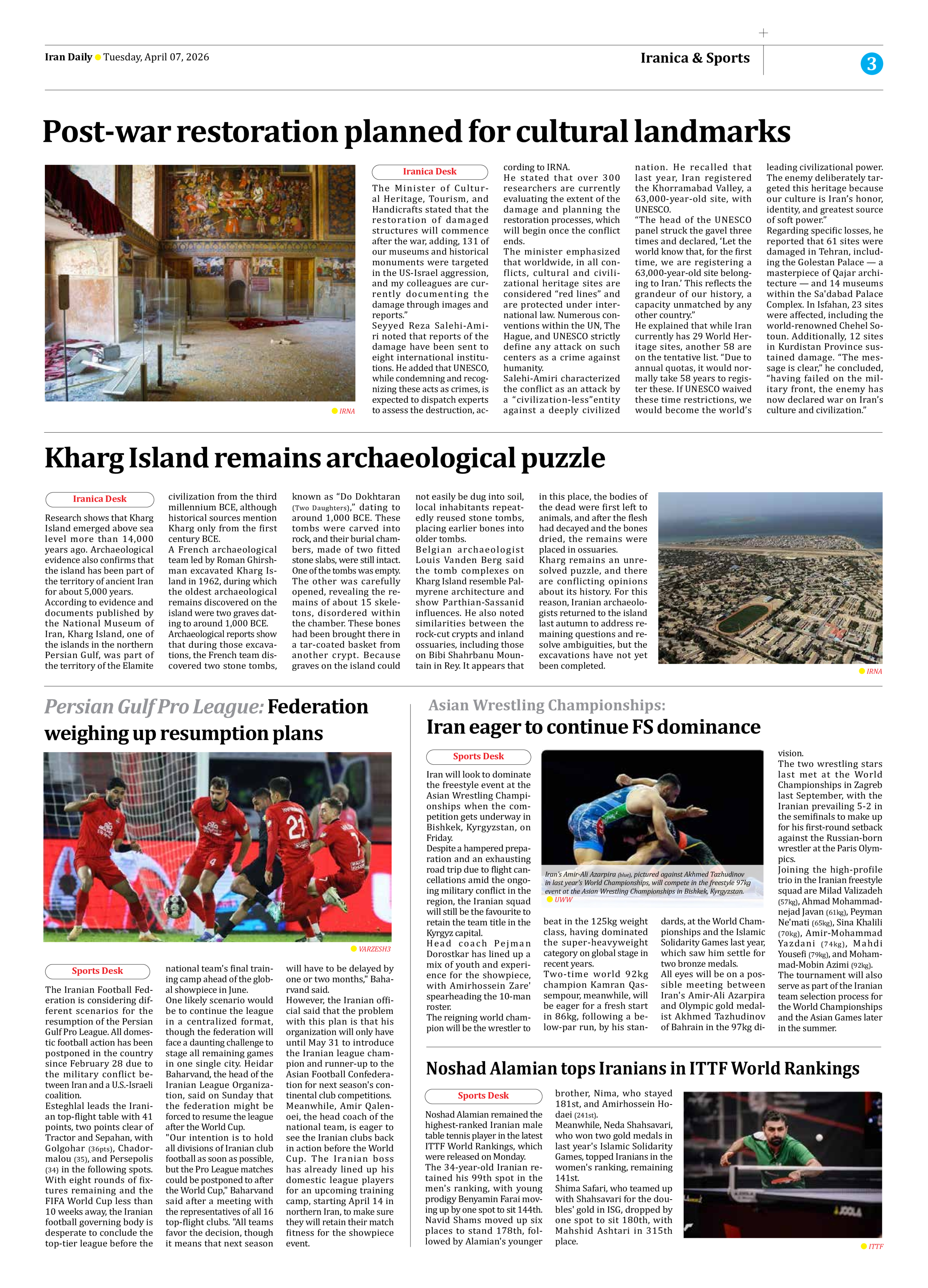
Research shows that Kharg Island emerged above sea level more than 14,000 years ago. Archaeological evidence also confirms that the island has been part of the territory of ancient Iran for about 5,000 years.
According to evidence and documents published by the National Museum of Iran, Kharg Island, one of the islands in the northern Persian Gulf, was part of the territory of the Elamite civilization from the third millennium BCE, although historical sources mention Kharg only from the first century BCE.
A French archaeological team led by Roman Ghirshman excavated Kharg Island in 1962, during which the oldest archaeological remains discovered on the island were two graves dating to around 1,000 BCE.
Archaeological reports show that during those excavations, the French team discovered two stone tombs, known as “Do Dokhtaran (Two Daughters),” dating to around 1,000 BCE. These tombs were carved into rock, and their burial chambers, made of two fitted stone slabs, were still intact. One of the tombs was empty.
The other was carefully opened, revealing the remains of about 15 skeletons, disordered within the chamber. These bones had been brought there in a tar-coated basket from another crypt. Because graves on the island could not easily be dug into soil, local inhabitants repeatedly reused stone tombs, placing earlier bones into older tombs.
Belgian archaeologist Louis Vanden Berg said the tomb complexes on Kharg Island resemble Palmyrene architecture and show Parthian-Sassanid influences. He also noted similarities between the rock-cut crypts and inland ossuaries, including those on Bibi Shahrbanu Mountain in Rey. It appears that in this place, the bodies of the dead were first left to animals, and after the flesh had decayed and the bones dried, the remains were placed in ossuaries.
Kharg remains an unresolved puzzle, and there are conflicting opinions about its history. For this reason, Iranian archaeologists returned to the island last autumn to address remaining questions and resolve ambiguities, but the excavations have not yet been completed.