







Copy in clipboard...
Iran’s ancient roots trace back 450,000 years
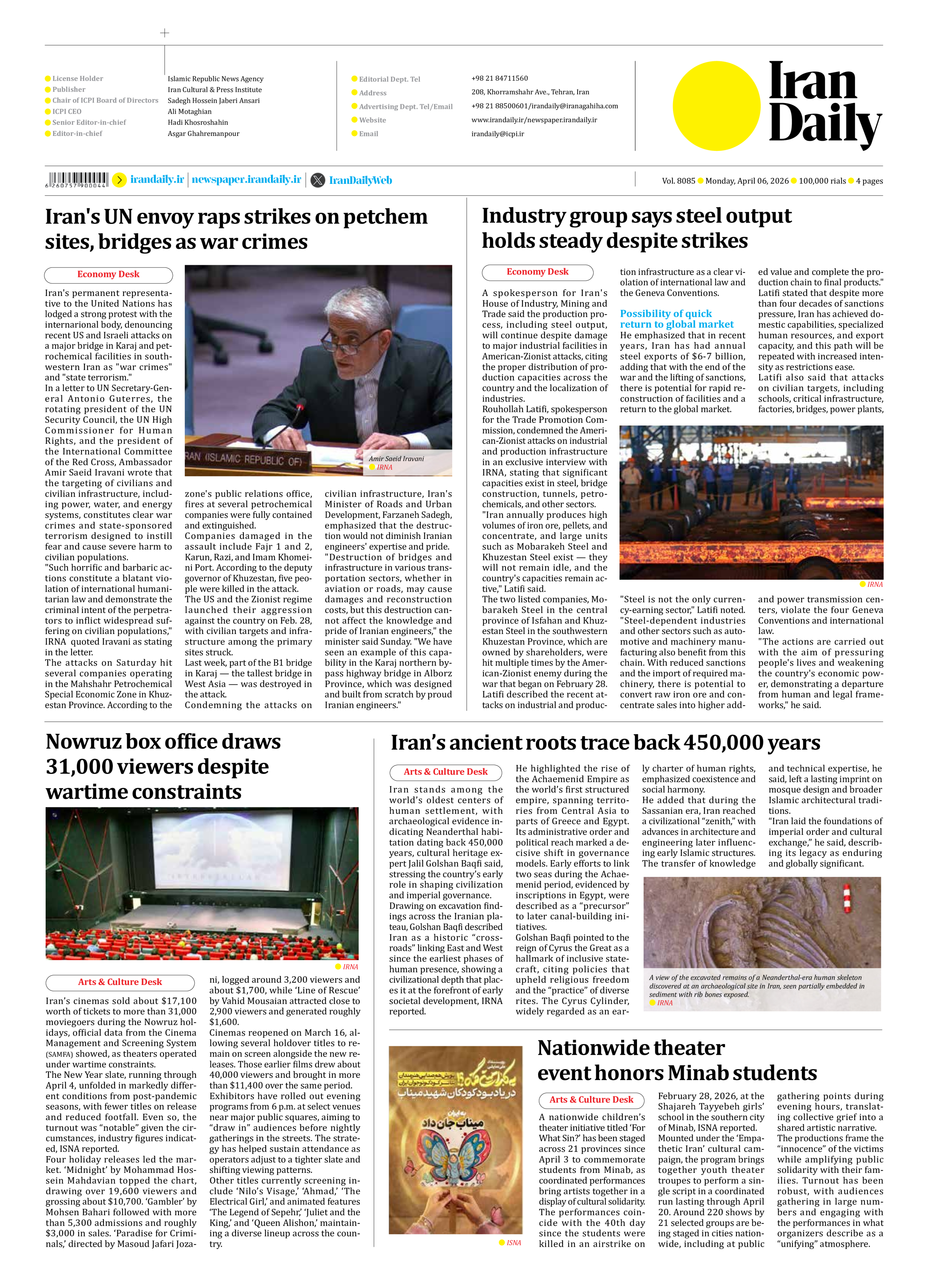
Iran stands among the world’s oldest centers of human settlement, with archaeological evidence indicating Neanderthal habitation dating back 450,000 years, cultural heritage expert Jalil Golshan Baqfi said, stressing the country’s early role in shaping civilization and imperial governance.
Drawing on excavation findings across the Iranian plateau, Golshan Baqfi described Iran as a historic “crossroads” linking East and West since the earliest phases of human presence, showing a civilizational depth that places it at the forefront of early societal development, IRNA reported.
He highlighted the rise of the Achaemenid Empire as the world’s first structured empire, spanning territories from Central Asia to parts of Greece and Egypt. Its administrative order and political reach marked a decisive shift in governance models. Early efforts to link two seas during the Achaemenid period, evidenced by inscriptions in Egypt, were described as a “precursor” to later canal-building initiatives.
Golshan Baqfi pointed to the reign of Cyrus the Great as a hallmark of inclusive statecraft, citing policies that upheld religious freedom and the “practice” of diverse rites. The Cyrus Cylinder, widely regarded as an early charter of human rights, emphasized coexistence and social harmony.
He added that during the Sassanian era, Iran reached a civilizational “zenith,” with advances in architecture and engineering later influencing early Islamic structures. The transfer of knowledge and technical expertise, he said, left a lasting imprint on mosque design and broader Islamic architectural traditions.
“Iran laid the foundations of imperial order and cultural exchange,” he said, describing its legacy as enduring and globally significant.