







Israel to pay ‘heavy price’ for attacks on infrastructure: Araghchi
President warns regional states against acting as staging grounds for war
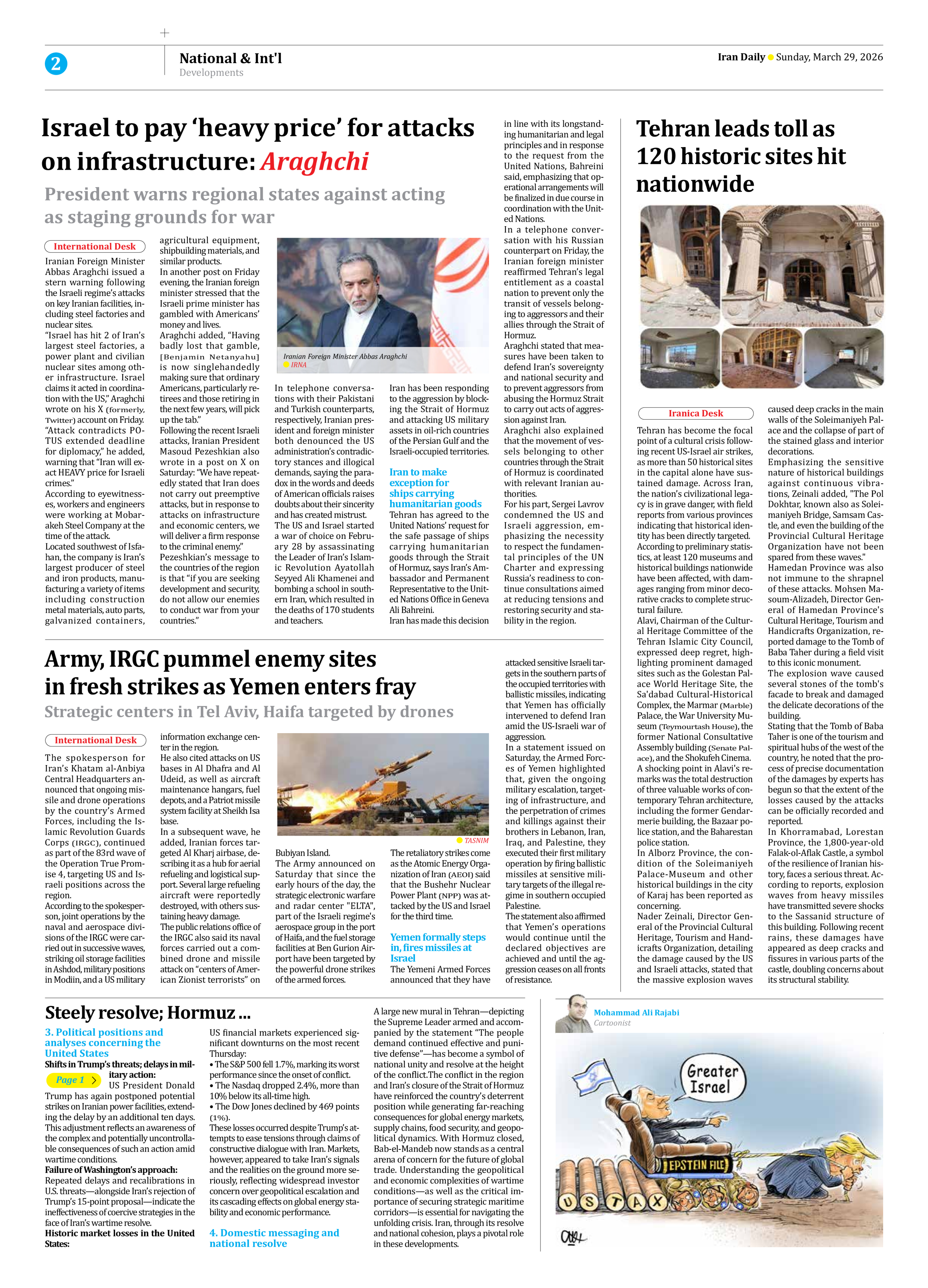
Iranian Foreign Minister Abbas Araghchi issued a stern warning following the Israeli regime’s attacks on key Iranian facilities, including steel factories and nuclear sites.
“Israel has hit 2 of Iran’s largest steel factories, a power plant and civilian nuclear sites among other infrastructure. Israel claims it acted in coordination with the US,” Araghchi wrote on his X (formerly, Twitter) account on Friday.
“Attack contradicts POTUS extended deadline for diplomacy,” he added, warning that “Iran will exact HEAVY price for Israeli crimes.”
According to eyewitnesses, workers and engineers were working at Mobarakeh Steel Company at the time of the attack.
Located southwest of Isfahan, the company is Iran’s largest producer of steel and iron products, manufacturing a variety of items including construction metal materials, auto parts, galvanized containers, agricultural equipment, shipbuilding materials, and similar products.
In another post on Friday evening, the Iranian foreign minister stressed that the Israeli prime minister has gambled with Americans’ money and lives.
Araghchi added, “Having badly lost that gamble, [Benjamin Netanyahu] is now singlehandedly making sure that ordinary Americans, particularly retirees and those retiring in the next few years, will pick up the tab.”
Following the recent Israeli attacks, Iranian President Masoud Pezeshkian also wrote in a post on X on Saturday: “We have repeatedly stated that Iran does not carry out preemptive attacks, but in response to attacks on infrastructure and economic centers, we will deliver a firm response to the criminal enemy.”
Pezeshkian’s message to the countries of the region is that “if you are seeking development and security, do not allow our enemies to conduct war from your countries.”
In telephone conversations with their Pakistani and Turkish counterparts, respectively, Iranian president and foreign minister both denounced the US administration’s contradictory stances and illogical demands, saying the paradox in the words and deeds of American officials raises doubts about their sincerity and has created mistrust.
The US and Israel started a war of choice on February 28 by assassinating the Leader of Iran’s Islamic Revolution Ayatollah Seyyed Ali Khamenei and bombing a school in southern Iran, which resulted in the deaths of 170 students and teachers.
Iran has been responding to the aggression by blocking the Strait of Hormuz and attacking US military assets in oil-rich countries of the Persian Gulf and the Israeli-occupied territories.
Iran to make exception for ships carrying humanitarian goods
Tehran has agreed to the United Nations’ request for the safe passage of ships carrying humanitarian goods through the Strait of Hormuz, says Iran’s Ambassador and Permanent Representative to the United Nations Office in Geneva Ali Bahreini.
Iran has made this decision in line with its longstanding humanitarian and legal principles and in response to the request from the United Nations, Bahreini said, emphasizing that operational arrangements will be finalized in due course in coordination with the United Nations.
In a telephone conversation with his Russian counterpart on Friday, the Iranian foreign minister reaffirmed Tehran’s legal entitlement as a coastal nation to prevent only the transit of vessels belonging to aggressors and their allies through the Strait of Hormuz.
Araghchi stated that measures have been taken to defend Iran’s sovereignty and national security and to prevent aggressors from abusing the Hormuz Strait to carry out acts of aggression against Iran.
Araghchi also explained that the movement of vessels belonging to other countries through the Strait of Hormuz is coordinated with relevant Iranian authorities.
For his part, Sergei Lavrov condemned the US and Israeli aggression, emphasizing the necessity to respect the fundamental principles of the UN Charter and expressing Russia’s readiness to continue consultations aimed at reducing tensions and restoring security and stability in the region.