







Qanbari U‑turns on Australian asylum to rejoin Iranian teammates
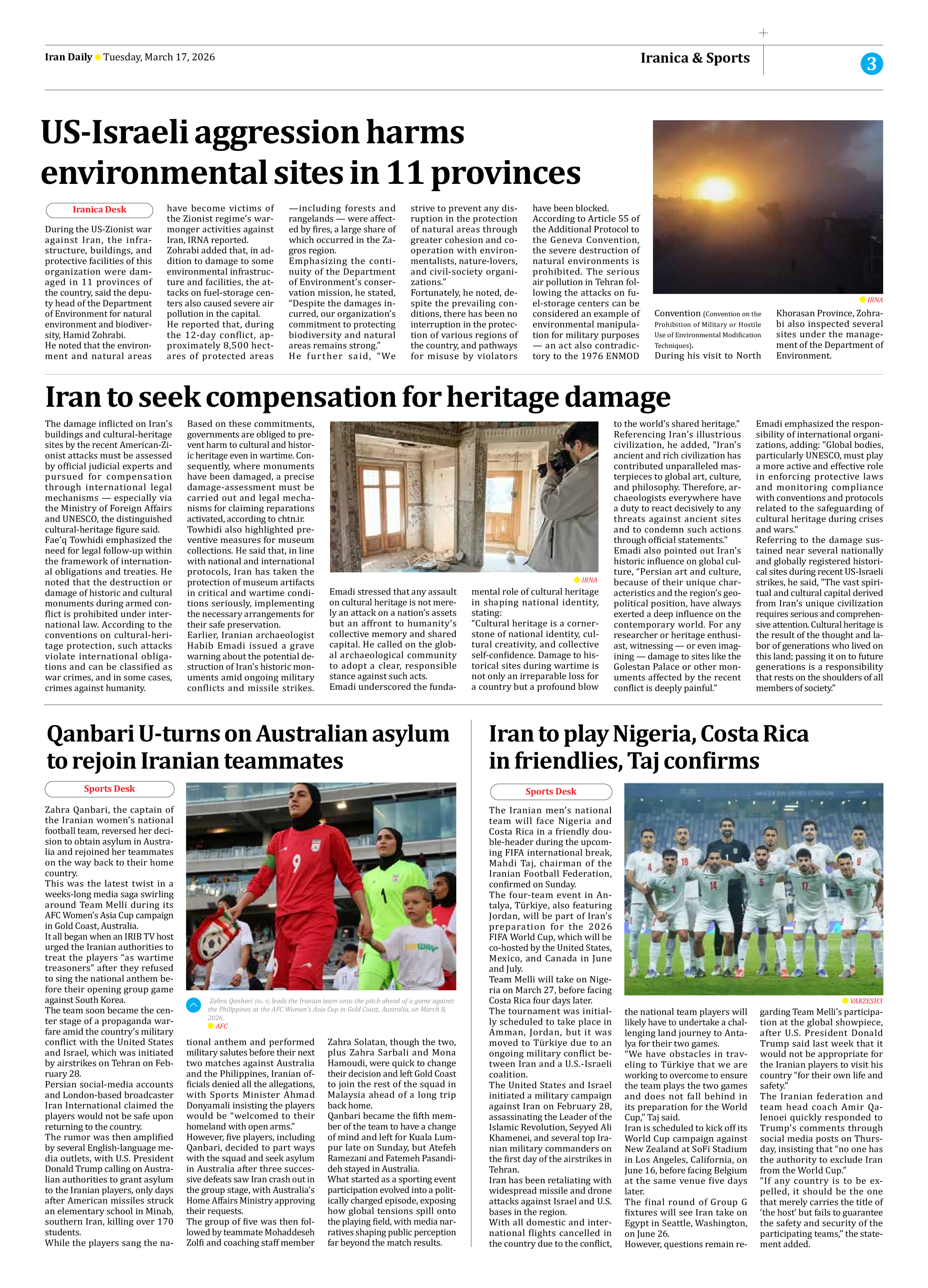
Zahra Qanbari, the captain of the Iranian women’s national football team, reversed her decision to obtain asylum in Australia and rejoined her teammates on the way back to their home country.
This was the latest twist in a weeks‑long media saga swirling around Team Melli during its AFC Women’s Asia Cup campaign in Gold Coast, Australia.
It all began when an IRIB TV host urged the Iranian authorities to treat the players “as wartime treasoners” after they refused to sing the national anthem before their opening group game against South Korea.
The team soon became the center stage of a propaganda warfare amid the country’s military conflict with the United States and Israel, which was initiated by airstrikes on Tehran on February 28.
Persian social‑media accounts and London‑based broadcaster Iran International claimed the players would not be safe upon returning to the country.
The rumor was then amplified by several English‑language media outlets, with U.S. President Donald Trump calling on Australian authorities to grant asylum to the Iranian players, only days after American missiles struck an elementary school in Minab, southern Iran, killing over 170 students.
While the players sang the national anthem and performed military salutes before their next two matches against Australia and the Philippines, Iranian officials denied all the allegations, with Sports Minister Ahmad Donyamali insisting the players would be “welcomed to their homeland with open arms.”
However, five players, including Qanbari, decided to part ways with the squad and seek asylum in Australia after three successive defeats saw Iran crash out in the group stage, with Australia’s Home Affairs Ministry approving their requests.
The group of five was then followed by teammate Mohaddeseh Zolfi and coaching staff member Zahra Solatan, though the two, plus Zahra Sarbali and Mona Hamoudi, were quick to change their decision and left Gold Coast to join the rest of the squad in Malaysia ahead of a long trip back home.
Qanbari became the fifth member of the team to have a change of mind and left for Kuala Lumpur late on Sunday, but Atefeh Ramezani and Fatemeh Pasandideh stayed in Australia.
What started as a sporting event participation evolved into a politically charged episode, exposing how global tensions spill onto the playing field, with media narratives shaping public perception far beyond the match results.