







Copy in clipboard...
Iran to seek compensation for heritage damage
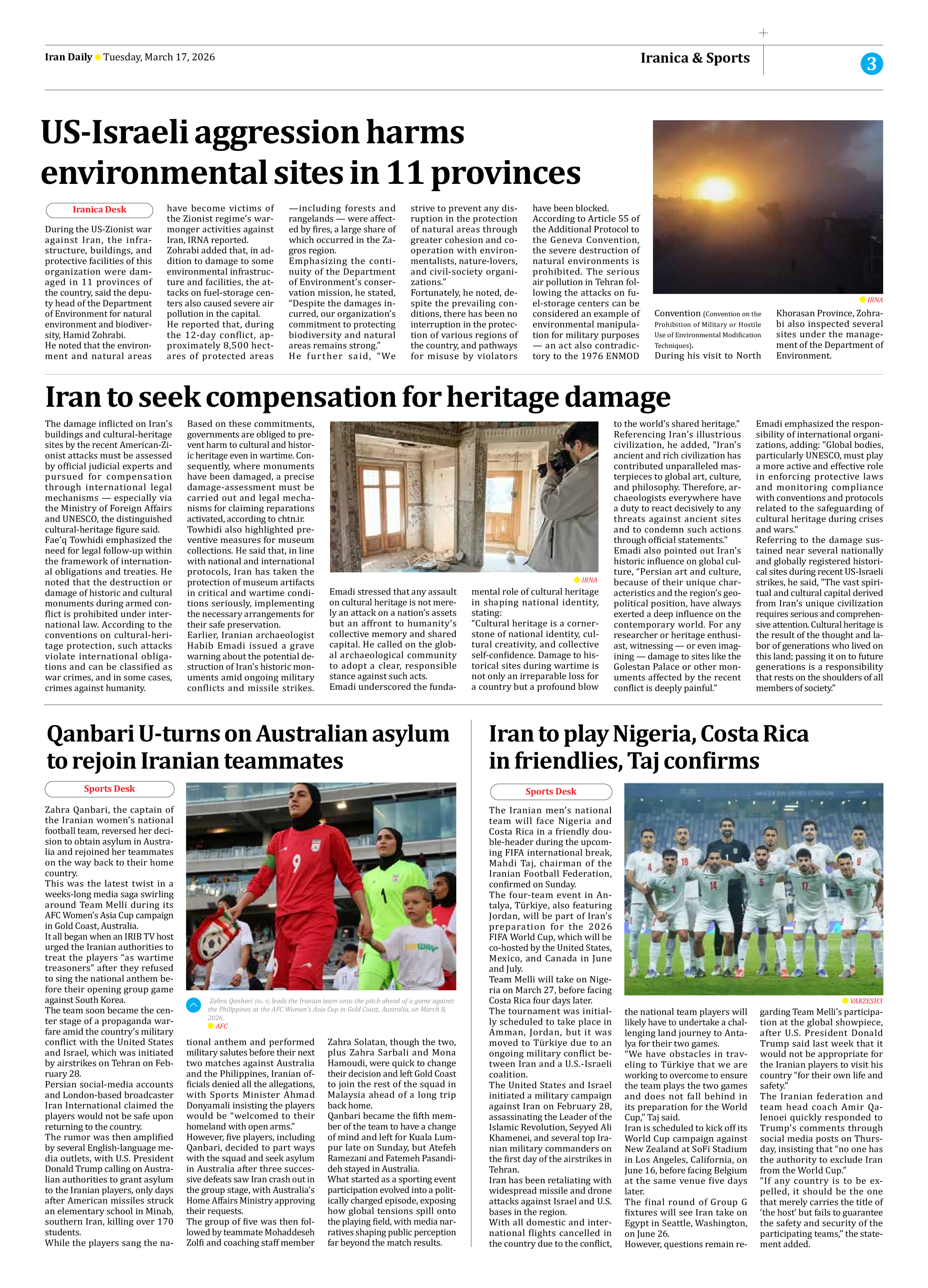
Fae’q Towhidi emphasized the need for legal follow‑up within the framework of international obligations and treaties. He noted that the destruction or damage of historic and cultural monuments during armed conflict is prohibited under international law. According to the conventions on cultural‑heritage protection, such attacks violate international obligations and can be classified as war crimes, and in some cases, crimes against humanity.
Based on these commitments, governments are obliged to prevent harm to cultural and historic heritage even in wartime. Consequently, where monuments have been damaged, a precise damage‑assessment must be carried out and legal mechanisms for claiming reparations activated, according to chtn.ir.
Towhidi also highlighted preventive measures for museum collections. He said that, in line with national and international protocols, Iran has taken the protection of museum artifacts in critical and wartime conditions seriously, implementing the necessary arrangements for their safe preservation.
Earlier, Iranian archaeologist Habib Emadi issued a grave warning about the potential destruction of Iran’s historic monuments amid ongoing military conflicts and missile strikes. Emadi stressed that any assault on cultural heritage is not merely an attack on a nation’s assets but an affront to humanity’s collective memory and shared capital. He called on the global archaeological community to adopt a clear, responsible stance against such acts.
Emadi underscored the fundamental role of cultural heritage in shaping national identity, stating:
“Cultural heritage is a cornerstone of national identity, cultural creativity, and collective self‑confidence. Damage to historical sites during wartime is not only an irreparable loss for a country but a profound blow to the world’s shared heritage.”
Referencing Iran’s illustrious civilization, he added, “Iran’s ancient and rich civilization has contributed unparalleled masterpieces to global art, culture, and philosophy. Therefore, archaeologists everywhere have a duty to react decisively to any threats against ancient sites and to condemn such actions through official statements.”
Emadi also pointed out Iran’s historic influence on global culture, “Persian art and culture, because of their unique characteristics and the region’s geopolitical position, have always exerted a deep influence on the contemporary world. For any researcher or heritage enthusiast, witnessing — or even imagining — damage to sites like the Golestan Palace or other monuments affected by the recent conflict is deeply painful.”
Emadi emphasized the responsibility of international organizations, adding: "Global bodies, particularly UNESCO, must play a more active and effective role in enforcing protective laws and monitoring compliance with conventions and protocols related to the safeguarding of cultural heritage during crises and wars."
Referring to the damage sustained near several nationally and globally registered historical sites during recent US-Israeli strikes, he said, "The vast spiritual and cultural capital derived from Iran’s unique civilization requires serious and comprehensive attention. Cultural heritage is the result of the thought and labor of generations who lived on this land; passing it on to future generations is a responsibility that rests on the shoulders of all members of society."