







Iran’s oil sales surge past pre-war levels
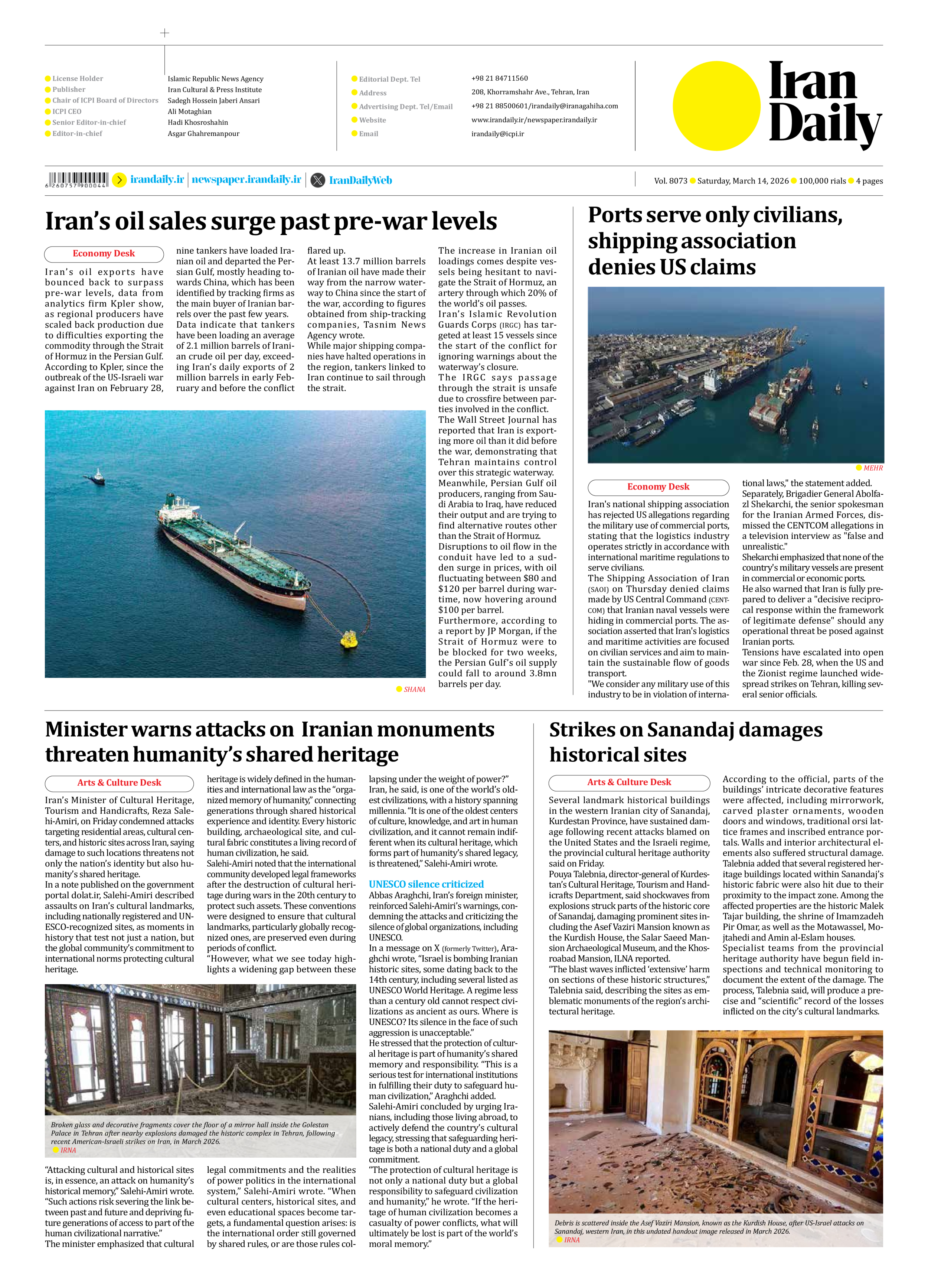
Iran’s oil exports have bounced back to surpass pre-war levels, data from analytics firm Kpler show, as regional producers have scaled back production due to difficulties exporting the commodity through the Strait of Hormuz in the Persian Gulf.
According to Kpler, since the outbreak of the US-Israeli war against Iran on February 28, nine tankers have loaded Iranian oil and departed the Persian Gulf, mostly heading towards China, which has been identified by tracking firms as the main buyer of Iranian barrels over the past few years.
Data indicate that tankers have been loading an average of 2.1 million barrels of Iranian crude oil per day, exceeding Iran’s daily exports of 2 million barrels in early February and before the conflict flared up.
At least 13.7 million barrels of Iranian oil have made their way from the narrow waterway to China since the start of the war, according to figures obtained from ship-tracking companies, Tasnim News Agency wrote.
While major shipping companies have halted operations in the region, tankers linked to Iran continue to sail through the strait.
The increase in Iranian oil loadings comes despite vessels being hesitant to navigate the Strait of Hormuz, an artery through which 20% of the world’s oil passes.
Iran’s Islamic Revolution Guards Corps (IRGC) has targeted at least 15 vessels since the start of the conflict for ignoring warnings about the waterway’s closure.
The IRGC says passage through the strait is unsafe due to crossfire between parties involved in the conflict.
The Wall Street Journal has reported that Iran is exporting more oil than it did before the war, demonstrating that Tehran maintains control over this strategic waterway.
Meanwhile, Persian Gulf oil producers, ranging from Saudi Arabia to Iraq, have reduced their output and are trying to find alternative routes other than the Strait of Hormuz.
Disruptions to oil flow in the conduit have led to a sudden surge in prices, with oil fluctuating between $80 and $120 per barrel during wartime, now hovering around $100 per barrel.
Furthermore, according to a report by JP Morgan, if the Strait of Hormuz were to be blocked for two weeks, the Persian Gulf’s oil supply could fall to around 3.8mn barrels per day.