







Iranian women’s team targeted by propaganda warfare at Asian Cup
Iran’s women’s national football team became the focal point of a political and media storm during the AFC Women’s Asian Cup in Australia, as foreign governments and outlets amplified claims that the players faced execution upon returning home, Fars News Agency reported.
The controversy began after the Iranian players chose not to sing the national anthem before its opening match against the South Korea. Social media accounts in Persian quickly circulated rumors that the players would be punished for this act. The rumor was then echoed by the London-based broadcaster Iran International and amplified by several English-language media outlets citing uncertain sources.
U.S. President Donald Trump, took advantage of the situation, urging Australian authorities, through social media posts, not to let Iranian players return home, claiming they would face severe punishment. Trump made the allegations less than 10 days after American missiles struck an elementary school in Minab, southern Iran, killing over 170 students.
Israeli journalist Barak Ravid of Axios had previously stated that Mossad uses media as a strategic tool — a claim that observers found newly relevant amid this coordinated campaign.
This was not the first time an Iranian team abstained from singing the national anthem at an international event; in none of the previous cases were athletes accused of treason or sentenced upon their return.
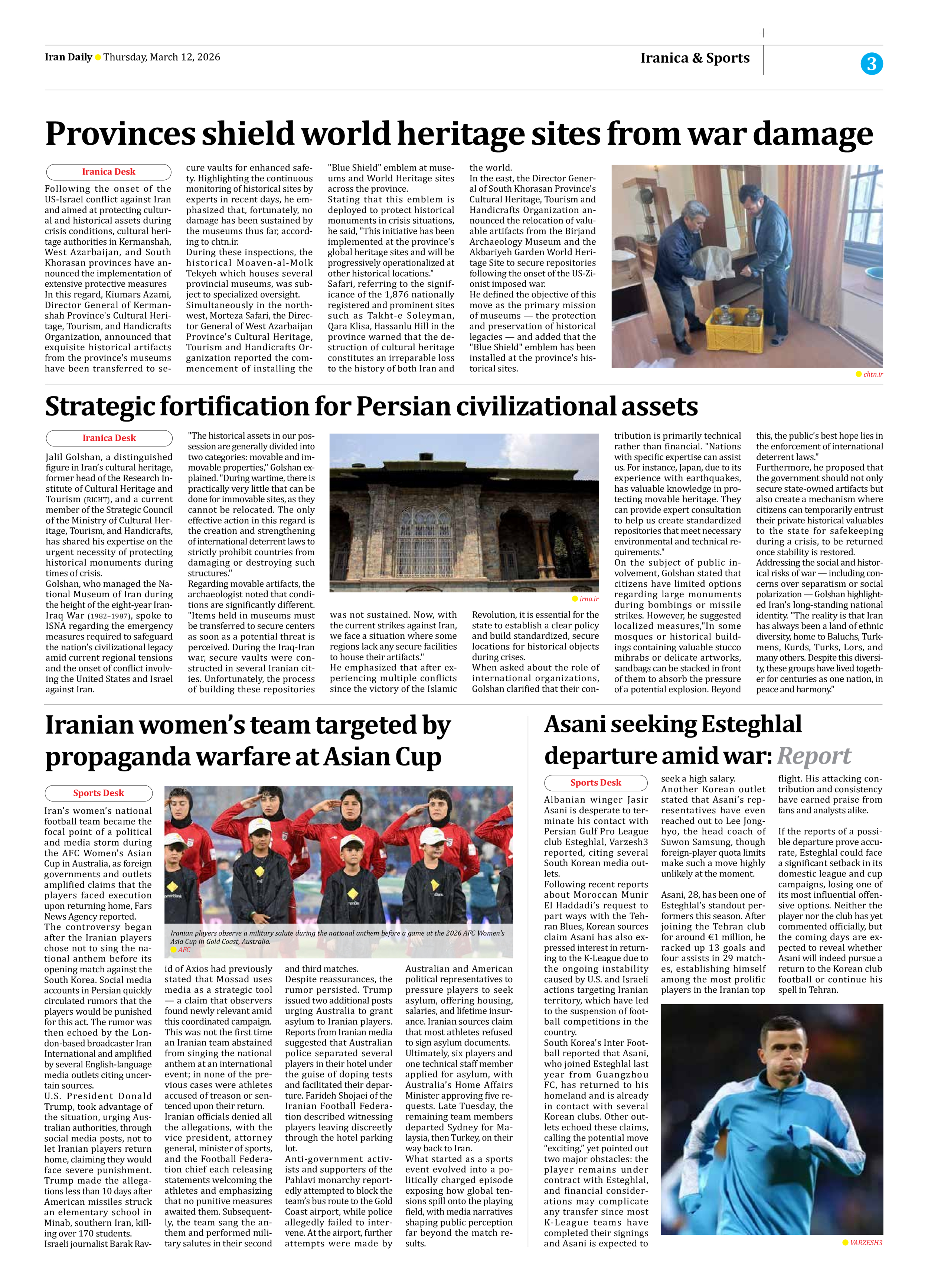
Iranian officials denied all the allegations, with the vice president, attorney general, minister of sports, and the Football Federation chief each releasing statements welcoming the athletes and emphasizing that no punitive measures awaited them. Subsequently, the team sang the anthem and performed military salutes in their second and third matches.
Despite reassurances, the rumor persisted. Trump issued two additional posts urging Australia to grant asylum to Iranian players. Reports from Iranian media suggested that Australian police separated several players in their hotel under the guise of doping tests and facilitated their departure. Farideh Shojaei of the Iranian Football Federation described witnessing players leaving discreetly through the hotel parking lot.
Anti-government activists and supporters of the Pahlavi monarchy reportedly attempted to block the team’s bus route to the Gold Coast airport, while police allegedly failed to intervene. At the airport, further attempts were made by Australian and American political representatives to pressure players to seek asylum, offering housing, salaries, and lifetime insurance. Iranian sources claim that most athletes refused to sign asylum documents.
Ultimately, six players and one technical staff member applied for asylum, with Australia’s Home Affairs Minister approving five requests. Late Tuesday, the remaining team members departed Sydney for Malaysia, then Turkey, on their way back to Iran.
What started as a sports event evolved into a politically charged episode exposing how global tensions spill onto the playing field, with media narratives shaping public perception far beyond the match results.