




Baluch culture celebrates warmth, respect beyond simple greeting
Across the vast expanse of Sistan and Balucehstan Province, where the grandeur of the desert meets the freshness of lush valleys and the roaring waters of the Oman Sea, and where the wind carries stories of an extraordinary heritage through the passage of time, warmth and cordiality are far more than passing words. They are deeply rooted traditions, woven into the very fabric of everyday life.
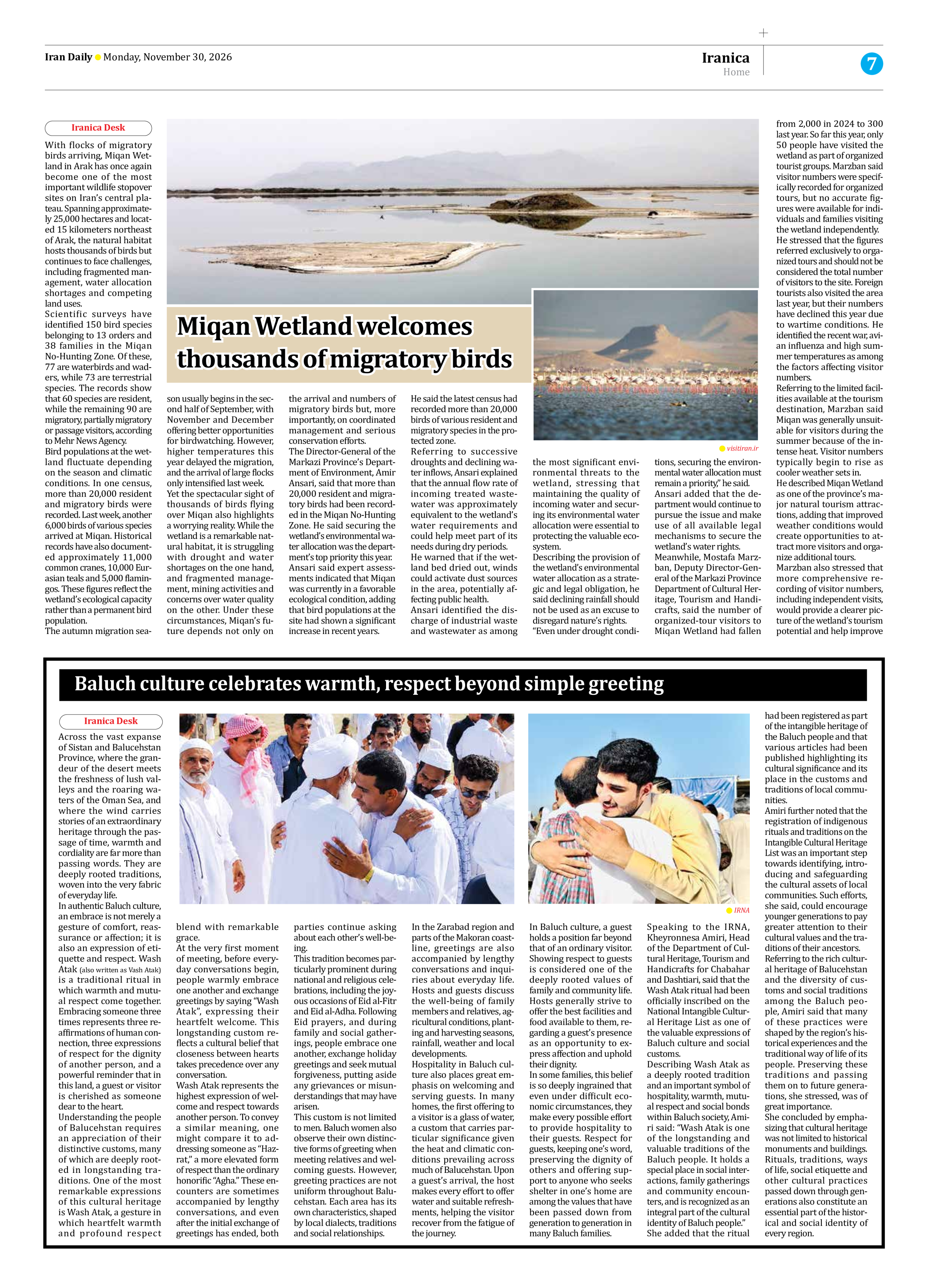
In authentic Baluch culture, an embrace is not merely a gesture of comfort, reassurance or affection; it is also an expression of etiquette and respect. Wash Atak (also written as Vash Atak) is a traditional ritual in which warmth and mutual respect come together. Embracing someone three times represents three reaffirmations of human connection, three expressions of respect for the dignity of another person, and a powerful reminder that in this land, a guest or visitor is cherished as someone dear to the heart.
Understanding the people of Balucehstan requires an appreciation of their distinctive customs, many of which are deeply rooted in longstanding traditions. One of the most remarkable expressions of this cultural heritage is Wash Atak, a gesture in which heartfelt warmth and profound respect blend with remarkable grace.
At the very first moment of meeting, before everyday conversations begin, people warmly embrace one another and exchange greetings by saying “Wash Atak”, expressing their heartfelt welcome. This longstanding custom reflects a cultural belief that closeness between hearts takes precedence over any conversation.
Wash Atak represents the highest expression of welcome and respect towards another person. To convey a similar meaning, one might compare it to addressing someone as “Hazrat,” a more elevated form of respect than the ordinary honorific “Agha.” These encounters are sometimes accompanied by lengthy conversations, and even after the initial exchange of greetings has ended, both parties continue asking about each other’s well-being.
This tradition becomes particularly prominent during national and religious celebrations, including the joyous occasions of Eid al-Fitr and Eid al-Adha. Following Eid prayers, and during family and social gatherings, people embrace one another, exchange holiday greetings and seek mutual forgiveness, putting aside any grievances or misunderstandings that may have arisen.
This custom is not limited to men. Baluch women also observe their own distinctive forms of greeting when meeting relatives and welcoming guests. However, greeting practices are not uniform throughout Balucehstan. Each area has its own characteristics, shaped by local dialects, traditions and social relationships.
In the Zarabad region and parts of the Makoran coastline, greetings are also accompanied by lengthy conversations and inquiries about everyday life. Hosts and guests discuss the well-being of family members and relatives, agricultural conditions, planting and harvesting seasons, rainfall, weather and local developments.
Hospitality in Baluch culture also places great emphasis on welcoming and serving guests. In many homes, the first offering to a visitor is a glass of water, a custom that carries particular significance given the heat and climatic conditions prevailing across much of Balucehstan. Upon a guest’s arrival, the host makes every effort to offer water and suitable refreshments, helping the visitor recover from the fatigue of the journey.
In Baluch culture, a guest holds a position far beyond that of an ordinary visitor. Showing respect to guests is considered one of the deeply rooted values of family and community life. Hosts generally strive to offer the best facilities and food available to them, regarding a guest’s presence as an opportunity to express affection and uphold their dignity.
In some families, this belief is so deeply ingrained that even under difficult economic circumstances, they make every possible effort to provide hospitality to their guests. Respect for guests, keeping one’s word, preserving the dignity of others and offering support to anyone who seeks shelter in one’s home are among the values that have been passed down from generation to generation in many Baluch families.
Speaking to the IRNA, Kheyronnesa Amiri, Head of the Department of Cultural Heritage, Tourism and Handicrafts for Chabahar and Dashtiari, said that the Wash Atak ritual had been officially inscribed on the National Intangible Cultural Heritage List as one of the valuable expressions of Baluch culture and social customs.
Describing Wash Atak as a deeply rooted tradition and an important symbol of hospitality, warmth, mutual respect and social bonds within Baluch society, Amiri said: “Wash Atak is one of the longstanding and valuable traditions of the Baluch people. It holds a special place in social interactions, family gatherings and community encounters, and is recognized as an integral part of the cultural identity of Baluch people.”
She added that the ritual had been registered as part of the intangible heritage of the Baluch people and that various articles had been published highlighting its cultural significance and its place in the customs and traditions of local communities.
Amiri further noted that the registration of indigenous rituals and traditions on the Intangible Cultural Heritage List was an important step towards identifying, introducing and safeguarding the cultural assets of local communities. Such efforts, she said, could encourage younger generations to pay greater attention to their cultural values and the traditions of their ancestors.
Referring to the rich cultural heritage of Balucehstan and the diversity of customs and social traditions among the Baluch people, Amiri said that many of these practices were shaped by the region’s historical experiences and the traditional way of life of its people. Preserving these traditions and passing them on to future generations, she stressed, was of great importance.
She concluded by emphasizing that cultural heritage was not limited to historical monuments and buildings. Rituals, traditions, ways of life, social etiquette and other cultural practices passed down through generations also constitute an essential part of the historical and social identity of every region.