


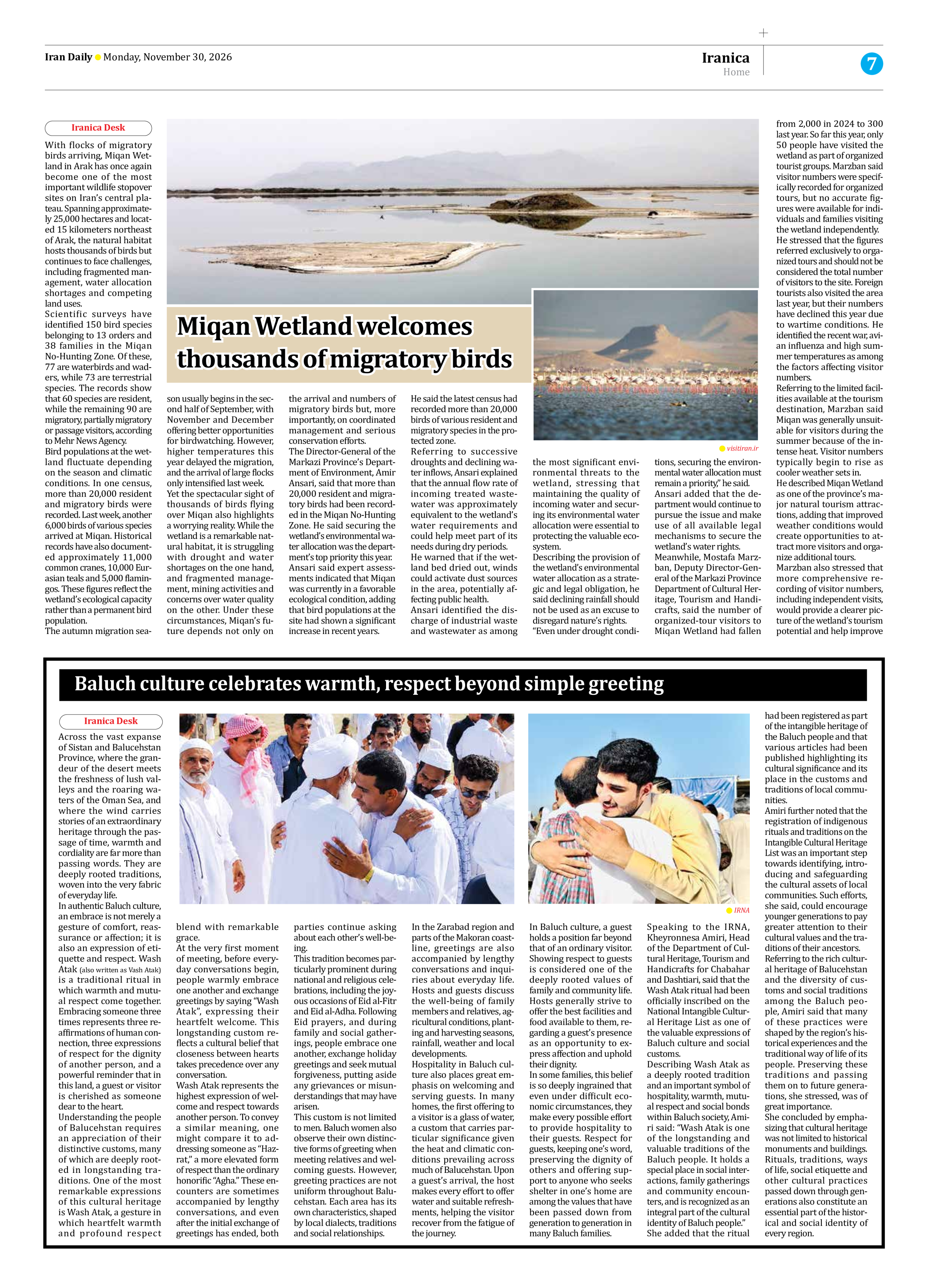


Miqan Wetland welcomes thousands of migratory birds
With flocks of migratory birds arriving, Miqan Wetland in Arak has once again become one of the most important wildlife stopover sites on Iran’s central plateau. Spanning approximately 25,000 hectares and located 15 kilometers northeast of Arak, the natural habitat hosts thousands of birds but continues to face challenges, including fragmented management, water allocation shortages and competing land uses.
Scientific surveys have identified 150 bird species belonging to 13 orders and 38 families in the Miqan No-Hunting Zone. Of these, 77 are waterbirds and waders, while 73 are terrestrial species. The records show that 60 species are resident, while the remaining 90 are migratory, partially migratory or passage visitors, according to Mehr News Agency.
Bird populations at the wetland fluctuate depending on the season and climatic conditions. In one census, more than 20,000 resident and migratory birds were recorded. Last week, another 6,000 birds of various species arrived at Miqan. Historical records have also documented approximately 11,000 common cranes, 10,000 Eurasian teals and 5,000 flamingos. These figures reflect the wetland’s ecological capacity rather than a permanent bird population.
The autumn migration season usually begins in the second half of September, with November and December offering better opportunities for birdwatching. However, higher temperatures this year delayed the migration, and the arrival of large flocks only intensified last week.
Yet the spectacular sight of thousands of birds flying over Miqan also highlights a worrying reality. While the wetland is a remarkable natural habitat, it is struggling with drought and water shortages on the one hand, and fragmented management, mining activities and concerns over water quality on the other. Under these circumstances, Miqan’s future depends not only on the arrival and numbers of migratory birds but, more importantly, on coordinated management and serious conservation efforts.
The Director-General of the Markazi Province’s Department of Environment, Amir Ansari, said that more than 20,000 resident and migratory birds had been recorded in the Miqan No-Hunting Zone. He said securing the wetland’s environmental water allocation was the department’s top priority this year.
Ansari said expert assessments indicated that Miqan was currently in a favorable ecological condition, adding that bird populations at the site had shown a significant increase in recent years.
He said the latest census had recorded more than 20,000 birds of various resident and migratory species in the protected zone.
Referring to successive droughts and declining water inflows, Ansari explained that the annual flow rate of incoming treated wastewater was approximately equivalent to the wetland’s water requirements and could help meet part of its needs during dry periods.
He warned that if the wetland bed dried out, winds could activate dust sources in the area, potentially affecting public health.
Ansari identified the discharge of industrial waste and wastewater as among the most significant environmental threats to the wetland, stressing that maintaining the quality of incoming water and securing its environmental water allocation were essential to protecting the valuable ecosystem.
Describing the provision of the wetland’s environmental water allocation as a strategic and legal obligation, he said declining rainfall should not be used as an excuse to disregard nature’s rights.
“Even under drought conditions, securing the environmental water allocation must remain a priority,” he said.
Ansari added that the department would continue to pursue the issue and make use of all available legal mechanisms to secure the wetland’s water rights.
Meanwhile, Mostafa Marzban, Deputy Director-General of the Markazi Province Department of Cultural Heritage, Tourism and Handicrafts, said the number of organized-tour visitors to Miqan Wetland had fallen from 2,000 in 2024 to 300 last year. So far this year, only 50 people have visited the wetland as part of organized tourist groups. Marzban said visitor numbers were specifically recorded for organized tours, but no accurate figures were available for individuals and families visiting the wetland independently.
He stressed that the figures referred exclusively to organized tours and should not be considered the total number of visitors to the site. Foreign tourists also visited the area last year, but their numbers have declined this year due to wartime conditions. He identified the recent war, avian influenza and high summer temperatures as among the factors affecting visitor numbers.
Referring to the limited facilities available at the tourism destination, Marzban said Miqan was generally unsuitable for visitors during the summer because of the intense heat. Visitor numbers typically begin to rise as cooler weather sets in.
He described Miqan Wetland as one of the province’s major natural tourism attractions, adding that improved weather conditions would create opportunities to attract more visitors and organize additional tours.
Marzban also stressed that more comprehensive recording of visitor numbers, including independent visits, would provide a clearer picture of the wetland’s tourism potential and help improve future planning.