




Mehregan highlights Iran’s rich heritage of harvest, friendship
Mehregan, one of Iran’s oldest festivals and a symbol of friendship, loyalty and gratitude for nature’s blessings and agricultural produce, was inscribed on UNESCO’s Representative List of the Intangible Cultural Heritage of Humanity in December 2024. The decision was made by UNESCO’s Intergovernmental Committee for the Safeguarding of the Intangible Cultural Heritage during its 19th session, held in Asunción, Paraguay, from December 2 to 6, 2024, as part of efforts to introduce one of Iran’s long-standing cultural traditions to the world.
Mehregan has deep roots in Iran’s history and culture. Historical accounts point to elaborate celebrations during the Sassanid era, while the origins of the festival are also associated with the Achaemenid period. In Iranian mythology, the festival is linked to Fereydun’s victory over Zahhak. The name Mehregan is derived from “Mehr,” a concept associated in Iranian culture with covenant, loyalty and love, according to chtn.ir.
The festival is celebrated from October 2 to November 2, coinciding with the autumn harvest season. It is an occasion to give thanks for the bounty of the land and divine blessings. From this perspective, Mehregan is more than a seasonal celebration; it is a tradition that recalls the bond between human beings and nature, bringing together the joy of the harvest, gratitude and social solidarity.
Mehregan is also associated with peace, friendship and social cohesion. Exchanging gifts and generosity are among the festival’s traditions, helping strengthen social ties and promote kindness among people. Sometimes referred to as the “autumn Nowruz,” the festival provides an opportunity for people from different communities to gather and foster unity.
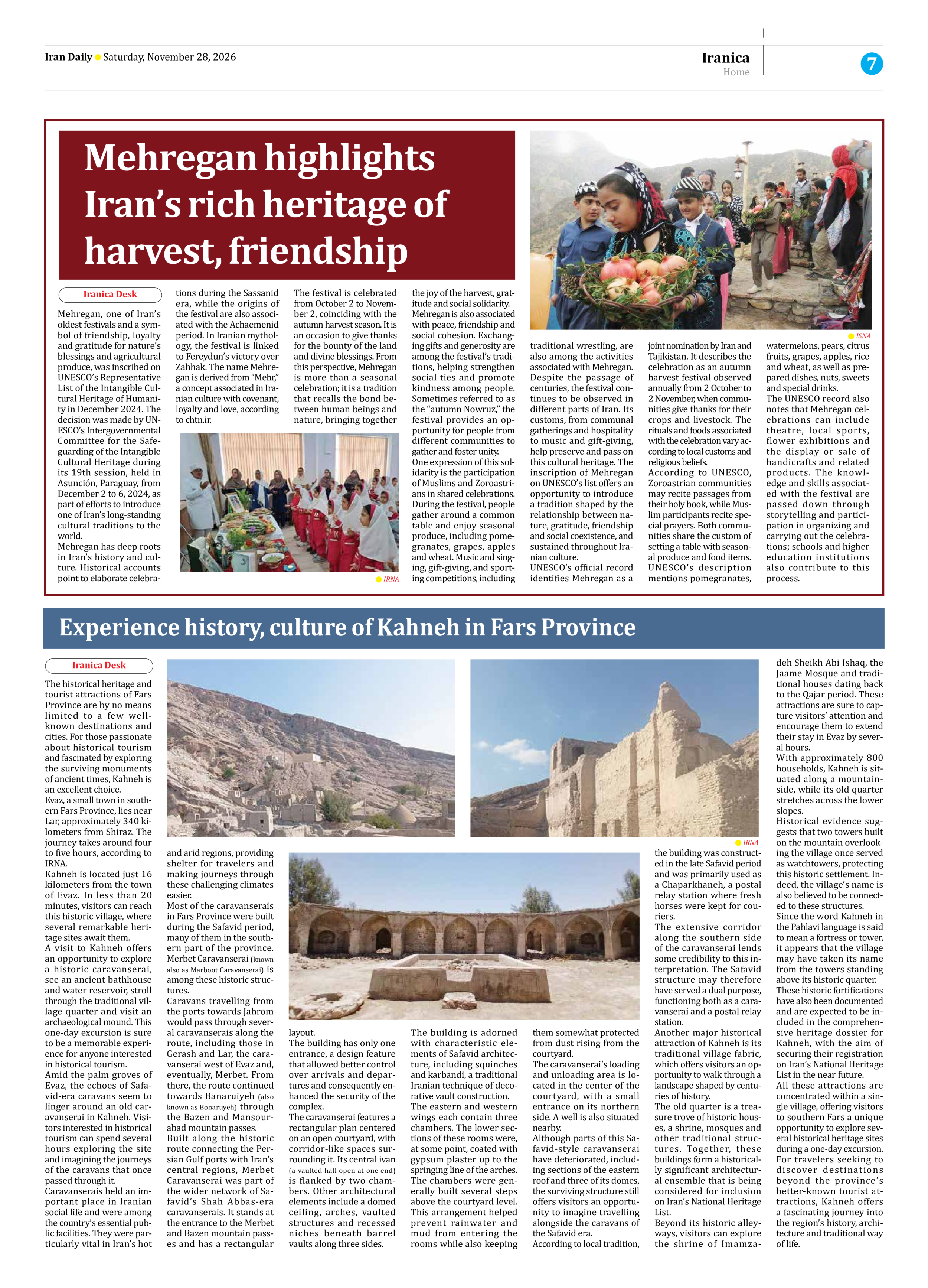
One expression of this solidarity is the participation of Muslims and Zoroastrians in shared celebrations. During the festival, people gather around a common table and enjoy seasonal produce, including pomegranates, grapes, apples and wheat. Music and singing, gift-giving, and sporting competitions, including traditional wrestling, are also among the activities associated with Mehregan.
Despite the passage of centuries, the festival continues to be observed in different parts of Iran. Its customs, from communal gatherings and hospitality to music and gift-giving, help preserve and pass on this cultural heritage. The inscription of Mehregan on UNESCO’s list offers an opportunity to introduce a tradition shaped by the relationship between nature, gratitude, friendship and social coexistence, and sustained throughout Iranian culture.
UNESCO’s official record identifies Mehregan as a joint nomination by Iran and Tajikistan. It describes the celebration as an autumn harvest festival observed annually from 2 October to 2 November, when communities give thanks for their crops and livestock. The rituals and foods associated with the celebration vary according to local customs and religious beliefs.
According to UNESCO, Zoroastrian communities may recite passages from their holy book, while Muslim participants recite special prayers. Both communities share the custom of setting a table with seasonal produce and food items. UNESCO’s description mentions pomegranates, watermelons, pears, citrus fruits, grapes, apples, rice and wheat, as well as prepared dishes, nuts, sweets and special drinks.
The UNESCO record also notes that Mehregan celebrations can include theatre, local sports, flower exhibitions and the display or sale of handicrafts and related products. The knowledge and skills associated with the festival are passed down through storytelling and participation in organizing and carrying out the celebrations; schools and higher education institutions also contribute to this process.