




Iran puts tourism recovery on global agenda
Iran has proposed expanding international cooperation on tourism recovery, seeking to strengthen its tourism sector and promote its attractions abroad following the damages in tourism section caused during 40-day war waged by the United States and Israel against Iran in late February 2026.
Anoushirvan Mohseni Bandpay, Iran’s deputy minister of cultural heritage, tourism and handicrafts, made the proposal on Tuesday at the 127th session of the UN Tourism Executive Council in Abu Dhabi, United Arab Emirates on November 25, 2026.
He thanked the UAE for hosting the meeting and praised the UN Tourism secretary-general and secretariat for organizing it.
He also highlighted Iran’s potential for tourism development and stronger international cooperation.
“The war had damaged Iran’s tourism sector and affected the operations of a considerable number of businesses. many people we, including children, were also killed during the war”, he said.
Despite these difficulties, Iran was continuing efforts to revive domestic travel, support tourism businesses and promote its attractions to international visitors, Mohseni Bandpay added.
He said Iran was ready to expand cooperation with UN Tourism and its member states in training and empowering tourism professionals, developing rural tourism and restoring destinations affected by crises.
Mohseni Bandpay cited Iran’s diverse attractions, including historic cities and cultural heritage sites listed by UNESCO, as well as deserts, forests and villages where local traditions remain alive.
He also identified health tourism and ecotourism as areas with significant growth potential, saying they could diversify the country’s tourism offerings and strengthen its position in international markets.
He described the expansion of eco-lodges and greater participation by local communities as important achievements in community-based tourism.
“Families in many villages have restored traditional houses and converted them into accommodation for visitors,” he said.
The initiative has created income opportunities for local guides, handicraft producers and small businesses while helping preserve traditional architecture, local customs and rural economies, he added.
Mohseni Bandpay expressed hope that discussions at the council meeting would produce joint projects and initiatives whose benefits would directly reach local communities.
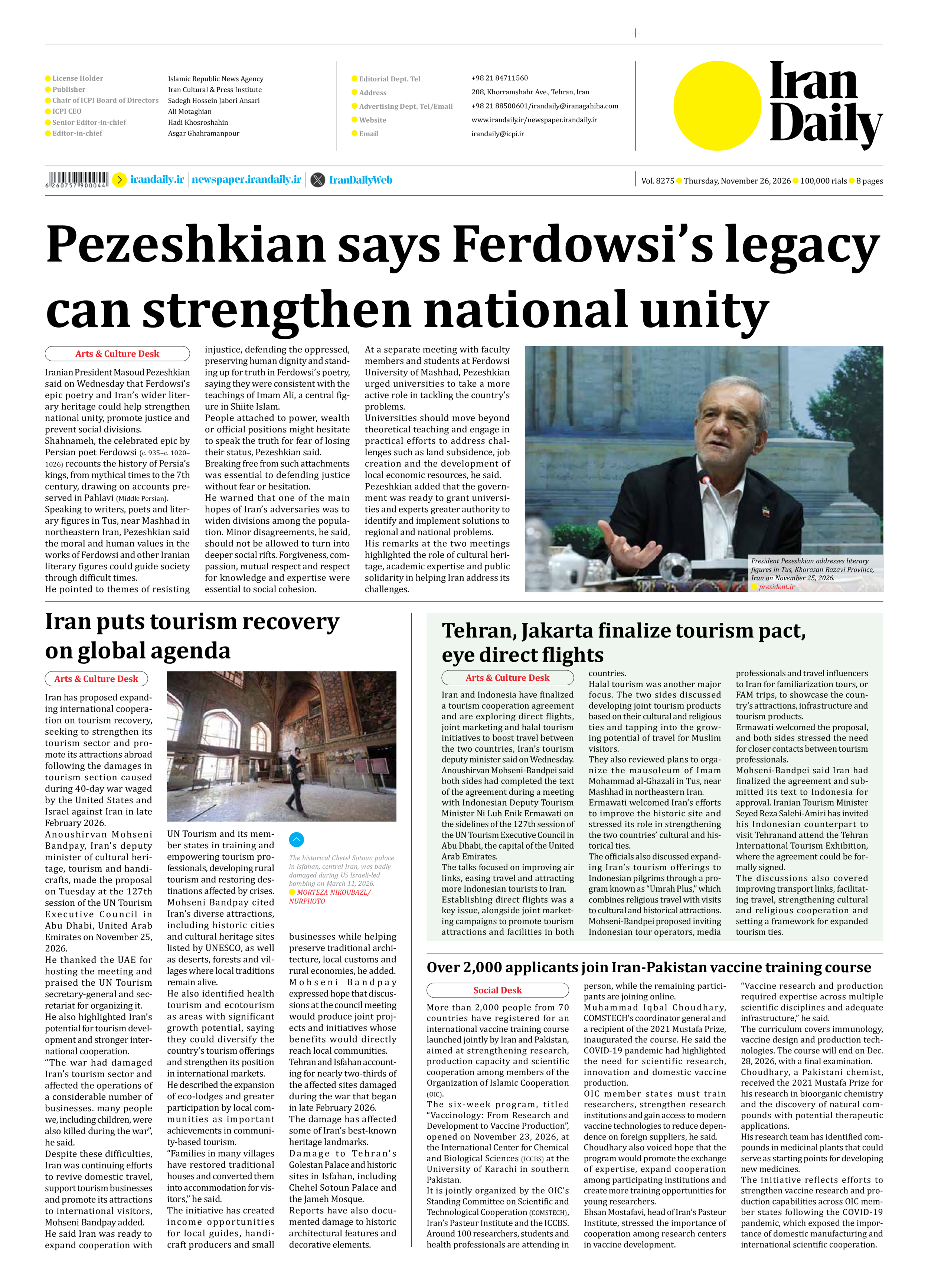
Tehran and Isfahan accounting for nearly two-thirds of the affected sites damaged during the war that began in late February 2026.
The damage has affected some of Iran’s best-known heritage landmarks.
Damage to Tehran’s Golestan Palace and historic sites in Isfahan, including Chehel Sotoun Palace and the Jameh Mosque.
Reports have also documented damage to historic architectural features and decorative elements.