




Copy in clipboard...
Saffron Festival to promote Torbat-e Jam’s tourism potential
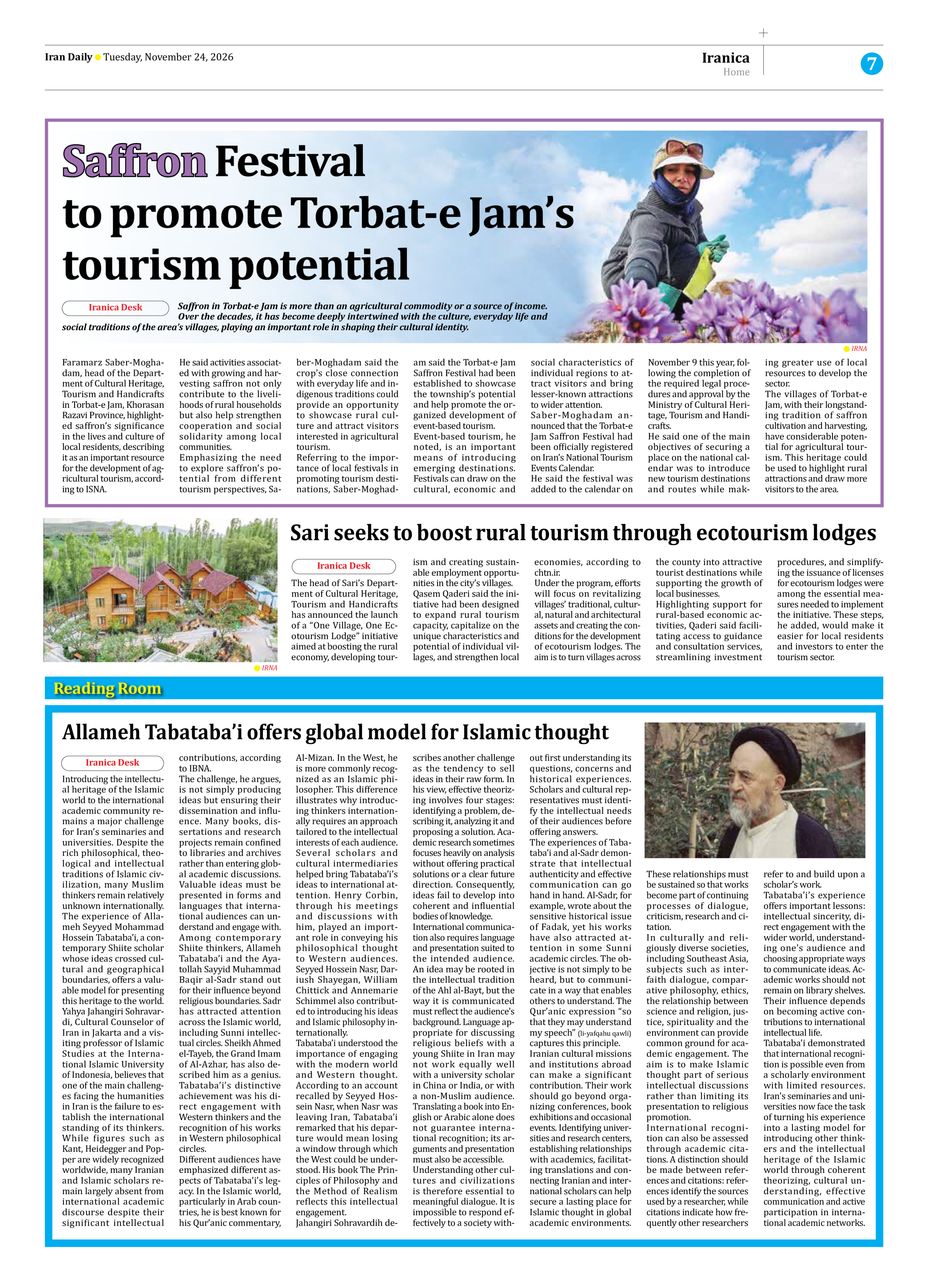
Saffron in Torbat-e Jam is more than an agricultural commodity or a source of income. Over the decades, it has become deeply intertwined with the culture, everyday life and social traditions of the area’s villages, playing an important role in shaping their cultural identity.
He said activities associated with growing and harvesting saffron not only contribute to the livelihoods of rural households but also help strengthen cooperation and social solidarity among local communities.
Emphasizing the need to explore saffron’s potential from different tourism perspectives, Saber-Moghadam said the crop’s close connection with everyday life and indigenous traditions could provide an opportunity to showcase rural culture and attract visitors interested in agricultural tourism.
Referring to the importance of local festivals in promoting tourism destinations, Saber-Moghadam said the Torbat-e Jam Saffron Festival had been established to showcase the township’s potential and help promote the organized development of event-based tourism.
Event-based tourism, he noted, is an important means of introducing emerging destinations. Festivals can draw on the cultural, economic and social characteristics of individual regions to attract visitors and bring lesser-known attractions to wider attention.
Saber-Moghadam announced that the Torbat-e Jam Saffron Festival had been officially registered on Iran’s National Tourism Events Calendar.
He said the festival was added to the calendar on November 9 this year, following the completion of the required legal procedures and approval by the Ministry of Cultural Heritage, Tourism and Handicrafts.
He said one of the main objectives of securing a place on the national calendar was to introduce new tourism destinations and routes while making greater use of local resources to develop the sector.
The villages of Torbat-e Jam, with their longstanding tradition of saffron cultivation and harvesting, have considerable potential for agricultural tourism. This heritage could be used to highlight rural attractions and draw more visitors to the area.