




Mexican students get taste of Iranian cuisine
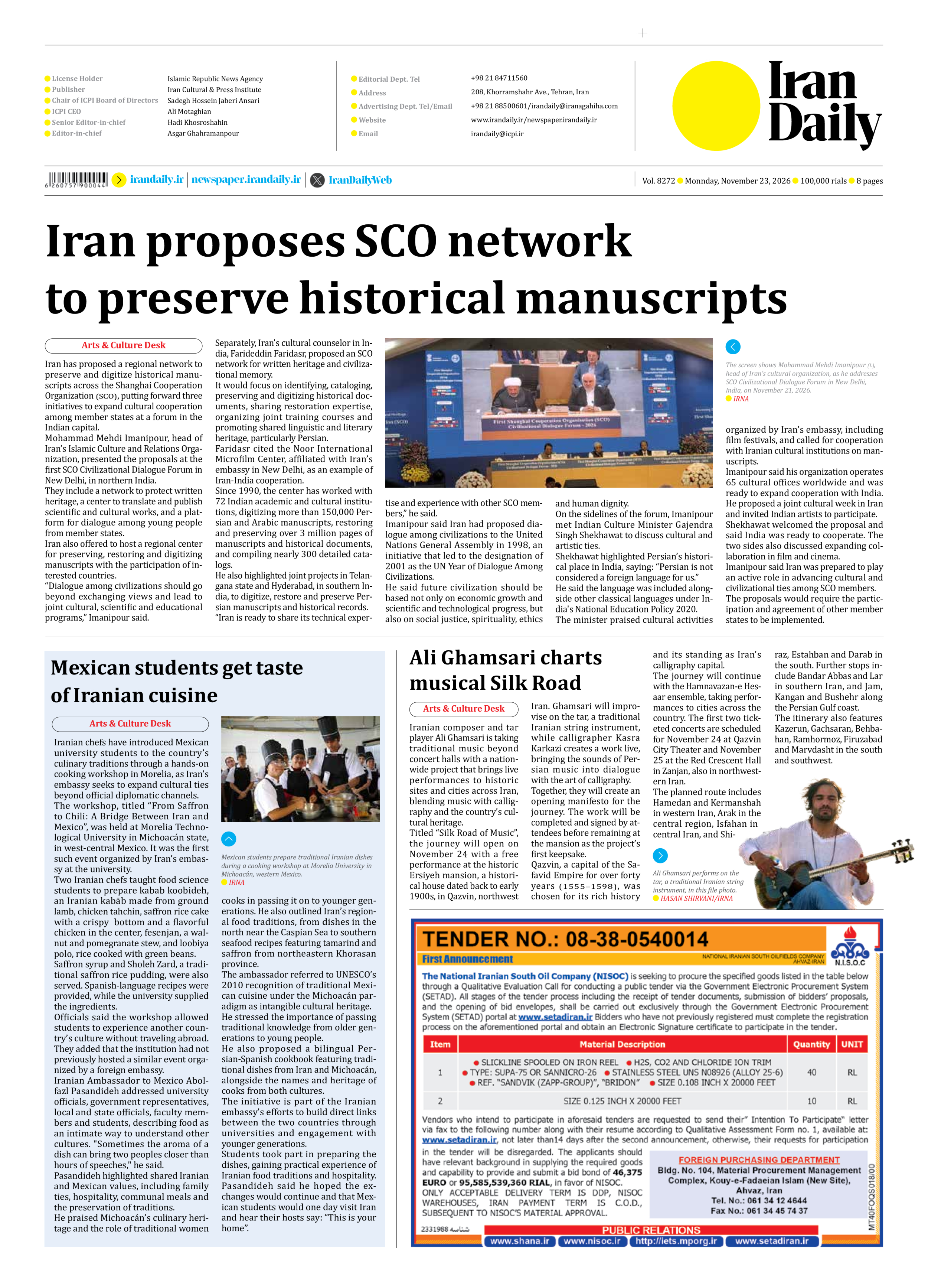
Iranian chefs have introduced Mexican university students to the country’s culinary traditions through a hands-on cooking workshop in Morelia, as Iran’s embassy seeks to expand cultural ties beyond official diplomatic channels.
The workshop, titled “From Saffron to Chili: A Bridge Between Iran and Mexico”, was held at Morelia Technological University in Michoacán state, in west-central Mexico. It was the first such event organized by Iran’s embassy at the university.
Two Iranian chefs taught food science students to prepare kabab koobideh, an Iranian kabāb made from ground lamb, chicken tahchin, saffron rice cake with a crispy bottom and a flavorful chicken in the center, fesenjan, a walnut and pomegranate stew, and loobiya polo, rice cooked with green beans.
Saffron syrup and Sholeh Zard, a traditional saffron rice pudding, were also served. Spanish-language recipes were provided, while the university supplied the ingredients.
Officials said the workshop allowed students to experience another country’s culture without traveling abroad. They added that the institution had not previously hosted a similar event organized by a foreign embassy.
Iranian Ambassador to Mexico Abolfazl Pasandideh addressed university officials, government representatives, local and state officials, faculty members and students, describing food as an intimate way to understand other cultures. "Sometimes the aroma of a dish can bring two peoples closer than hours of speeches," he said.
Pasandideh highlighted shared Iranian and Mexican values, including family ties, hospitality, communal meals and the preservation of traditions.
He praised Michoacán’s culinary heritage and the role of traditional women cooks in passing it on to younger generations. He also outlined Iran’s regional food traditions, from dishes in the north near the Caspian Sea to southern seafood recipes featuring tamarind and saffron from northeastern Khorasan province.
The ambassador referred to UNESCO’s 2010 recognition of traditional Mexican cuisine under the Michoacán paradigm as intangible cultural heritage.
He stressed the importance of passing traditional knowledge from older generations to young people.
He also proposed a bilingual Persian-Spanish cookbook featuring traditional dishes from Iran and Michoacán, alongside the names and heritage of cooks from both cultures.
The initiative is part of the Iranian embassy’s efforts to build direct links between the two countries through universities and engagement with younger generations.
Students took part in preparing the dishes, gaining practical experience of Iranian food traditions and hospitality.
Pasandideh said he hoped the exchanges would continue and that Mexican students would one day visit Iran and hear their hosts say: “This is your home”.