




Hirmand embroidery weaves culture into livelihoods
Hirmand in northern Sistan and Baluchestan Province is known for its agricultural activities and close ties to the Hirmand River. Alongside its natural and historical attractions, the city is also home to a rich tradition of handicrafts, including embroidery practiced by local women and girls.
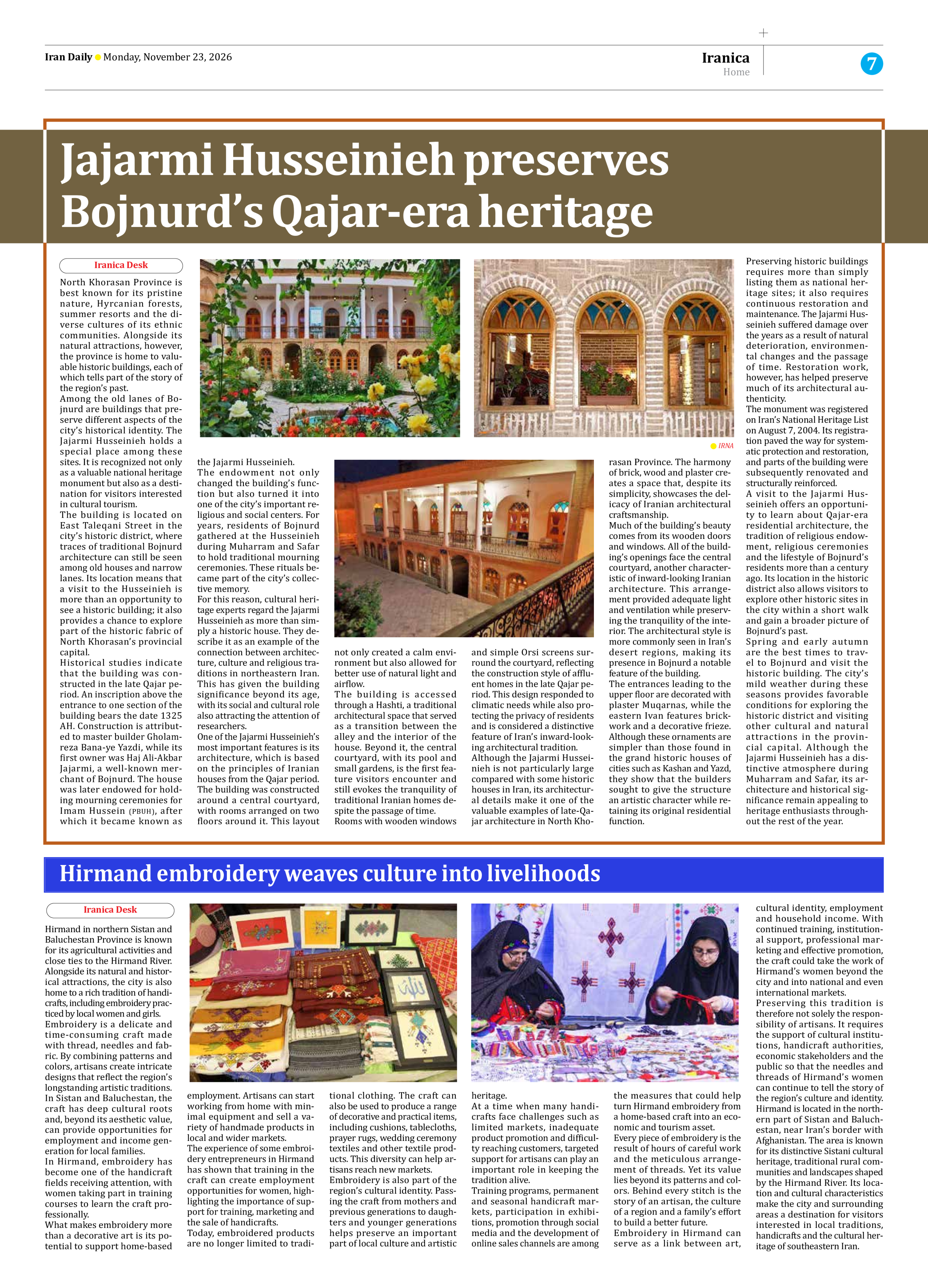
Embroidery is a delicate and time-consuming craft made with thread, needles and fabric. By combining patterns and colors, artisans create intricate designs that reflect the region’s longstanding artistic traditions. In Sistan and Baluchestan, the craft has deep cultural roots and, beyond its aesthetic value, can provide opportunities for employment and income generation for local families.
In Hirmand, embroidery has become one of the handicraft fields receiving attention, with women taking part in training courses to learn the craft professionally.
What makes embroidery more than a decorative art is its potential to support home-based employment. Artisans can start working from home with minimal equipment and sell a variety of handmade products in local and wider markets.
The experience of some embroidery entrepreneurs in Hirmand has shown that training in the craft can create employment opportunities for women, highlighting the importance of support for training, marketing and the sale of handicrafts.
Today, embroidered products are no longer limited to traditional clothing. The craft can also be used to produce a range of decorative and practical items, including cushions, tablecloths, prayer rugs, wedding ceremony textiles and other textile products. This diversity can help artisans reach new markets.
Embroidery is also part of the region’s cultural identity. Passing the craft from mothers and previous generations to daughters and younger generations helps preserve an important part of local culture and artistic heritage.
At a time when many handicrafts face challenges such as limited markets, inadequate product promotion and difficulty reaching customers, targeted support for artisans can play an important role in keeping the tradition alive.
Training programs, permanent and seasonal handicraft markets, participation in exhibitions, promotion through social media and the development of online sales channels are among the measures that could help turn Hirmand embroidery from a home-based craft into an economic and tourism asset.
Every piece of embroidery is the result of hours of careful work and the meticulous arrangement of threads. Yet its value lies beyond its patterns and colors. Behind every stitch is the story of an artisan, the culture of a region and a family’s effort to build a better future.
Embroidery in Hirmand can serve as a link between art, cultural identity, employment and household income. With continued training, institutional support, professional marketing and effective promotion, the craft could take the work of Hirmand’s women beyond the city and into national and even international markets.
Preserving this tradition is therefore not solely the responsibility of artisans. It requires the support of cultural institutions, handicraft authorities, economic stakeholders and the public so that the needles and threads of Hirmand’s women can continue to tell the story of the region’s culture and identity.
Hirmand is located in the northern part of Sistan and Baluchestan, near Iran’s border with Afghanistan. The area is known for its distinctive Sistani cultural heritage, traditional rural communities and landscapes shaped by the Hirmand River. Its location and cultural characteristics make the city and surrounding areas a destination for visitors interested in local traditions, handicrafts and the cultural heritage of southeastern Iran.