


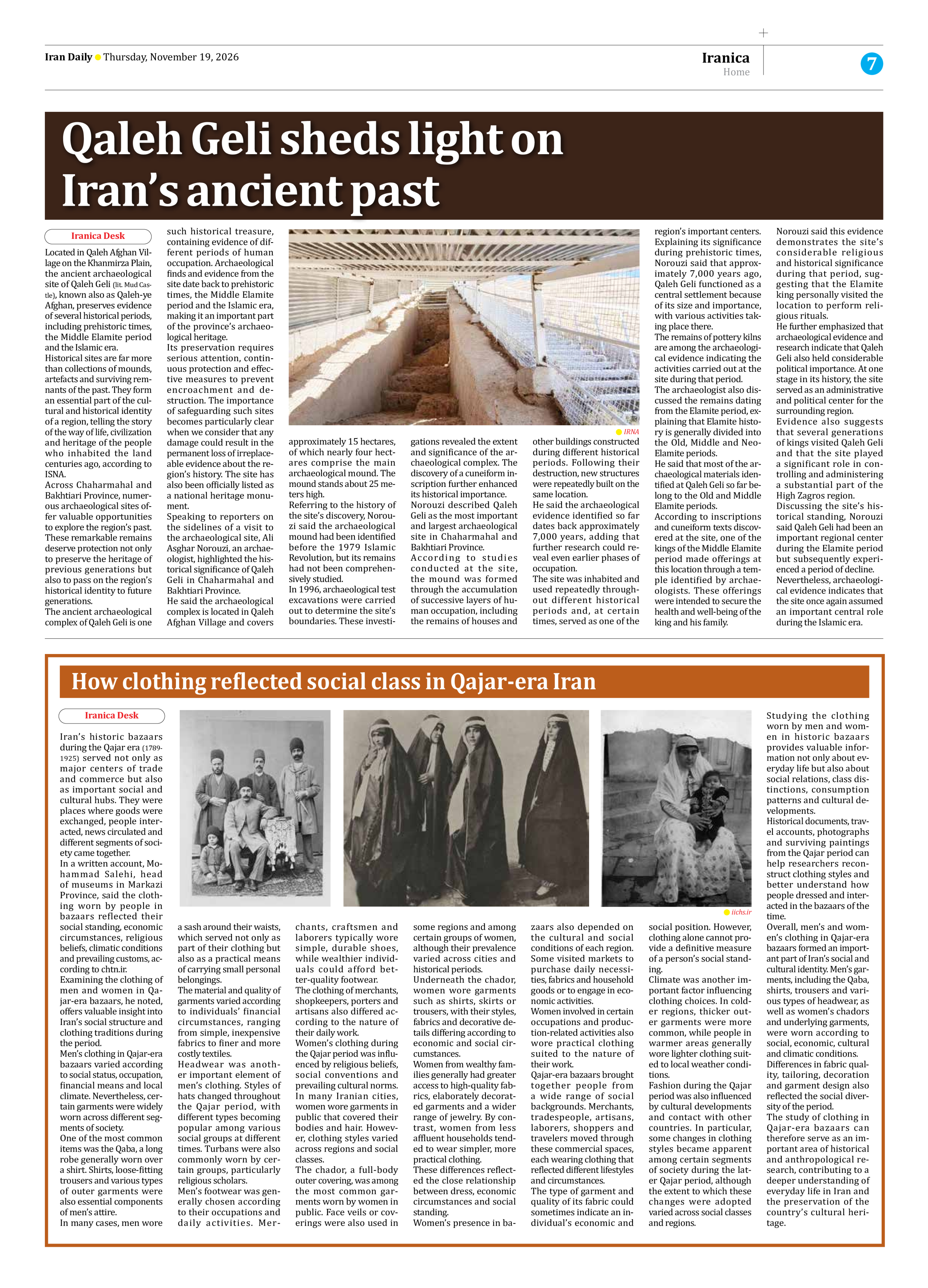


How clothing reflected social class in Qajar-era Iran
Iran’s historic bazaars during the Qajar era (1789-1925) served not only as major centers of trade and commerce but also as important social and cultural hubs. They were places where goods were exchanged, people interacted, news circulated and different segments of society came together.
In a written account, Mohammad Salehi, head of museums in Markazi Province, said the clothing worn by people in bazaars reflected their social standing, economic circumstances, religious beliefs, climatic conditions and prevailing customs, according to chtn.ir.
Examining the clothing of men and women in Qajar-era bazaars, he noted, offers valuable insight into Iran’s social structure and clothing traditions during the period.
Men’s clothing in Qajar-era bazaars varied according to social status, occupation, financial means and local climate. Nevertheless, certain garments were widely worn across different segments of society.
One of the most common items was the Qaba, a long robe generally worn over a shirt. Shirts, loose-fitting trousers and various types of outer garments were also essential components of men’s attire.
In many cases, men wore a sash around their waists, which served not only as part of their clothing but also as a practical means of carrying small personal belongings.
The material and quality of garments varied according to individuals’ financial circumstances, ranging from simple, inexpensive fabrics to finer and more costly textiles.
Headwear was another important element of men’s clothing. Styles of hats changed throughout the Qajar period, with different types becoming popular among various social groups at different times. Turbans were also commonly worn by certain groups, particularly religious scholars.
Men’s footwear was generally chosen according to their occupations and daily activities. Merchants, craftsmen and laborers typically wore simple, durable shoes, while wealthier individuals could afford better-quality footwear.
The clothing of merchants, shopkeepers, porters and artisans also differed according to the nature of their daily work.
Women’s clothing during the Qajar period was influenced by religious beliefs, social conventions and prevailing cultural norms. In many Iranian cities, women wore garments in public that covered their bodies and hair. However, clothing styles varied across regions and social classes.
The chador, a full-body outer covering, was among the most common garments worn by women in public. Face veils or coverings were also used in some regions and among certain groups of women, although their prevalence varied across cities and historical periods.
Underneath the chador, women wore garments such as shirts, skirts or trousers, with their styles, fabrics and decorative details differing according to economic and social circumstances.
Women from wealthy families generally had greater access to high-quality fabrics, elaborately decorated garments and a wider range of jewelry. By contrast, women from less affluent households tended to wear simpler, more practical clothing.
These differences reflected the close relationship between dress, economic circumstances and social standing.
Women’s presence in bazaars also depended on the cultural and social conditions of each region. Some visited markets to purchase daily necessities, fabrics and household goods or to engage in economic activities.
Women involved in certain occupations and production-related activities also wore practical clothing suited to the nature of their work.
Qajar-era bazaars brought together people from a wide range of social backgrounds. Merchants, tradespeople, artisans, laborers, shoppers and travelers moved through these commercial spaces, each wearing clothing that reflected different lifestyles and circumstances.
The type of garment and quality of its fabric could sometimes indicate an individual’s economic and social position. However, clothing alone cannot provide a definitive measure of a person’s social standing.
Climate was another important factor influencing clothing choices. In colder regions, thicker outer garments were more common, while people in warmer areas generally wore lighter clothing suited to local weather conditions.
Fashion during the Qajar period was also influenced by cultural developments and contact with other countries. In particular, some changes in clothing styles became apparent among certain segments of society during the later Qajar period, although the extent to which these changes were adopted varied across social classes and regions.
Studying the clothing worn by men and women in historic bazaars provides valuable information not only about everyday life but also about social relations, class distinctions, consumption patterns and cultural developments.
Historical documents, travel accounts, photographs and surviving paintings from the Qajar period can help researchers reconstruct clothing styles and better understand how people dressed and interacted in the bazaars of the time.
Overall, men’s and women’s clothing in Qajar-era bazaars formed an important part of Iran’s social and cultural identity. Men’s garments, including the Qaba, shirts, trousers and various types of headwear, as well as women’s chadors and underlying garments, were worn according to social, economic, cultural and climatic conditions.
Differences in fabric quality, tailoring, decoration and garment design also reflected the social diversity of the period.
The study of clothing in Qajar-era bazaars can therefore serve as an important area of historical and anthropological research, contributing to a deeper understanding of everyday life in Iran and the preservation of the country’s cultural heritage.