




Pezeshkian calls for data-driven fight against economic corruption
President Masoud Pezeshkian has called for a data-driven campaign against economic corruption, tax evasion and money laundering, saying government support must reach households that need it.
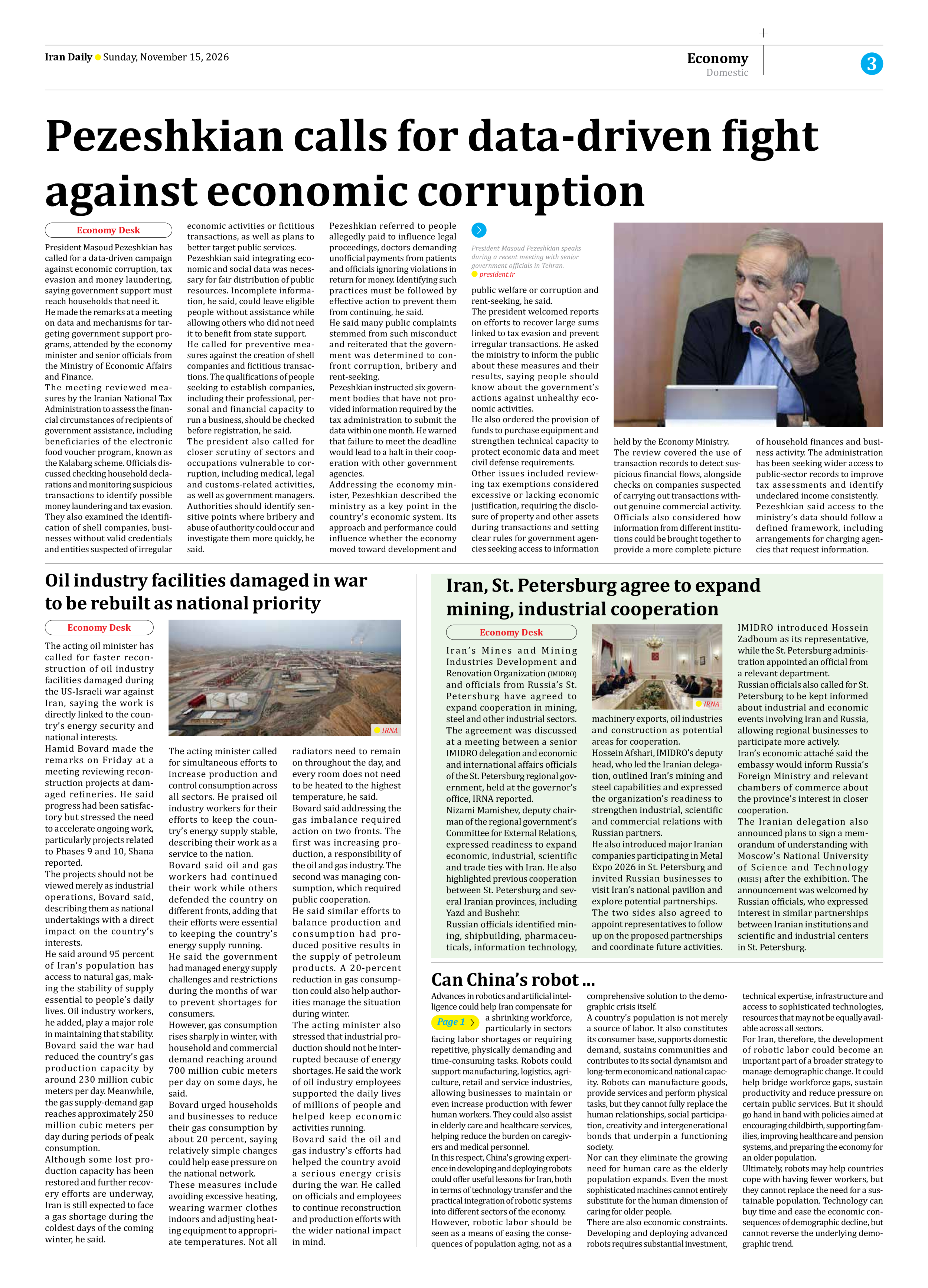
He made the remarks at a meeting on data and mechanisms for targeting government support programs, attended by the economy minister and senior officials from the Ministry of Economic Affairs and Finance.
The meeting reviewed measures by the Iranian National Tax Administration to assess the financial circumstances of recipients of government assistance, including beneficiaries of the electronic food voucher program, known as the Kalabarg scheme. Officials discussed checking household declarations and monitoring suspicious transactions to identify possible money laundering and tax evasion.
They also examined the identification of shell companies, businesses without valid credentials and entities suspected of irregular economic activities or fictitious transactions, as well as plans to better target public services.
Pezeshkian said integrating economic and social data was necessary for fair distribution of public resources. Incomplete information, he said, could leave eligible people without assistance while allowing others who did not need it to benefit from state support.
He called for preventive measures against the creation of shell companies and fictitious transactions. The qualifications of people seeking to establish companies, including their professional, personal and financial capacity to run a business, should be checked before registration, he said.
The president also called for closer scrutiny of sectors and occupations vulnerable to corruption, including medical, legal and customs-related activities, as well as government managers. Authorities should identify sensitive points where bribery and abuse of authority could occur and investigate them more quickly, he said.
Pezeshkian referred to people allegedly paid to influence legal proceedings, doctors demanding unofficial payments from patients and officials ignoring violations in return for money. Identifying such practices must be followed by effective action to prevent them from continuing, he said.
He said many public complaints stemmed from such misconduct and reiterated that the government was determined to confront corruption, bribery and rent-seeking.
Pezeshkian instructed six government bodies that have not provided information required by the tax administration to submit the data within one month. He warned that failure to meet the deadline would lead to a halt in their cooperation with other government agencies.
Addressing the economy minister, Pezeshkian described the ministry as a key point in the country’s economic system. Its approach and performance could influence whether the economy moved toward development and public welfare or corruption and rent-seeking, he said.
The president welcomed reports on efforts to recover large sums linked to tax evasion and prevent irregular transactions. He asked the ministry to inform the public about these measures and their results, saying people should know about the government’s actions against unhealthy economic activities.
He also ordered the provision of funds to purchase equipment and strengthen technical capacity to protect economic data and meet civil defense requirements.
Other issues included reviewing tax exemptions considered excessive or lacking economic justification, requiring the disclosure of property and other assets during transactions and setting clear rules for government agencies seeking access to information held by the Economy Ministry.
The review covered the use of transaction records to detect suspicious financial flows, alongside checks on companies suspected of carrying out transactions without genuine commercial activity. Officials also considered how information from different institutions could be brought together to provide a more complete picture of household finances and business activity. The administration has been seeking wider access to public-sector records to improve tax assessments and identify undeclared income consistently.
Pezeshkian said access to the ministry’s data should follow a defined framework, including arrangements for charging agencies that request information.