




Iran seeks three new UNESCO heritage listings
Iran is seeking to add three elements to UNESCO’s intangible cultural heritage lists, a move that would raise the number of its registered entries to 30 if all are approved.
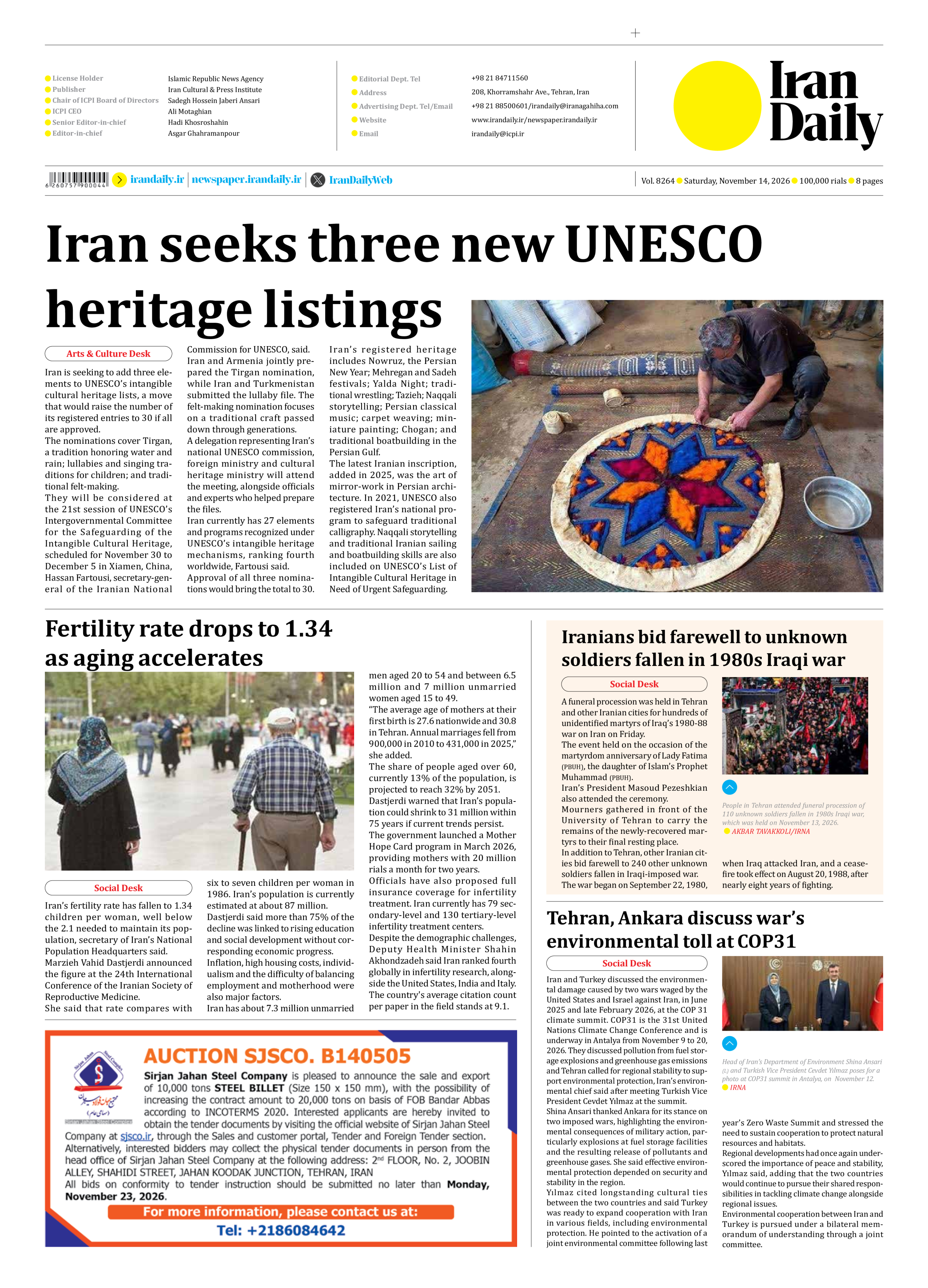
The nominations cover Tirgan, a tradition honoring water and rain; lullabies and singing traditions for children; and traditional felt-making.
They will be considered at the 21st session of UNESCO’s Intergovernmental Committee for the Safeguarding of the Intangible Cultural Heritage, scheduled for November 30 to December 5 in Xiamen, China, Hassan Fartousi, secretary-general of the Iranian National Commission for UNESCO, said.
Iran and Armenia jointly prepared the Tirgan nomination, while Iran and Turkmenistan submitted the lullaby file. The felt-making nomination focuses on a traditional craft passed down through generations.
A delegation representing Iran’s national UNESCO commission, foreign ministry and cultural heritage ministry will attend the meeting, alongside officials and experts who helped prepare the files.
Iran currently has 27 elements and programs recognized under UNESCO’s intangible heritage mechanisms, ranking fourth worldwide, Fartousi said.
Approval of all three nominations would bring the total to 30.
Iran’s registered heritage includes Nowruz, the Persian New Year; Mehregan and Sadeh festivals; Yalda Night; traditional wrestling; Tazieh; Naqqali storytelling; Persian classical music; carpet weaving; miniature painting; Chogan; and traditional boatbuilding in the Persian Gulf.
The latest Iranian inscription, added in 2025, was the art of mirror-work in Persian architecture. In 2021, UNESCO also registered Iran’s national program to safeguard traditional calligraphy. Naqqali storytelling and traditional Iranian sailing and boatbuilding skills are also included on UNESCO’s List of Intangible Cultural Heritage in Need of Urgent Safeguarding.