




Historic wall of Isfahan gains national heritage status
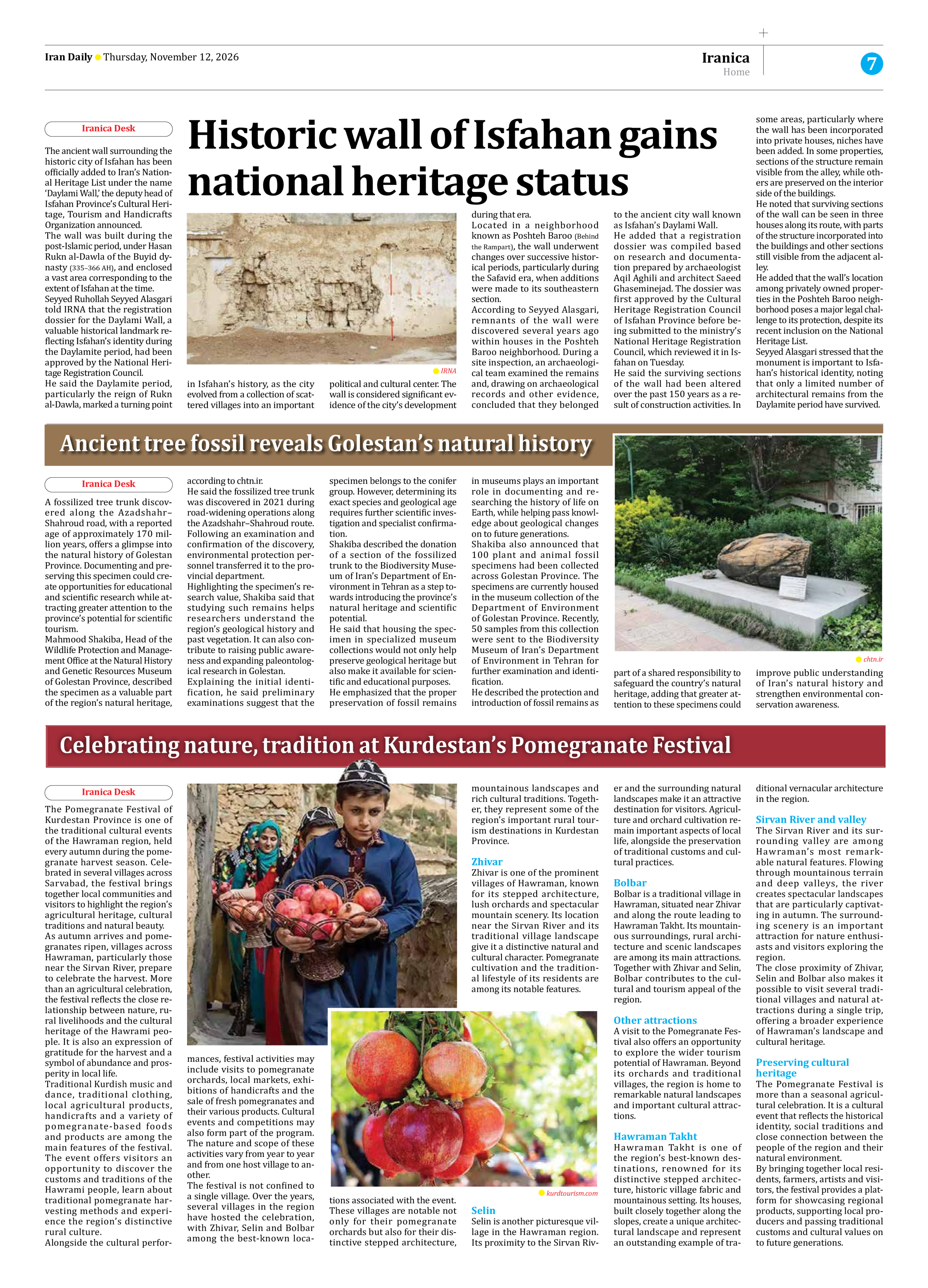
The ancient wall surrounding the historic city of Isfahan has been officially added to Iran’s National Heritage List under the name ‘Daylami Wall,’ the deputy head of Isfahan Province’s Cultural Heritage, Tourism and Handicrafts Organization announced.
The wall was built during the post-Islamic period, under Hasan Rukn al-Dawla of the Buyid dynasty (335–366 AH), and enclosed a vast area corresponding to the extent of Isfahan at the time.
Seyyed Ruhollah Seyyed Alasgari told IRNA that the registration dossier for the Daylami Wall, a valuable historical landmark reflecting Isfahan’s identity during the Daylamite period, had been approved by the National Heritage Registration Council.
He said the Daylamite period, particularly the reign of Rukn al-Dawla, marked a turning point in Isfahan’s history, as the city evolved from a collection of scattered villages into an important political and cultural center. The wall is considered significant evidence of the city’s development during that era.
Located in a neighborhood known as Poshteh Baroo (Behind the Rampart), the wall underwent changes over successive historical periods, particularly during the Safavid era, when additions were made to its southeastern section.
According to Seyyed Alasgari, remnants of the wall were discovered several years ago within houses in the Poshteh Baroo neighborhood. During a site inspection, an archaeological team examined the remains and, drawing on archaeological records and other evidence, concluded that they belonged to the ancient city wall known as Isfahan’s Daylami Wall.
He added that a registration dossier was compiled based on research and documentation prepared by archaeologist Aqil Aghili and architect Saeed Ghaseminejad. The dossier was first approved by the Cultural Heritage Registration Council of Isfahan Province before being submitted to the ministry’s National Heritage Registration Council, which reviewed it in Isfahan on Tuesday.
He said the surviving sections of the wall had been altered over the past 150 years as a result of construction activities. In some areas, particularly where the wall has been incorporated into private houses, niches have been added. In some properties, sections of the structure remain visible from the alley, while others are preserved on the interior side of the buildings.
He noted that surviving sections of the wall can be seen in three houses along its route, with parts of the structure incorporated into the buildings and other sections still visible from the adjacent alley.
He added that the wall’s location among privately owned properties in the Poshteh Baroo neighborhood poses a major legal challenge to its protection, despite its recent inclusion on the National Heritage List.
Seyyed Alasgari stressed that the monument is important to Isfahan’s historical identity, noting that only a limited number of architectural remains from the Daylamite period have survived.