




NIGC says gas supply remains stable after fire at South Pars platform
Iran’s domestic gas supply remains stable, with no disruption reported for consumers following a fire at a gas platform in the South Pars field, the head of the National Iranian Gas Company (NIGC) said on Wednesday, adding that the platform’s lost output had been offset by production from other platforms.
Saeed Tavakoli said coordination between the oil and gas sectors, along with technical and engineering measures, had helped maintain the stability of the country’s gas network after Tuesday night’s fire at a platform in Phase 14 of the South Pars gas field, IRNA reported.
He said coordinated management across the oil and gas sectors had played an important role in keeping the network stable.
“During the seasonal transition to colder weather, actual gas consumption sometimes exceeds forecasts slightly,” Tavakoli said.
Gas consumption in Tehran province reached a record 95 million cubic meters on Wednesday morning, while household and commercial users across the country consumed nearly 450 million cubic meters, he said.
Tavakoli urged the public to join the “20 Degrees” campaign, which encourages households to set indoor temperatures at 20 degrees Celsius, to help ensure stable gas supplies through the fall and winter.
According to the NIGC, Iran was facing a daily gas shortfall of about 300 million cubic meters before the 40-day US-Israeli war began in late February. Attacks on four South Pars gas refineries in March initially knocked out about 230 million cubic meters of daily gas production capacity. About 100 million cubic meters of that lost capacity has since been restored, leaving 130 million cubic meters of daily production capacity still offline and adding to the country’s existing supply constraints. This has underscored the importance of efforts to curb consumption.
Iran holds about 34 trillion cubic meters of proven natural gas reserves, the world’s second-largest after Russia, accounting for about 17% of global proven reserves. Despite its vast reserves, a significant portion of the country’s gas potential remains undeveloped because of sanctions-related constraints and insufficient investment.
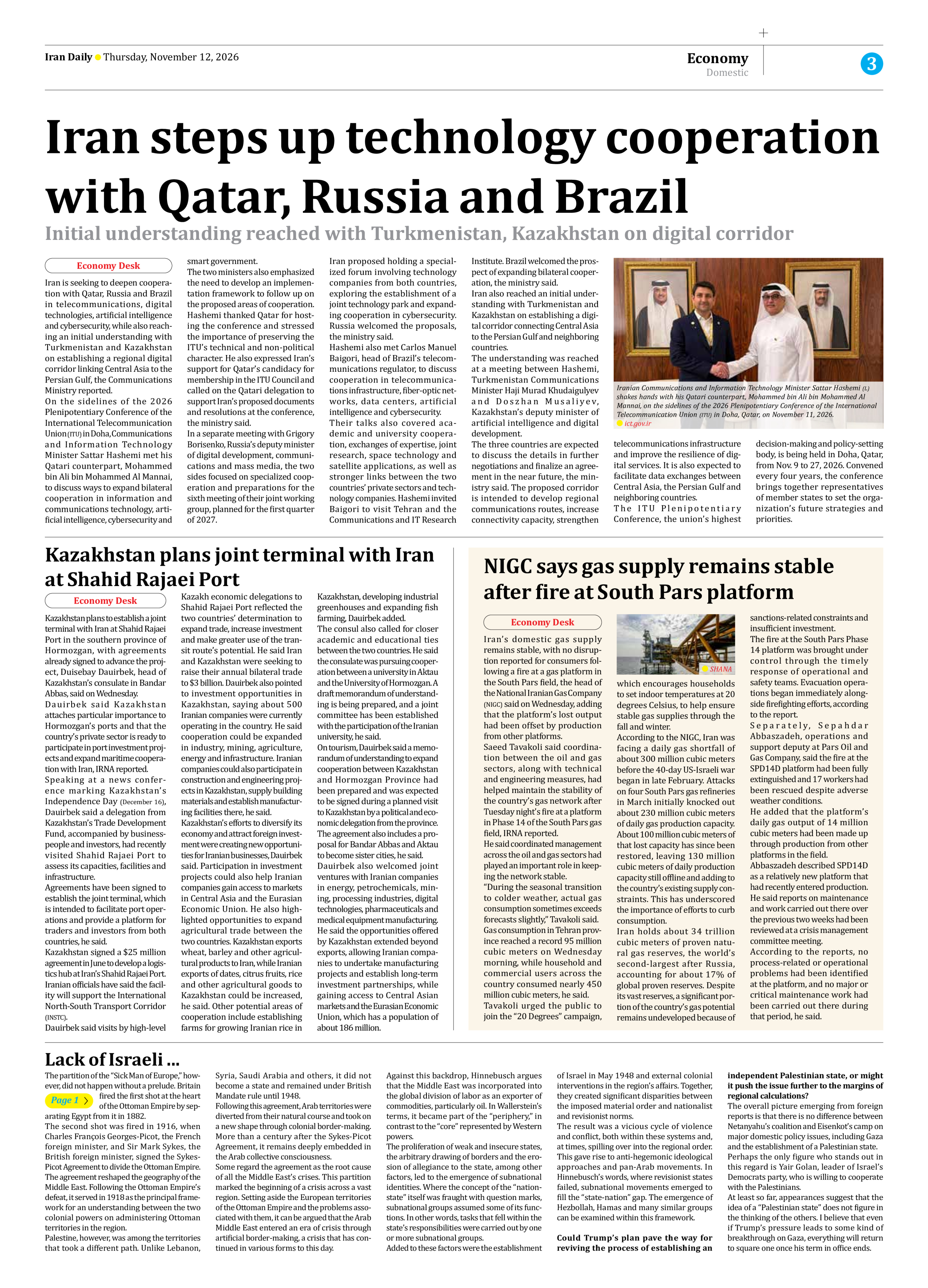
The fire at the South Pars Phase 14 platform was brought under control through the timely response of operational and safety teams. Evacuation operations began immediately alongside firefighting efforts, according to the report.
Separately, Sepahdar Abbaszadeh, operations and support deputy at Pars Oil and Gas Company, said the fire at the SPD14D platform had been fully extinguished and 17 workers had been rescued despite adverse weather conditions.
He added that the platform’s daily gas output of 14 million cubic meters had been made up through production from other platforms in the field.
Abbaszadeh described SPD14D as a relatively new platform that had recently entered production. He said reports on maintenance and work carried out there over the previous two weeks had been reviewed at a crisis management committee meeting.
According to the reports, no process-related or operational problems had been identified at the platform, and no major or critical maintenance work had been carried out there during that period, he said.