




Iraq reopens border crossing with Iran as another faces temporary closure
Iraq has reopened a key border crossing with Iran after nearly three weeks of closure, while another crossing is set to shut temporarily on Friday, Tasnim news agency reported.
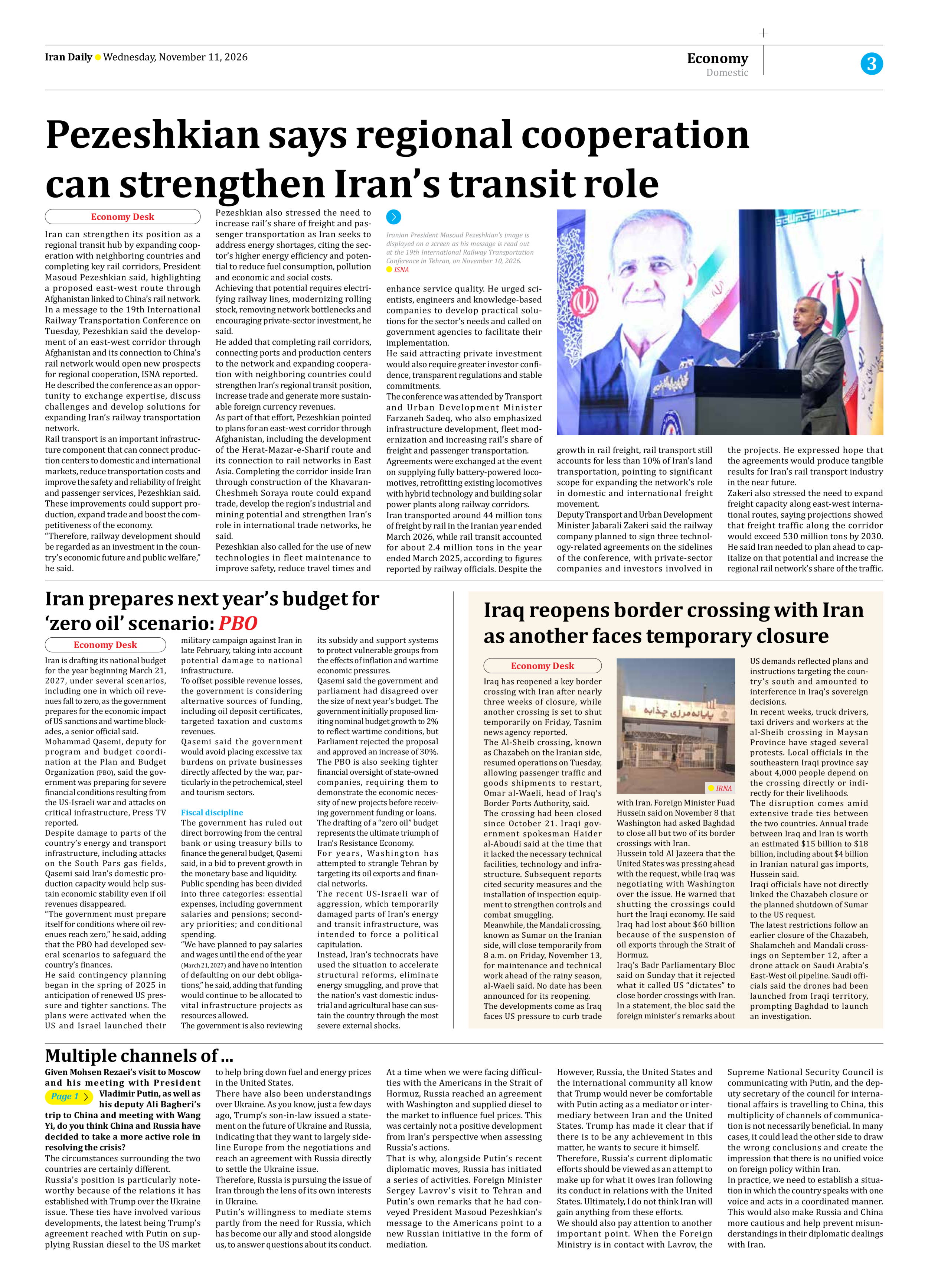
The Al-Sheib crossing, known as Chazabeh on the Iranian side, resumed operations on Tuesday, allowing passenger traffic and goods shipments to restart, Omar al-Waeli, head of Iraq’s Border Ports Authority, said.
The crossing had been closed since October 21. Iraqi government spokesman Haider al-Aboudi said at the time that it lacked the necessary technical facilities, technology and infrastructure. Subsequent reports cited security measures and the installation of inspection equipment to strengthen controls and combat smuggling.
Meanwhile, the Mandali crossing, known as Sumar on the Iranian side, will close temporarily from 8 a.m. on Friday, November 13, for maintenance and technical work ahead of the rainy season, al-Waeli said. No date has been announced for its reopening.
The developments come as Iraq faces US pressure to curb trade with Iran. Foreign Minister Fuad Hussein said on November 8 that Washington had asked Baghdad to close all but two of its border crossings with Iran.
Hussein told Al Jazeera that the United States was pressing ahead with the request, while Iraq was negotiating with Washington over the issue. He warned that shutting the crossings could hurt the Iraqi economy. He said Iraq had lost about $60 billion because of the suspension of oil exports through the Strait of Hormuz.
Iraq’s Badr Parliamentary Bloc said on Sunday that it rejected what it called US “dictates” to close border crossings with Iran. In a statement, the bloc said the foreign minister’s remarks about US demands reflected plans and instructions targeting the country’s south and amounted to interference in Iraq’s sovereign decisions.
In recent weeks, truck drivers, taxi drivers and workers at the al-Sheib crossing in Maysan Province have staged several protests. Local officials in the southeastern Iraqi province say about 4,000 people depend on the crossing directly or indirectly for their livelihoods.
The disruption comes amid extensive trade ties between the two countries. Annual trade between Iraq and Iran is worth an estimated $15 billion to $18 billion, including about $4 billion in Iranian natural gas imports, Hussein said.
Iraqi officials have not directly linked the Chazabeh closure or the planned shutdown of Sumar to the US request.
The latest restrictions follow an earlier closure of the Chazabeh, Shalamcheh and Mandali crossings on September 12, after a drone attack on Saudi Arabia’s East-West oil pipeline. Saudi officials said the drones had been launched from Iraqi territory, prompting Baghdad to launch an investigation.