




Pezeshkian says regional cooperation can strengthen Iran’s transit role
Iran can strengthen its position as a regional transit hub by expanding cooperation with neighboring countries and completing key rail corridors, President Masoud Pezeshkian said, highlighting a proposed east-west route through Afghanistan linked to China’s rail network.
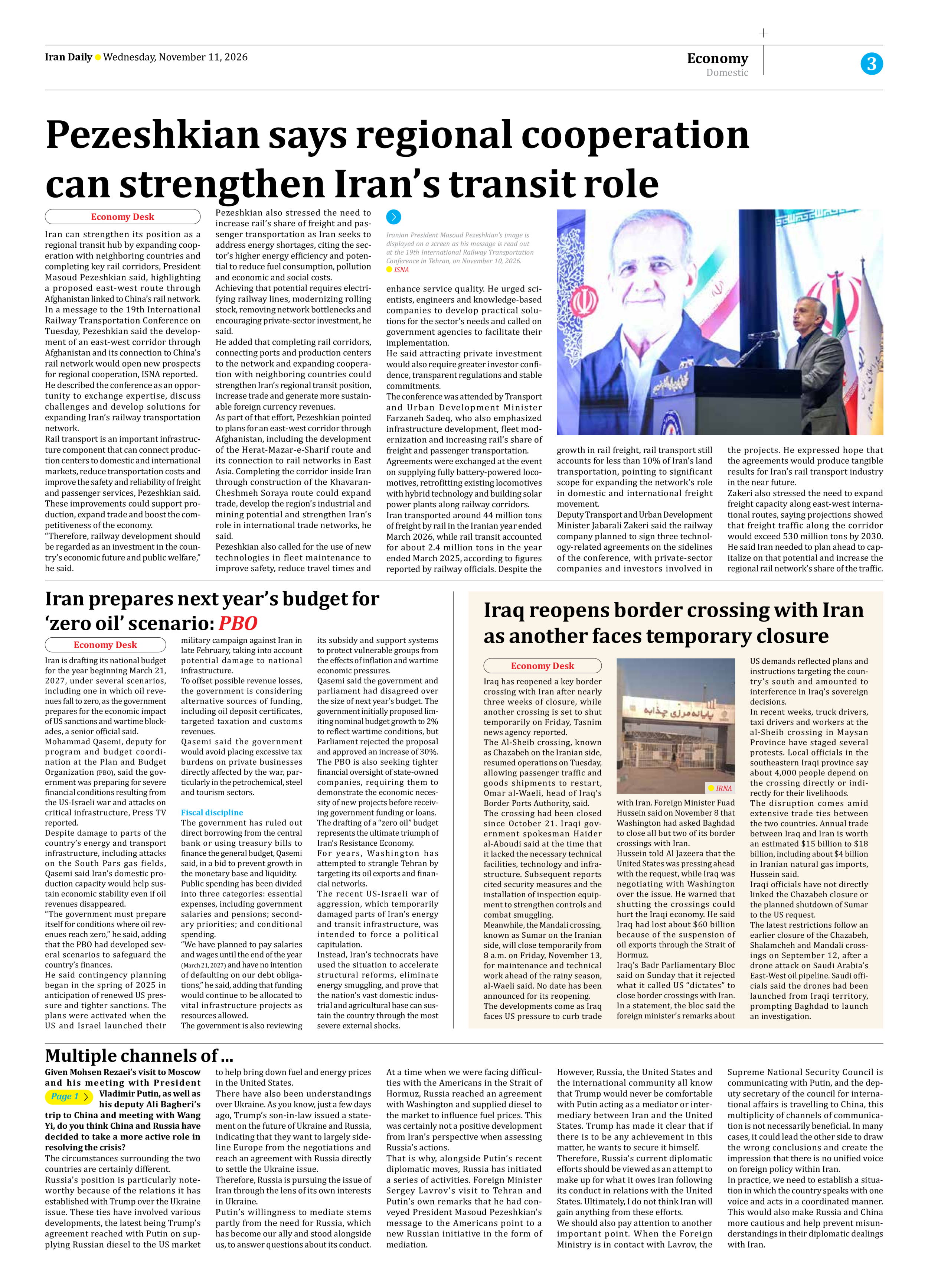
In a message to the 19th International Railway Transportation Conference on Tuesday, Pezeshkian said the development of an east-west corridor through Afghanistan and its connection to China’s rail network would open new prospects for regional cooperation, ISNA reported.
He described the conference as an opportunity to exchange expertise, discuss challenges and develop solutions for expanding Iran’s railway transportation network.
Rail transport is an important infrastructure component that can connect production centers to domestic and international markets, reduce transportation costs and improve the safety and reliability of freight and passenger services, Pezeshkian said. These improvements could support production, expand trade and boost the competitiveness of the economy.
“Therefore, railway development should be regarded as an investment in the country’s economic future and public welfare,” he said.
Pezeshkian also stressed the need to increase rail’s share of freight and passenger transportation as Iran seeks to address energy shortages, citing the sector’s higher energy efficiency and potential to reduce fuel consumption, pollution and economic and social costs.
Achieving that potential requires electrifying railway lines, modernizing rolling stock, removing network bottlenecks and encouraging private-sector investment, he said.
He added that completing rail corridors, connecting ports and production centers to the network and expanding cooperation with neighboring countries could strengthen Iran’s regional transit position, increase trade and generate more sustainable foreign currency revenues.
As part of that effort, Pezeshkian pointed to plans for an east-west corridor through Afghanistan, including the development of the Herat-Mazar-e-Sharif route and its connection to rail networks in East Asia. Completing the corridor inside Iran through construction of the Khavaran-Cheshmeh Soraya route could expand trade, develop the region’s industrial and mining potential and strengthen Iran’s role in international trade networks, he said.
Pezeshkian also called for the use of new technologies in fleet maintenance to improve safety, reduce travel times and enhance service quality. He urged scientists, engineers and knowledge-based companies to develop practical solutions for the sector’s needs and called on government agencies to facilitate their implementation.
He said attracting private investment would also require greater investor confidence, transparent regulations and stable commitments.
The conference was attended by Transport and Urban Development Minister Farzaneh Sadeq, who also emphasized infrastructure development, fleet modernization and increasing rail’s share of freight and passenger transportation.
Agreements were exchanged at the event on supplying fully battery-powered locomotives, retrofitting existing locomotives with hybrid technology and building solar power plants along railway corridors.
Iran transported around 44 million tons of freight by rail in the Iranian year ended March 2026, while rail transit accounted for about 2.4 million tons in the year ended March 2025, according to figures reported by railway officials. Despite the growth in rail freight, rail transport still accounts for less than 10% of Iran’s land transportation, pointing to significant scope for expanding the network’s role in domestic and international freight movement.
Deputy Transport and Urban Development Minister Jabarali Zakeri said the railway company planned to sign three technology-related agreements on the sidelines of the conference, with private-sector companies and investors involved in the projects. He expressed hope that the agreements would produce tangible results for Iran’s rail transport industry in the near future.
Zakeri also stressed the need to expand freight capacity along east-west international routes, saying projections showed that freight traffic along the corridor would exceed 530 million tons by 2030. He said Iran needed to plan ahead to capitalize on that potential and increase the regional rail network’s share of the traffic.