




Iran’s ancient water systems offer lessons for climate adaptation
Iran’s traditional water systems, including underground qanats (ancient underground water networks) and community-based irrigation, could help inform efforts to tackle water scarcity and adapt to climate change, cultural officials and experts said on Monday.
Speaking at a ceremony marking the World Day for Intangible Cultural Heritage at the Ministry of Cultural Heritage, Tourism and Handicrafts, Hassan Fartousi, secretary-general of the Iranian National Commission for UNESCO, said generations of Iranians had developed ways to manage scarce water in the country’s arid and semi-arid regions.
“Qanats were not merely historic engineering structures but embodied technical skills, cultural beliefs and social practices developed around managing limited water resources,” he said.
The head of the UNESCO office in Tehran said traditional irrigation, rainwater harvesting and community-led water management could support more sustainable and equitable approaches to water use. He called for these skills to be passed on to younger generations.
Mahmoud Golabchi, an Iranian architecture and engineering scholar, said the country’s historic water infrastructure reflected the integration of engineering, architecture and environmental knowledge.
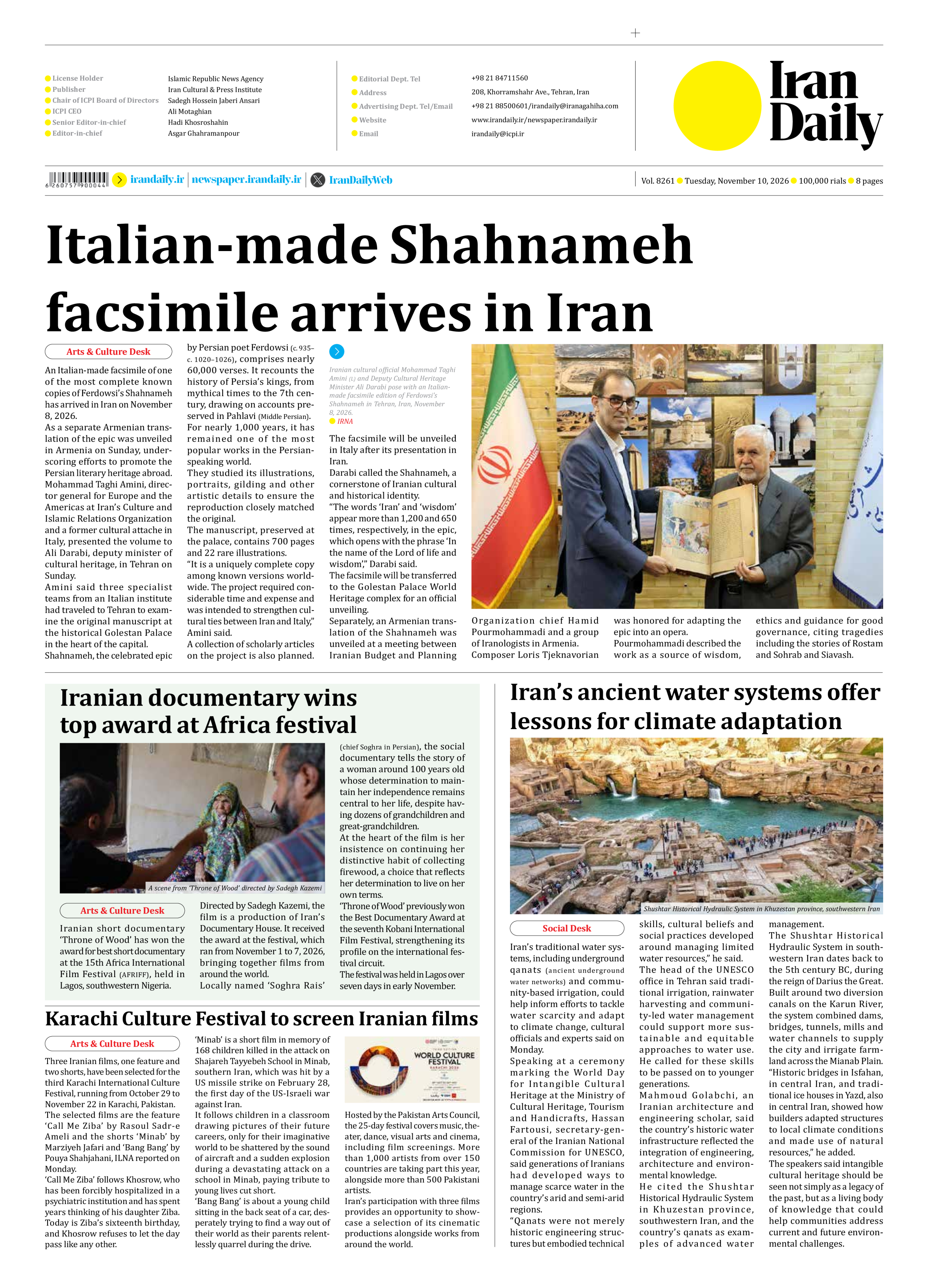
He cited the Shushtar Historical Hydraulic System in Khuzestan province, southwestern Iran, and the country’s qanats as examples of advanced water management.
The Shushtar Historical Hydraulic System in southwestern Iran dates back to the 5th century BC, during the reign of Darius the Great. Built around two diversion canals on the Karun River, the system combined dams, bridges, tunnels, mills and water channels to supply the city and irrigate farmland across the Mianab Plain.
“Historic bridges in Isfahan, in central Iran, and traditional ice houses in Yazd, also in central Iran, showed how builders adapted structures to local climate conditions and made use of natural resources,” he added.
The speakers said intangible cultural heritage should be seen not simply as a legacy of the past, but as a living body of knowledge that could help communities address current and future environmental challenges.