




Iran, Brazil seek to expand trade to $10b despite shipping challenges
Iran and Brazil are seeking to increase bilateral trade to $10 billion, but disruptions to shipping routes and sharply higher transportation costs are posing challenges to expanding economic ties, an Iranian transport official said on Monday.
Abazar Barari, deputy head of international affairs at Iran's Federation of Transport and Logistics, said the two countries' trade had grown in recent years and Brazil's economic capacity, particularly in supplying essential goods and agricultural products, offered opportunities for further cooperation.
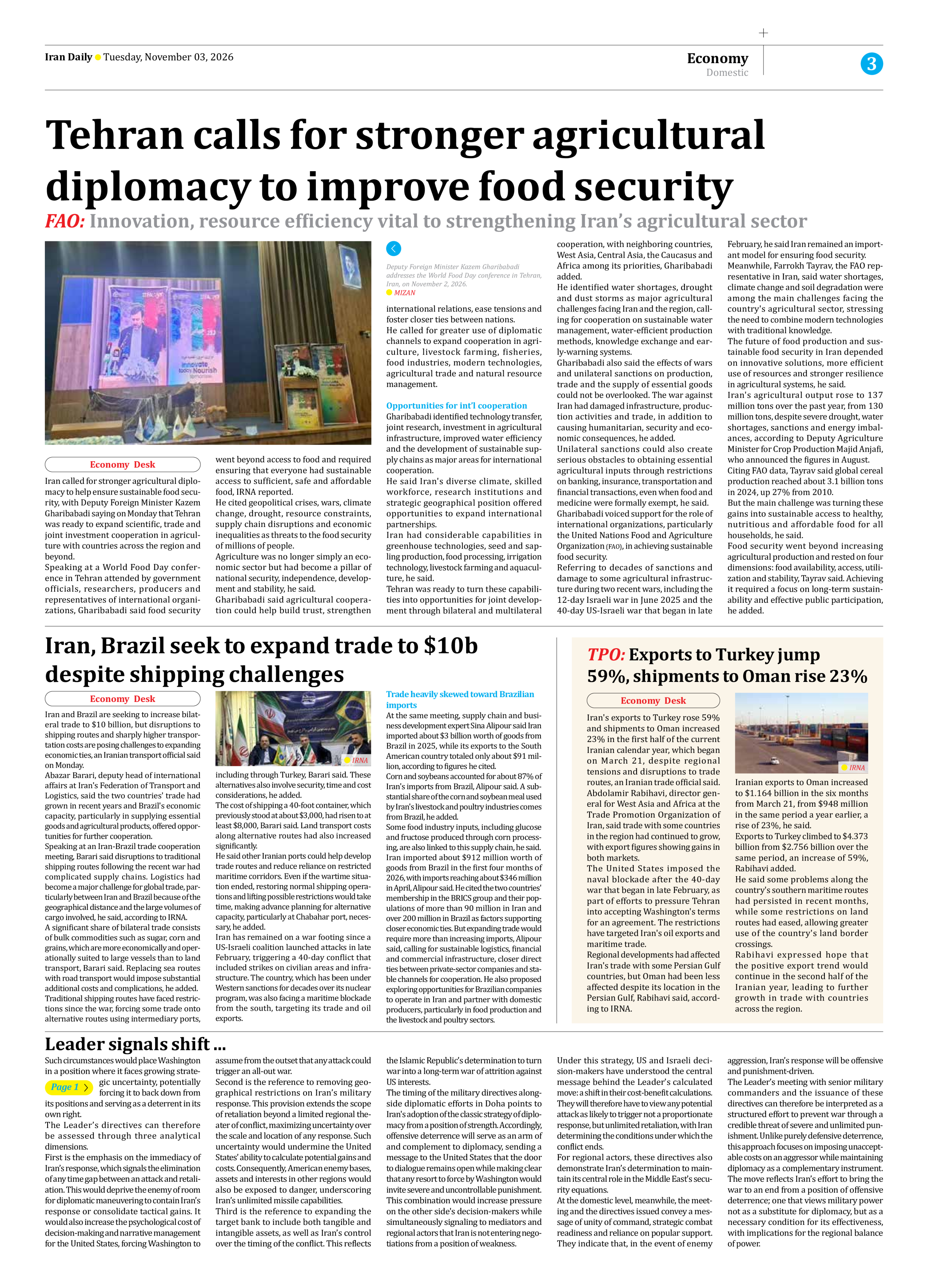
Speaking at an Iran-Brazil trade cooperation meeting, Barari said disruptions to traditional shipping routes following the recent war had complicated supply chains. Logistics had become a major challenge for global trade, particularly between Iran and Brazil because of the geographical distance and the large volumes of cargo involved, he said, according to IRNA.
A significant share of bilateral trade consists of bulk commodities such as sugar, corn and grains, which are more economically and operationally suited to large vessels than to land transport, Barari said. Replacing sea routes with road transport would impose substantial additional costs and complications, he added.
Traditional shipping routes have faced restrictions since the war, forcing some trade onto alternative routes using intermediary ports, including through Turkey, Barari said. These alternatives also involve security, time and cost considerations, he added.
The cost of shipping a 40-foot container, which previously stood at about $3,000, had risen to at least $8,000, Barari said. Land transport costs along alternative routes had also increased significantly.
He said other Iranian ports could help develop trade routes and reduce reliance on restricted maritime corridors. Even if the wartime situation ended, restoring normal shipping operations and lifting possible restrictions would take time, making advance planning for alternative capacity, particularly at Chabahar port, necessary, he added.
Iran has remained on a war footing since a US-Israeli coalition launched attacks in late February, triggering a 40-day conflict that included strikes on civilian areas and infrastructure. The country, which has been under Western sanctions for decades over its nuclear program, was also facing a maritime blockade from the south, targeting its trade and oil exports.
Trade heavily skewed toward Brazilian imports
At the same meeting, supply chain and business development expert Sina Alipour said Iran imported about $3 billion worth of goods from Brazil in 2025, while its exports to the South American country totaled only about $91 million, according to figures he cited.
Corn and soybeans accounted for about 87% of Iran's imports from Brazil, Alipour said. A substantial share of the corn and soybean meal used by Iran's livestock and poultry industries comes from Brazil, he added.
Some food industry inputs, including glucose and fructose produced through corn processing, are also linked to this supply chain, he said.
Iran imported about $912 million worth of goods from Brazil in the first four months of 2026, with imports reaching about $346 million in April, Alipour said. He cited the two countries' membership in the BRICS group and their populations of more than 90 million in Iran and over 200 million in Brazil as factors supporting closer economic ties. But expanding trade would require more than increasing imports, Alipour said, calling for sustainable logistics, financial and commercial infrastructure, closer direct ties between private-sector companies and stable channels for cooperation. He also proposed exploring opportunities for Brazilian companies to operate in Iran and partner with domestic producers, particularly in food production and the livestock and poultry sectors.